

Learn how McDonald's has partnered with Zappi to build its test-and-learn approach to innovation, rather than a "test to earn a good score" approach.

Sustainability is one of the most important factors consumers take into consideration today when choosing who to buy from. In fact, 78% of consumers rank sustainability considerations as somewhat or very important when making a purchase.
Shoppers say they’re willing to pay up to 9.7% more for sustainable products. But they’re growing increasingly skeptical of big, bold sustainability claims and greenwashing.
In 2026, consumers expect transparency and credible green claims. And they’re willing to vote with their wallets when brands fail to comply.
Sustainable product testing helps brands validate credibility and commercial viability before launch. In this post, I explore consumer perception of sustainability in marketing and messaging, branding, packaging and product. I’ll also walk you through the ins-and-outs of sustainable product testing, sustainability claim validation and how to measure the commercial impact of sustainability.
Download our guide for more on how to use consumer insights to take the risk out of product innovation.
60% of global consumers say they’re skeptical about brands’ sustainability claims.
While over 52% say they’ve seen a company greenwash.
Getting called out for greenwashing can irreparably dent a brand’s credibility. Your sustainability claims require validation before you go to market to protect your brand credibility and avoid losing consumer trust.
Concerns about greenwashing remain high across sectors. Around half or more of consumers show reservations about greenwashing in areas like meat, oil and gas and clothing production:
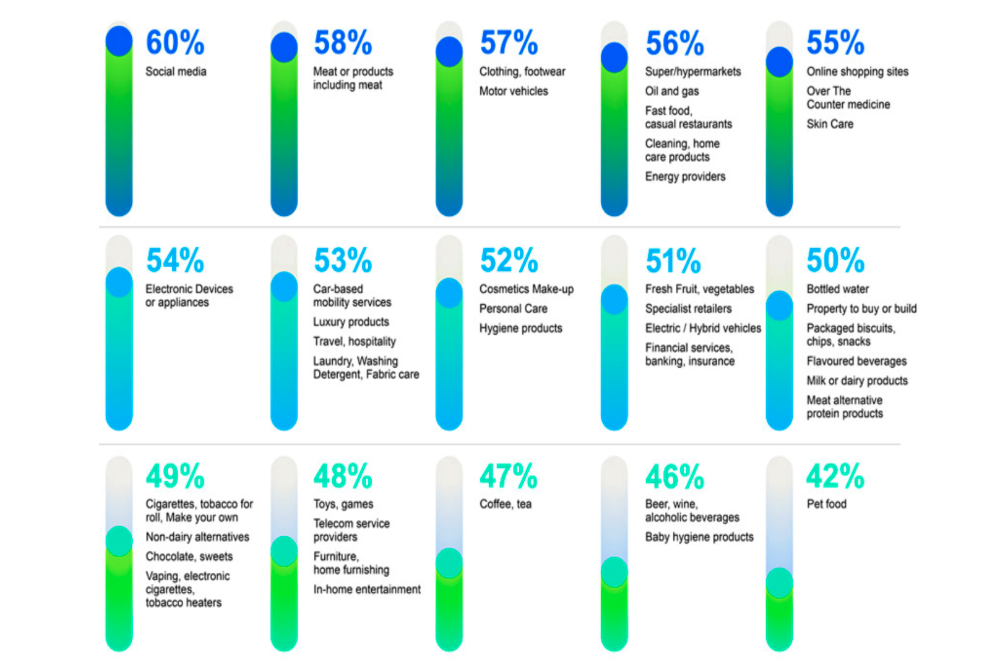
Source: Kantar
Dr. Kokho Sit, a professor in the School of Strategy, Marketing and Innovation at the University of Portsmouth, says that brand compliance is a core dimension of ethical brand perception. Without it, consumers won’t trust a brand or see it as ethical.
Brand compliance refers to a company’s ability to show that it respects society's norms and expectations and doesn't try to manipulate, ignore or work around them for financial gain. Modern consumers expect companies to follow the same rules and norms as they do — this includes being honest and transparent about sustainability claims.
“Behavioral research shows that uncertainty pushes people toward the familiar. If sustainability claims lack credibility, action stalls. Consumers will not consistently choose sustainable products if they question their safety, quality or credibility.”
[[- Emma Prouteau, World Economic Forum]]
Green marketing research shows that confidence in sustainability claims is often the deciding factor in consumers’ buying behavior. Without validated sustainability claims, consumer trust drops and they often go back to their favorite familiar buys — including products that are less sustainable. Products must be safe, high quality and certifiably green and consumers must know they are before they buy.
Beyond the importance of consumer trust, regulations around environmental messaging are tightening. In many states, ESG (Environmental, Social and Governance) product validation has moved from “nice to have” to necessity — claims must be fully validated and free from greenwashing.
California recently rolled out several pieces of new regulation. California SB 253 requires companies with over $1B in revenue to mandatory report on Scope 1 & 2 carbon emissions. California SB 343 prohibits companies from using the green "chasing arrows" recycling symbol if they fail to meet state criteria on recycling practices — coming into effect in Oct 2026. The burden of proof falls on companies to actively show that 60% of the state can recycle the material.
New York is following up with its own version of CA SB 253 with the SB 9072A Climate Corporate Data Accountability Act.
Beyond increasing regulatory pressure, greenwashing had serious financial consequences for businesses in 2026 and beyond. With total figures still being calculated, the past year saw the highest figures yet, with over 164 climate cases in the U.S.
Plummeting brand equity, widespread negative brand sentiment and brand boycotts: getting called out for greenwashing can lead to decades-long reputational damage.
One misaligned claim can lead to one million angry TikToks. In an area as important to consumers as sustainability, you can lose trust with your entire customer base for a single misleading claim.
"Brands have never been so scrutinised, so publicly, with any transgression liable to be amplified beyond their wildest nightmares, and it only takes one mistake, handled badly, for trust to be undermined." - helia CEO David Macmillan
58% of consumers say they’d boycott a brand that was found to be greenwashing.
Engaging in unethical business practices like making false claims was the second biggest reason US’ consumers said they’d boycott a brand (ranking shortly behind producing products found to pose a health risk).
As a brand, how do you make sure your sustainability claims are believable, easy to understand and authentic by consumers? You test. Here’s how.
The first thing to measure when it comes to your messaging is clarity and comprehension.
81% of consumers think there is too much sustainability jargon. While 73% say that there are too many eco-related words, which makes it difficult to differentiate one green claim from another.
Think about clarity before “credibility.” While “net positive,” circularity and regenerative systems may sound impressive to people in the industry and be understood by employees, they often hold little meaning to the average consumer. 79% of consumers say these buzzwords should be put in layman's terms to make them easy for every consumer to understand.
Early-stage concept testing can help you find the clearest way to phrase your sustainability messaging — making sure your claims are easily comprehensible and understandable to your target consumers.
Credibility and believability are essential for trust. Clear messaging is the foundation of your sustainability claims, while credibility and believability help make sure your messaging is trustworthy and reliable.
Credible claims are:
Specific: They’re measurable. They’re typically built around concrete metrics such as, “45% reduction in carbon emissions.”
Context-backed: Credible claims provide context. Brands don’t just state that their products are built using recycled plastic, they explain the origin of those materials and the process for renewing them. To build credibility even more effectively, trustworthy companies often test their “why”, telling customers what drew them to this practice and how it fits in with their wider business ethos and sustainable philosophy and values.
Include reputable, third-party certification: From B Corp to USDA organic, credible claims are verified by reliable independent bodies.
Using these elements as your foundation, you can start to test different messaging with consumers to find out which claims feel the most authentic to them and appear the most credible and believable.
Do your sustainability claims enhance or dilute value perception? Which messaging resonates with consumers and drives buying behavior?
Data shows that vague claims like, “green” or “eco-friendly,”, often fail to drive purchase intent. Closely connected to credibility, consumers want concrete, verifiable claims that are easy to conceptualize. Vague claims often dilute value by making brands like out dated, untrustworthy and shallow rather than credible, innovative and dedicated to real environmental change. While claims tied to direct benefits, like forever recyclable, can also help drive purchase behavior.
Test claim variations with real consumers before you launch to see which claims are most effective at influencing consumer buying behavior.
Can you move to eco-friendly materials without sacrificing performance? Find out how you can test and validate packaging shifts before you scale.
Despite environmental benefits and positive consumer sentiment, sustainable packaging can have hidden tradeoffs, with both companies and researchers reporting lower performance in areas like protective strength, shelf life and durability.
From balancing the need for meeting sustainability goals with packaging performance to making sure your packaging appeals to consumers, you can help make sure your packaging checks every box with eco-friendly packaging testing before you launch.
Run a series of tests to check for product durability and functionality:
Drop tests: Drop your packaging from a range of heights and angles (using standards like ISTA or ASTM) to assess how effective your packaging is at handling accidental ware and tare. Simulate handling hazards.
Compression or stacking tests: Make sure your packaging can handle the stress of transportation and warehouse storage by measuring how much weight it can bear without getting crushed.
Vibration tests: Simulate transportation and check for packaging damage such as dents or seal failure.
Puncture and burst resistance: Assess how strong your seals and materials are when under stress. To run puncture tests, use sharp objects to see how much your material can handle before it punctures. Use burst tests to inflate your package to failure to check seal strength and packaging integrity.
To make your sure your packaging appeals on the shelf, best serves and converts consumers, it’s important to test your packaging with consumers before you launch:
What were their first impressions of the packaging?
Does the packaging meet their needs and support usage well?
What do they think of the specific material you chose?
What do they think of the look and feel of the packaging?
Do they like the design, color scheme and imagery?
How well does the packaging fit the brand?
While McKinsey reports that packaging appearance has fallen in importance for consumers since 2020, packaging’s sustainability, particularly its recyclability, has risen in importance for American shoppers.
Unsurprisingly, sustainable packaging that reads as sustainable to consumers as they walk past your product in the grocery store helps create positive product and brand perceptions. Unique materials, from textured paper to matte finishes à la Oatly, can differentiate your product from the hyper-glossy cleaned-up aesthetic of your competitors as consumers scan the shelves for their next purchase.
Sustainable packaging can also visually (and unconsciously) reinforce your sustainable brand philosophy and values, drawing in eco-conscious consumers.
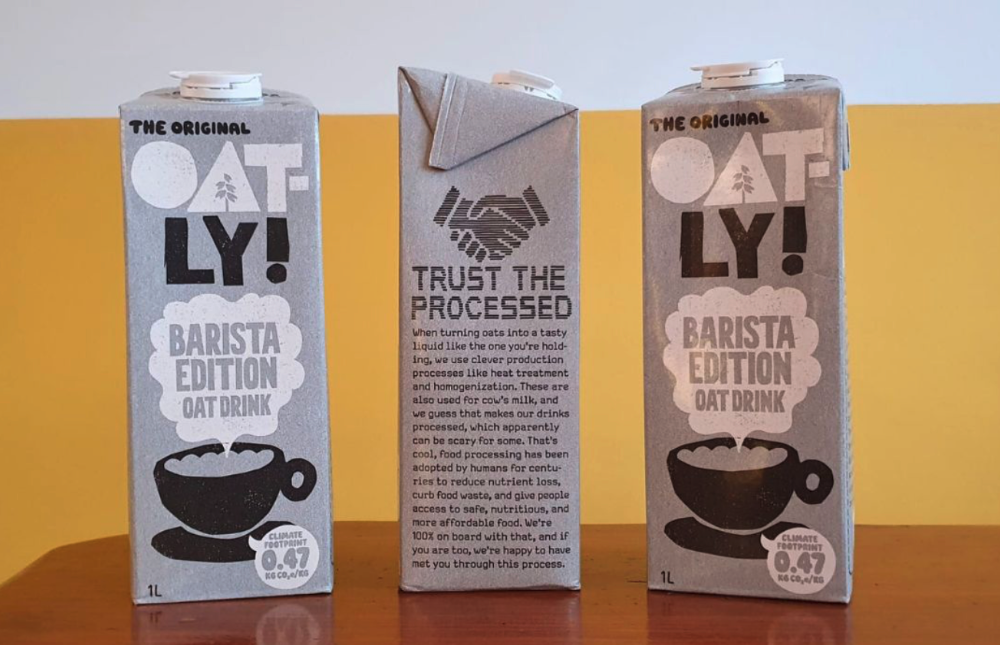
Source: Plant Based News
It’s also essential to test packaging with consumers and get their feedback before you launch, drilling down into how your sustainable packaging influences brand perception.
For example, what do they think of the specific material you chose? Consumers say they think glass, paper and metal top the list as the most sustainable materials. While some materials, like recycled plastic packaging, may be tied to misconceptions of biases (such as all plastic = non-environmentally-friendly or mushroom leather = “weird”).
Consumers care about sustainability, but cost far outranks sustainability when it comes to factors that influence buying behavior. In the face of rising inflation and political and economic instability, consumers currently place cost and convenience as the number one factor influencing purchasing decisions.
Surveys can help you uncover where the sweet spot for price vs sustainability is for consumers, showing you at which price point they are no longer willing to pay more for a sustainable product.
Use Zappi to find out how pricing impacts consumers’ perception of your product, test price elasticity and find the best price range for your product to maximize sales and revenue.
For more about how to price your product right before you launch, check out our latest article.
It’s essential to align innovation with real consumer demand, from understanding your audience’s meaningful sustainability drivers to determining which innovations would appeal to your audience. That’s why you should test early and often to find what works best with consumers before you spend.
Which environmental benefits matter most to your audience? As we’ve seen, when it comes to making buying decisions, many consumers often prioritize price and convenience over sustainability — even when they say they’d like to make more eco-friendly choices. But which sustainability drivers help persuade consumers to spend more?
There may be commonalities for sustainability drivers across your entire audience or you may find different drivers hold different meaning and influence for different segments.
Gen Z are typically highly educated on the environment and climate change. They are also typically drawn to brands and products that are making a real environmental impact and have strong business ethics, such as facilitating a fair supply chain and business practices free from exploitation. While Millennials often prioritize sustainability alongside health and wellbeing concerns — avoiding microplastics and ultra-processed foods with long ingredient lists.
Other data shows that Gen Z and Boomers value waste-free philosophies and gravitate towards brands that make full use of resources, with 30% of this demographic looking to see companies reduce waste for environmental and social causes.
Prioritization and meaning can vary widely among different demographics at the structural level and different segments at the brand level.
Staying up-to-date with shifts in consumer sustainability sentiments can help inform the earliest decisions you make for your brand and product. The latest data shows that for a large segment of consumers, sustainable choices are often parallel to health and wellness. They connect sustainable products to health-promoting decisions for themselves and their families. While other consumers may prioritize issues like biodiversity.
Running early-stage consumer research with consumer segments that mirror your audience can help you understand the perceptions and behavior of each of your target segments, giving you insights into how to tailor your messaging for different prospective customers.
Find out more about market segmentation best practices.
Sustainability isn’t just about box ticking for compliance or hooking consumers in the short term. When done effectively, it can drive long-term growth and value. Many brands look to prioritize high value, low-cost sustainability initiatives first: mapping out initiatives with a value vs cost matrix.
You can use the Three Horizons model to find which initiatives will bring the best returns:
Efficiency iInnovations (Horizon 1): Low-risk projects that have few cost barriers and can bring continuous improvements (e.g. energy efficiency and effective recycling and waste management systems).
Sustaining iInnovations (Horizon 2): These initiatives need more resources, they typically require pilots to validate the strongest ideas. Back these initiatives with extensive testing before you launch.
Transformative iInnovations (Horizon 3): Place initiatives that bring both high-uncertainty and high-impact "small bets" (e.g. new circular business models) in this category.
Return on Sustainability Investment (ROSI™): Use ROSI to help calculate the direct benefits your sustainability initiatives are likely to deliver, such as improving efficiency, driving customer loyalty, improving employee satisfaction levels and growing your revenue.
Let’s quantify the brand impact of sustainability.
Measuring sustainable initiatives’ impact on consumer trust and affinity is one of the best ways to measure the commercial impact of sustainability. The latest research shows that sustainable strategies can increase brand value by up to 20% in just four years.
You can use a combination of quantitative and qualitative research methods to find out whether your moves towards more sustainability have impacted brand awareness and a more positive brand perception. Use Zappi’s Brand Health Tracker to get real-time insights into brand awareness, usage, consideration and appeal.
Brands with strong sustainability narratives typically grow 2.5x faster than other brands. While products with ESG-related claims see an average 28% cumulative growth over five years, compared to 20% growth for products without them. This research highlights that brands with a strong sustainability philosophy and credibly sustainable products continue to successfully differentiate themselves from their competitors in the long run.
Zappi’s Brand Health Tracker also helps you understand your market share, how your brand stacks up against 15 of your core competitors and see how your brand compares in areas like ethical sourcing, affordability and innovation.
61% of companies say sustainability efforts increase customer loyalty. As consumers continue to shift their buying habits and brand loyalties towards matching their sustainable and ethical values, sustainable brands will continue to see the pay off with brand advocates who share across socials and make recommendations to family and friends.
Sustainable product testing reduces reputational and commercial risk, allowing you to test how durable, visually appealing and financially valuable your product is before you scale production.
As consumer skepticism around greenwashing rises, validating claims and testing sustainable products and messaging with consumers before you launch helps you make sure your sustainability initiatives are seen as credible and clear — attracting customers and building the kind of trust that leads to long-term customer retention and brand advocacy.
Brands that test their messaging early on in both campaign and product development balance purpose with performance, making sure their products are as durable and functional as they are environmentally sound.
Download our guide for more on how to use consumer insights to take the risk out of product innovation.
Stay up to date with our latest insights, tips, and industry news.