
Learn how McDonald's has partnered with Zappi to build its test-and-learn approach to innovation, rather than a "test to earn a good score" approach.
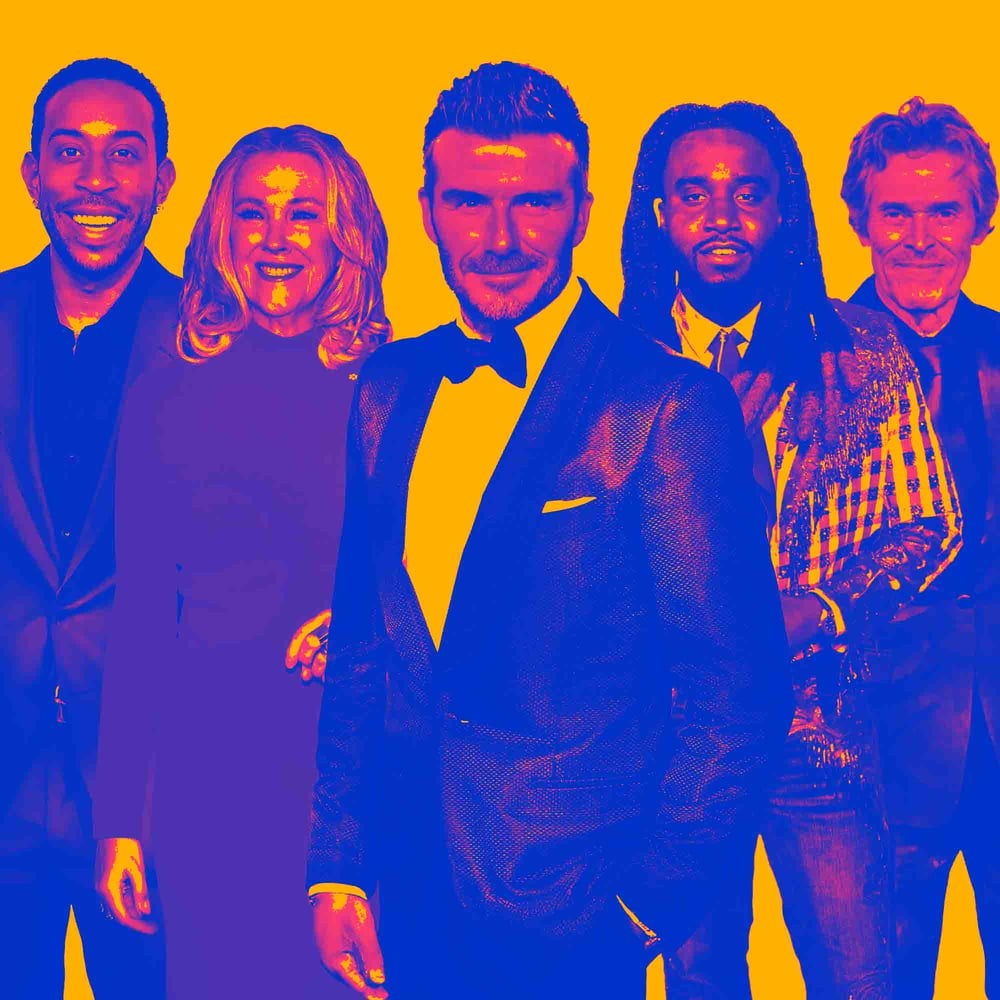
The Super Bowl isn’t just the biggest night in sports — it’s the biggest stage in advertising in the US.
Every year, brands spend millions not only to secure airtime but to create ads that feel like a cultural event. A major reason for that? Celebrities.
From Hollywood a-listers to athletes and musicians, star power has become a defining feature of Super Bowl creative, often making the ads as anticipated as the game itself.
But while celebrity appearances can drive buzz and entertainment value, they don’t automatically guarantee stronger ad performance. In fact, some of the most talked about celebrity ads can struggle with brand recall and message clarity.
In this article, I’ll explore how celebrities can influence Super Bowl ad performance, why star-driven concepts don’t always deliver and why brands need to evaluate celebrity impact with consumers long before game day.
Assumptions about celebrity inclusion can damage the brand
You can only uncover whether a celebrity is the right choice for your campaign with consumer testing
Consumer insights platforms like Zappi go beyond how people feel to uncover key indicators like whether the ad is likely to drive sales and long-term brand equity, if the brand is recognizable in the ad or if the message is clear and believable
Before locking in talent, marketers should evaluate a set of five specific signals that go beyond buzz or likability
When tested properly, celebrity insights can actively improve creative rather than simply validate it
Celebrities dominate Super Bowl advertising for a few reasons.
First, the stakes are high. With a massive, diverse audience and premium media costs, brands can often see celebrities as a shortcut to attention. And that makes sense in general, as a familiar face can help break through the clutter in the first few seconds.
There’s also a strong belief that celebrities create instant cultural relevance. Brands assume that star power will generate earned media, social sharing and post-game chatter, extending the life of the ad beyond its 30 or 60 seconds on air.
In many cases, these assumptions aren’t wrong, but they’re incomplete.
Celebrities automatically increase attention and recall
Familiar faces make ads more likable
Star power equals stronger brand impact
Big names reduce creative risk
The problems come when these assumptions aren’t tested with consumers in advance — especially with ads under Super Bowl-level pressure.
When celebrities work, they can be incredibly effective. But simply having a celebrity in your ad doesn’t guarantee success.
As we uncovered in our latest State of Creative Effectiveness report, while about 25% of ads contain celebrities, unsurprisingly, that presence is no guarantee of success. In fact, on average, ads with celebrities have equal effectiveness to ads without.
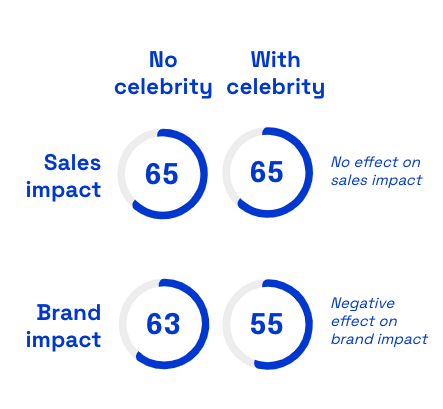
The right talent can certainly help your ad stand out and increase recall in such a large scale advertising event like the Super Bowl. Celebrities can also help humanize a brand’s message, bring humor and/or credibility and elevate the entertainment value of the spot.
But the downside is real. When a celebrity doesn’t make sense for the brand or enhance the story or message, celebrities can easily overshadow the brand, becoming the most memorable part of the ad while the brand fades into the background.
For instance, have you ever remembered the punchline in an ad but not the brand it was for? In some cases, the presence of a star can actually cause confusion — with viewers remembering that great joke or funny cameo, but end up struggling to explain who the ad was for or what the brand was actually selling.
Celebrities can also dilute branding if the association feels forced or mismatched. A well-known face doesn’t automatically transfer meaning to a brand, and in some cases, it can even conflict with existing brand perceptions.
Key takeaway: If including celebrities in your advertising, they should always make sense for the brand, which can be uncovered through consumer testing.
Every Super Bowl season, the same pattern emerges. Publications rank “the best celebrity ads,” recapping who appeared and which spots went viral, but rarely explaining why they worked. The focus stays on popularity, not effectiveness.
Without these indicators of effectiveness, such as recall, overall emotion, distinctiveness and more, brands can easily fall back on cultural momentum or gut feel — especially when pressures and deadlines are tight. The result is a category-wide overreliance on star power without enough evidence behind the investment.
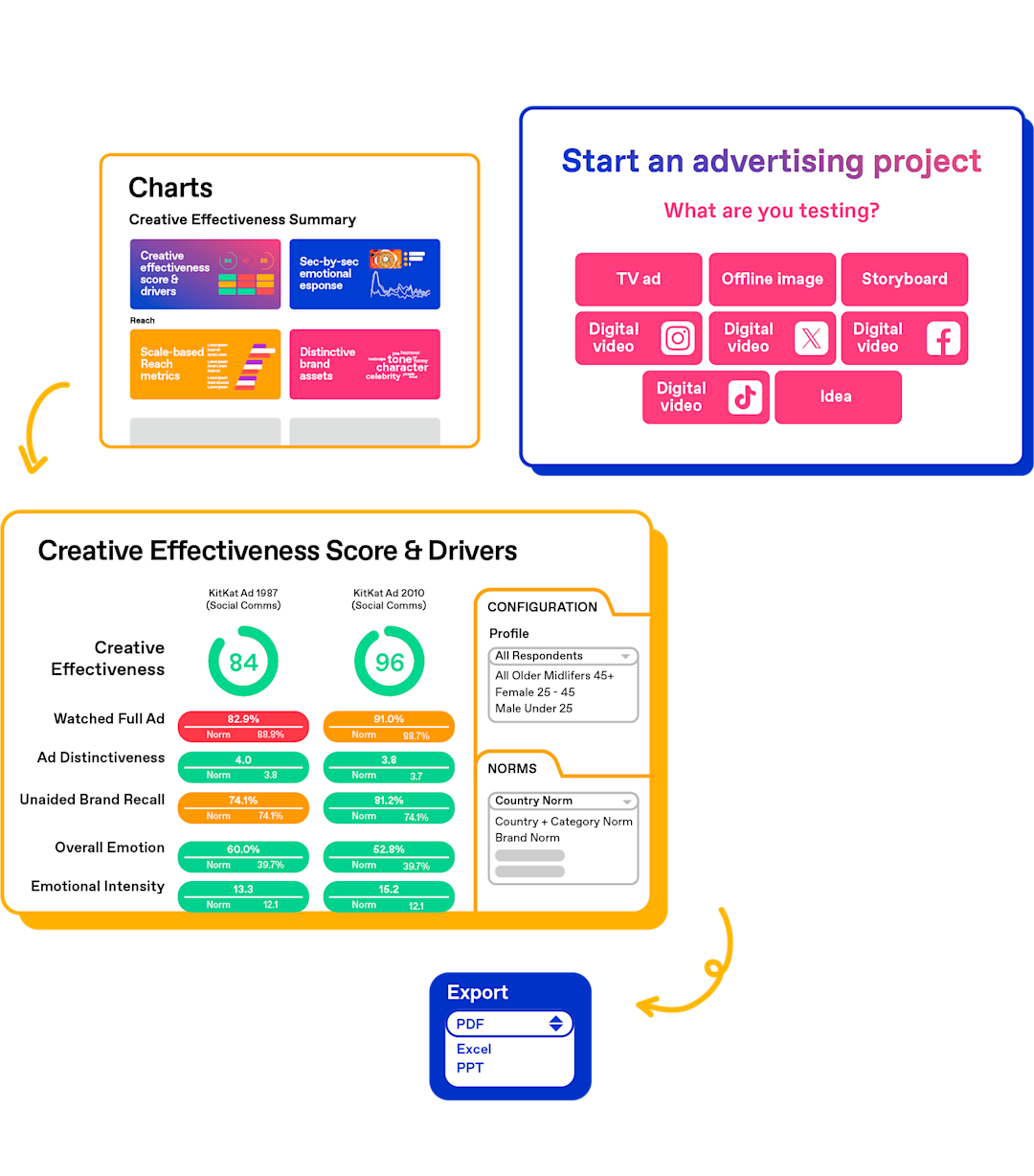
That’s where Zappi comes in. Modern, connected consumer insights platforms like Zappi's have been created to address these white space gaps that not only capture how the celebrity in the ad made consumers feel, but whether:
Your brand was easily remembered
Your message was clear and believable
Your ad was distinctive enough
Your brand remained the hero of the story
Your spokesperson is worth the investment
Your ad evoked the right emotions
And this is all complete with AI Quick Reports that help you instantly summarize how your ads performed and why.
Key takeaway: Zappi’s advertising system allows you to easily uncover key creative drivers, course-correct early and launch with confidence — a must-have for high-stakes spots like the Super Bowl.
“Since partnering with Zappi, our creative effectiveness has improved by 30% across all our advertising. This equates to PepsiCo gaining hundreds of millions in value!”
- Stephan Gans, SVP Chief Consumer Insights & Analytics Officer, PepsiCo
Let’s take a deeper look at the signals to pay attention to when testing with consumers.
As we covered above, before locking in talent, marketers should evaluate a set of specific signals that go beyond buzz or likability:
Brand fit and association strength: Does the celebrity naturally align with the brand’s values, message, tone and category role?
Emotional lift: Does the celebrity meaningfully increase the intended emotional response or simply add novelty?
Message clarity and brand linkage: Is the brand and brand message still clearly understood, or does the celebrity distract from the core message?
Memorability of the celebrity–product connection: Do viewers remember who or what the ad was for, not just who was in it?
Cost efficiency: Does the expected impact justify the celebrity cost compared to alternative creative options?
These are all measurable inputs that will help you decide if the celebrity being considered is the right choice and their inclusion is worth the cost — but only if brands test them early enough.
While Zappi’s platform allows you to get clear insight into what’s working for your brand and what isn’t, here’s a few things to keep top-of-mind when running your research:
Brand association before and after casting: Compare performance of a concept with and without the celebrity to see whether recall, relevance or resonance meaningfully improves.
Emotional response: Measure whether the celebrity enhances the intended emotional tone or pulls focus away from it.
Message clarity and brand linkage: Confirm that the brand remains the hero of the story, not the talent.
Multi-concept testing: Evaluate multiple celebrities, or different tiers of talent, against the same idea to identify the most efficient investment.
This approach helps to shift celebrity decisions from a subjective debate to an evidence-based choice, especially when testing with your target consumer.
When tested properly, consumer insights can actively improve ad creative rather than simply validate it.
Here’s a few scenarios.
Researching with consumers will help you:
Identify which celebrity creates the strongest recall for the brand
Adjust scripts, scenes or visual cues to reinforce the brand/product connection
Determine whether a non-celebrity version outperforms a star-driven version
Apply learnings to different ad cuts, social extensions and pre-game teasers
In some cases, testing can reveal that the celebrity actually isn’t the differentiator — the idea is. In others, it highlights exactly how the talent should be used to maximize impact.
Celebrities will likely always be part of the Super Bowl advertising playbook. They can help capture attention and fuel conversation on one of the biggest nights in marketing in the US.
But remember, star power alone doesn’t guarantee effectiveness.
The brands that win aren’t simply the ones that cast the biggest names, they’re the ones that understand the role those names actually play when it’s a good fit. By testing celebrity impact long before game day, marketers can move beyond assumptions and ensure their Super Bowl investment delivers more than just applause.
Stay up to date with our latest insights, tips, and industry news.