
Learn how McDonald's has partnered with Zappi to build its test-and-learn approach to innovation, rather than a "test to earn a good score" approach.

Although the Super Bowl reigns as the most important sporting event in US advertising, college football is becoming increasingly attractive. In fact, college football advertising is second only to the NFL in the United States, with 2025 setting new records.
ESPN, ABC, Fox, NBC and CBS have all experienced significant increases, with viewership for all of college football increasing by about 9% in 2025. Along with more viewers comes increased audience engagement, which translates to an increased need for ad effectiveness.
In short, savvy brands are paying attention to college football because so many Americans are paying attention to college football. But what are the costs and benefits for brands? In this post, I offer a clear view of how college football advertising functions and presents, including:
Cost benchmarks
Revenue flow
High impact creative examples
Let’s get into it!
Of course! College football is deeply rooted in American culture and has a long, storied history. In fact, these games have been broadcast since 1939!
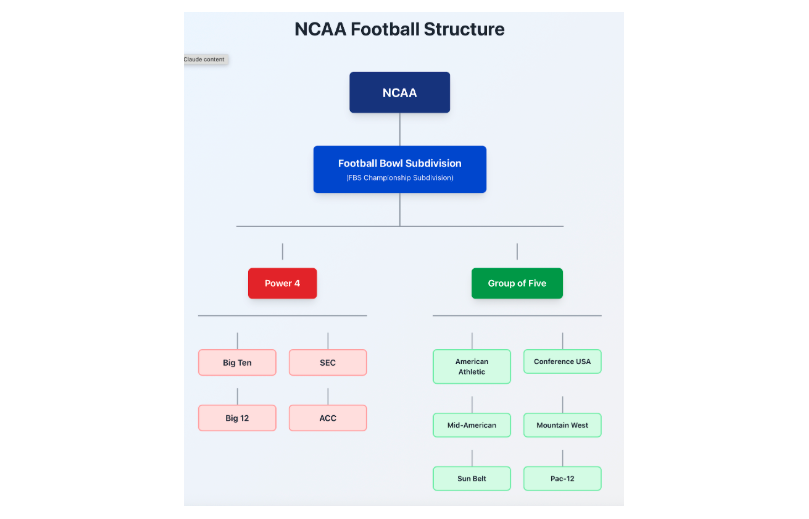
The National Collegiate Athletic Association, better known as the NCAA, controlled all television rights at that time, and their main concern was protecting attendance so few games were aired. In 1984, courts ruled those restrictions were illegal and the number of games shown on television has increased since—along with advertising to audiences watching the games.
Today, there are many ways to advertise for college football, including TV broadcasts, sponsorships and on-site placements. TV advertising is familiar and it’s clear why brands seek those spots, especially during the big games that pull in millions of viewers. Sponsorships are valuable to everyone involved: schools, teams, individual athletes, fans and certainly brands.
For teams, sponsorships can mean that the cost of uniforms and shoes is covered. Individual athletes are often featured on social media and garner national awareness and attention. Brands get huge exposure.
Marquee games get plenty of attention, but regular season games are important for advertisers. During week 10 of the 2025 regular season, college football games were on opposite Game 7 of the World Series.
It might seem like a no-brainer that the last game of the World Series would be the draw for sports fans. Yet, eight college football games were shown on ABC, the ESPN networks, FS1, BTN, NBC and CBS and attracted 11.62 million viewers!
College games are broadcast on major television networks like ABC, CBS and Fox, as well as streaming platforms such as Hulu, Fubo, Sling TV and others. Many of these broadcasters also have apps and offer simulcasts.
You can also access games through conference-specific channels. CableTV.com offers an example: “You can access games on ACC Network Extra, ESPN3, and SEC Network+ by signing in to ESPN.com or the ESPN app with your TV provider credentials.”
All of those broadcasts offer opportunities for advertising. Additionally, during the games sponsorships come into play.
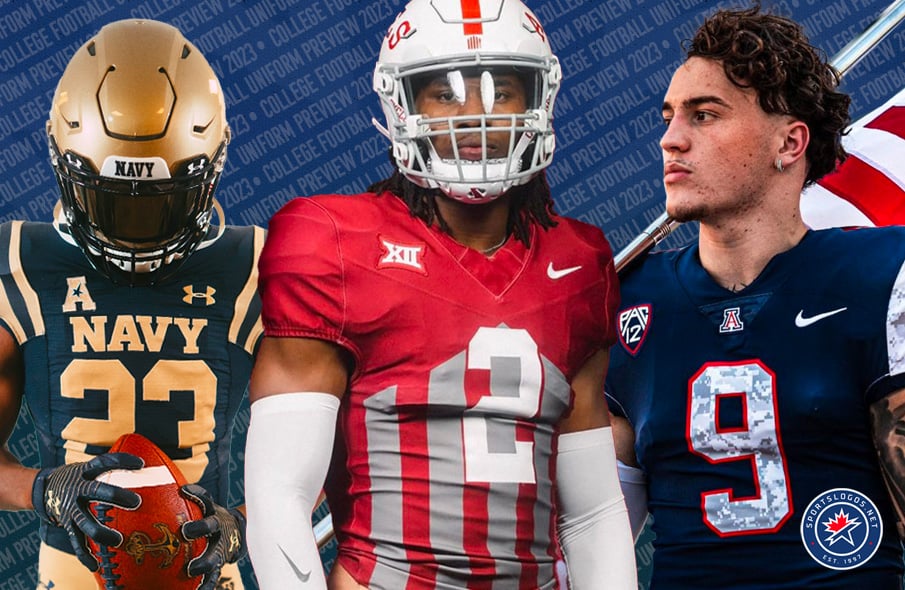
Source: Sports Logos.net News
Brand logos can appear on players’ uniforms, shoes, warm-up gear and accessories of course, but also on Football Bowl Subdivision (FBS) apparel available at retailers for sale to the public. Stadium signage, digital boards, perimeter placements and out-of-home advertisements near campuses are all opportunities for brands, too.
On-site advertising, particularly the placement of brand logos on the field alongside team logos during regular games, is new. The NCAA changed the rules in 2024, and 2025 was the first season where brand logos appeared on the 50-yard line and in a smaller format in two other locations.
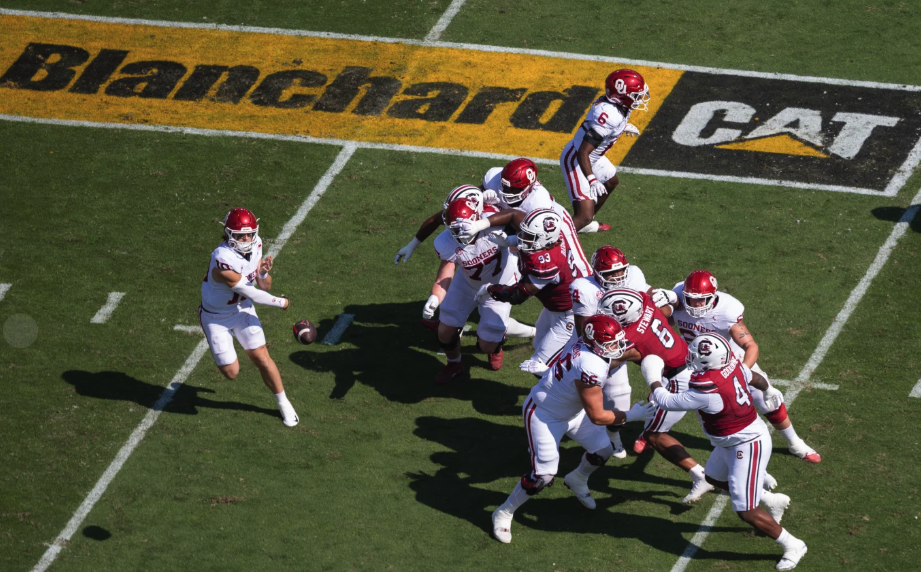
Source: AP News
When it comes to college football, tradition matters—a lot—to fans, so not all teams are courting or accepting on-field advertising, even though it can bring substantial revenue. However, in Tennessee, a deal between Pilot and the Volunteers shows how both schools and brands can benefit.
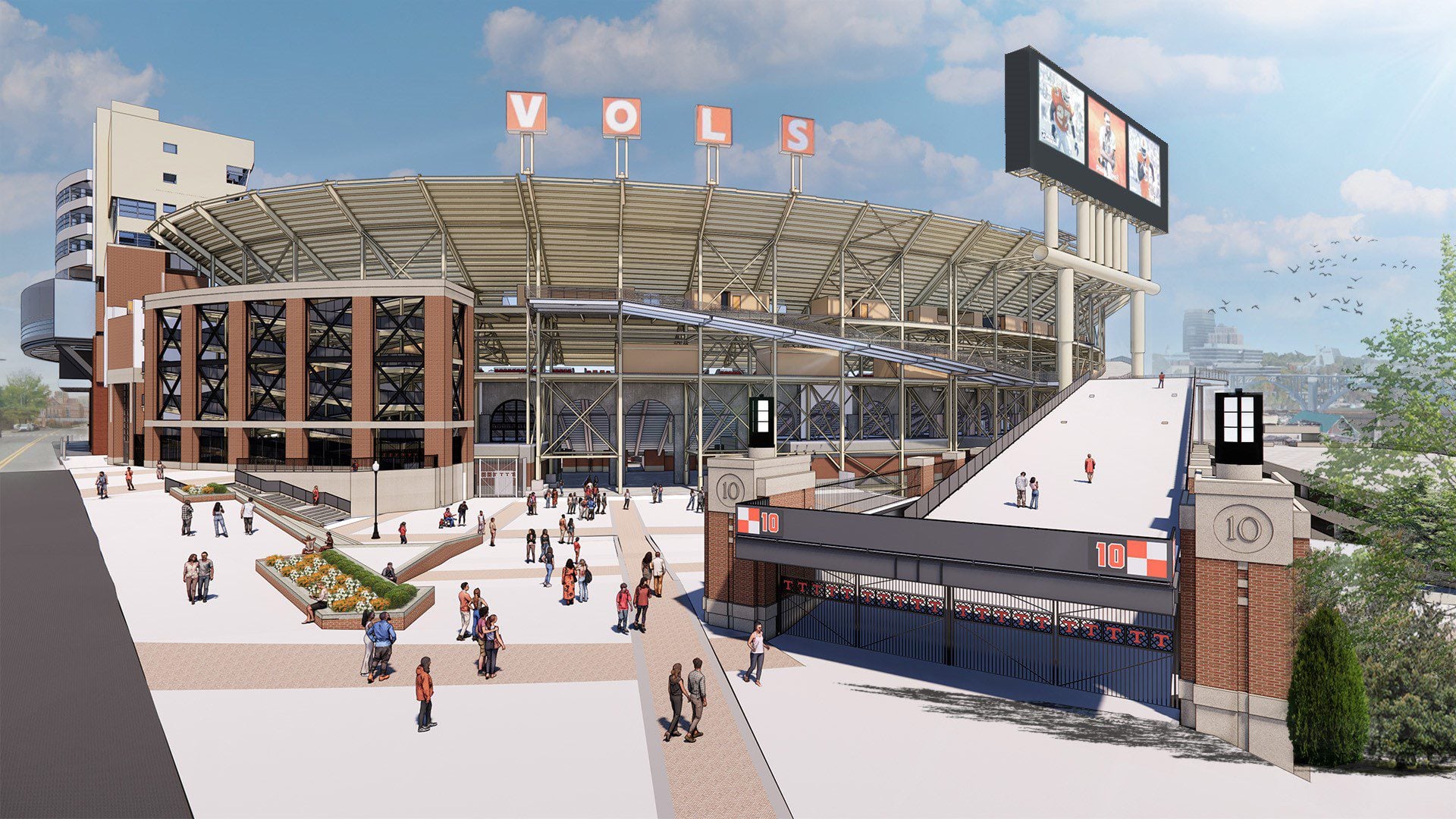
Source: Rocky Top Insider
Historic and beloved Neyland Stadium is named for coach General Robert Neyland, but is in need of costly renovations. The school was considering selling the naming rights to the stadium to raise the funds, when Pilot stepped in. The revenue from on-field advertising featuring Pilot will pay for the renovations, allowing the school to keep the historic and much-loved name.
In 2025, 673 different colleges and universities participated in the NCAA. Some of those teams are household names with cherished histories, others smaller and less well-known. It stands to reason that there would be significant variation in the cost of advertising during games, sponsoring teams and on-site logo placement.
The importance of individual games, the size of the audience and the broadcast partner determine the cost of ad spots during broadcasts. Let’s take a look at some benchmarks.
The National Football League (NFL) holds the number one spot in total number of viewers, but college football is solidly in second place.
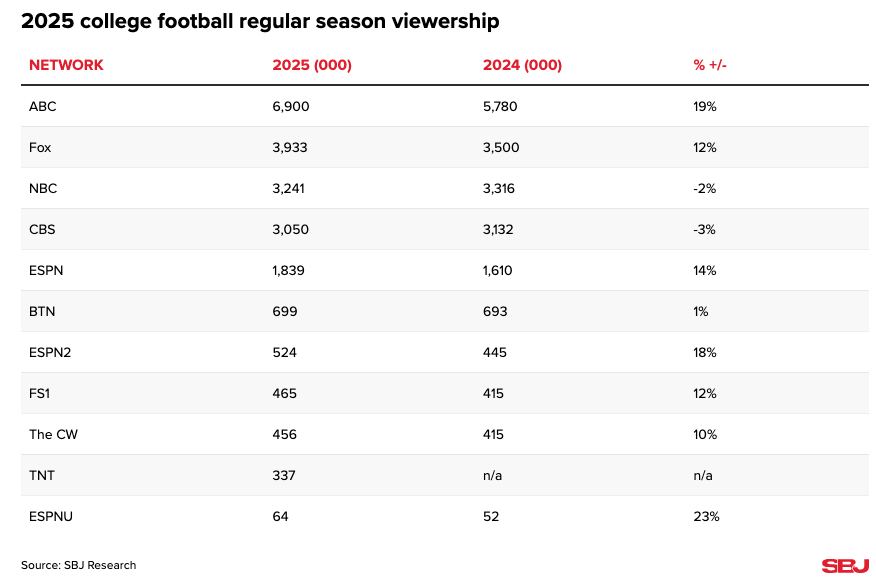
Obviously, the teams make a great deal of difference in how many people tune in. Alabama was most-watched in 2025, with 8.5 million viewers.
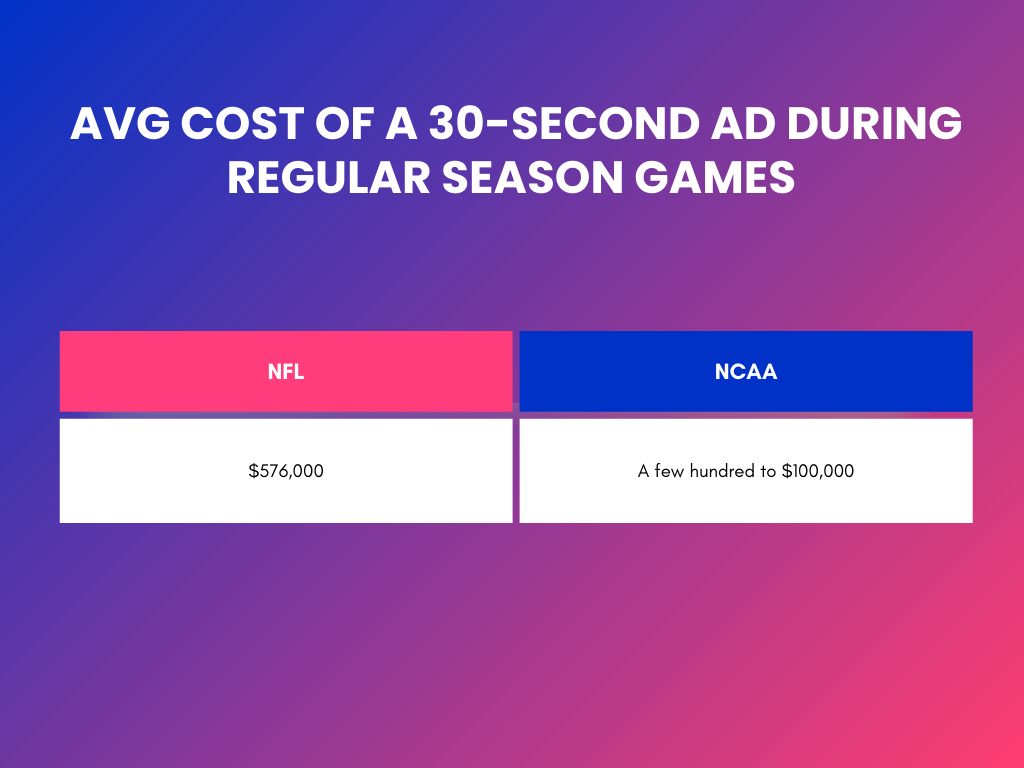
Here’s a comparison between advertising spots in NFL games and NCAA games:
But what about the big games in college football?
As valuable as ad spots during regular season college football games are, bowl games are substantially more. Some championship games command as much as $2 million for a 30-second ad, and broadcasters are getting close to selling out for some games. On January 19, 2026, the College Football Playoff National Championship aired on ESPN. As of January 8, the ad spots were almost gone.
“I don’t want to say I’m completely sold out just yet, but we’re in a much better position than we’ve been in years past,”
[[- Jim Minnich, SVP of Revenue and Yield Management, Disney Advertising]]
At this point, you might be wondering what kinds of ads generate a strong response from audiences who are tuned into college football? Given the cost of the advertising spots and the potential audience for them, it’s certainly a good idea for brands to closely consider what it takes to make a successful ad, well before taking the plunge.
The “best” creative strategy for an NCAA game spot depends on all kinds of factors, of course, just as any marketing campaign must consider.
Marriott excels in sports advertising, and in 2025 their “Game Day Rituals” ads won awards and drove engagement. The campaign included TV advertising, digital ads and influencer marketing. The ads featured people who were rested and decked out in their game day best, and fans responded. Engagement, recall and site visits were all significantly higher thanks to the marketing push.
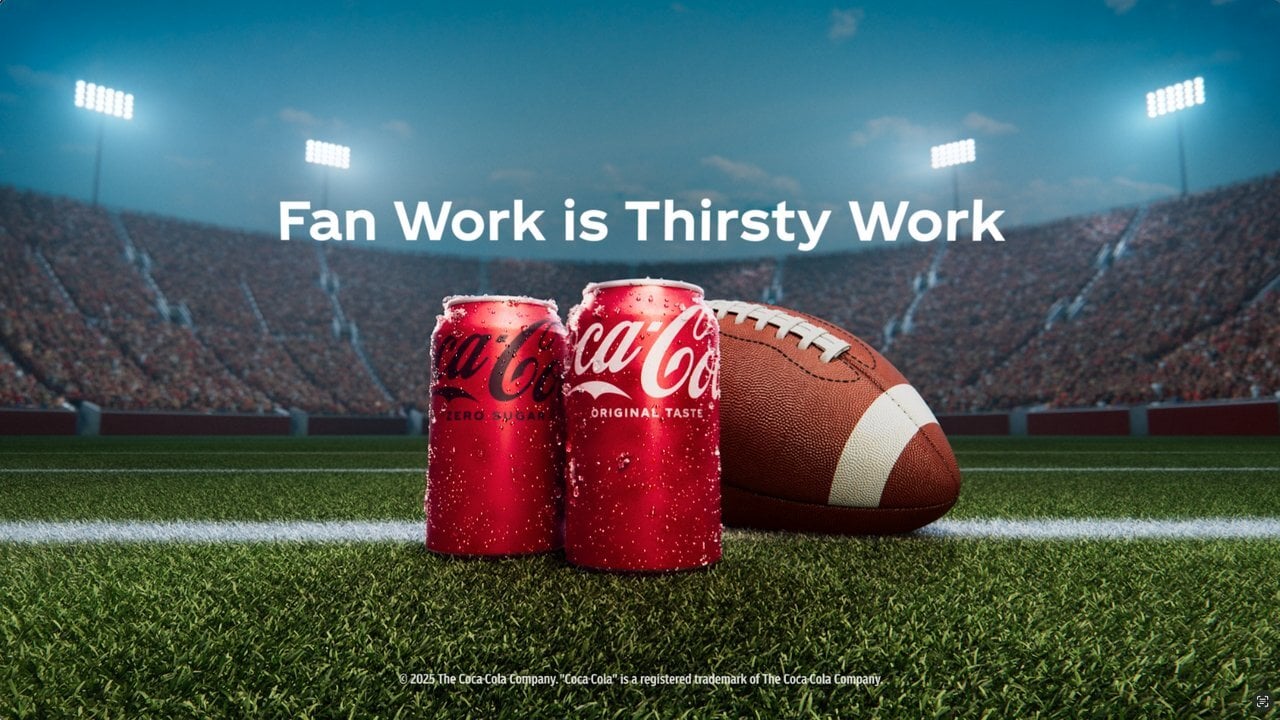
As with virtually all advertising, college football ads require excellent storytelling, emotional resonance and relevance in order to be successful. Coca-Cola nails all three with the 2025 campaign “Fan Work Is Thirsty Work.”
The TV commercial shows fans bravely entering rival territory while fortifying themselves with soda, and the campaign includes in-stadium promotions, digital contests, merchandise and more.
Modelo is another brand that got the storytelling just right in its 2025 college football campaign. They introduced the “Modelo Recruiter” in 2024, and in 2025 we saw more of his search for “Full Time Fans.” This year the ad profiles different types of fans, like “The Transfer” and “The Playmaker.” The campaign also includes visits by the Recruiter to campuses, QR code based contests, retail displays and more.
Some brands become associated with the tradition that is so pervasive in college football. Old Dominion Freight Lines taps into that tradition through the sponsorship of 44 different NCAA teams, and this year, with an ad titled “The Best in Game” that includes moments only dedicated fans are likely to pick up on.
One example is a line spoken by Rece Davis, ESPN College Football Game Day Host, that hints at recent discussion about playoffs by the college football playoff committee—only someone who closely follows NCAA football would be likely to catch the reference. The ad also features iconic mascots from 18 different universities.
These ads further the sense of belonging that comes with being a college football fan, they entertain, amplify the spirit of fun and competition inherent in sports and they tell good stories. Those strengths keep them relevant and will continue to generate value for the brands investing in them.
Do the broadcast networks get advertising revenue? What about the schools? The players? When you’re talking about millions of dollars per game, the questions about where the money goes are important, especially in light of how much it costs for schools to field outstanding teams.
Advertising revenue is distributed across multiple stakeholders, including:
TV networks
Media rights holders
Conferences and the schools that participate in them
Athletes through name, image and likeness (NIL) agreements
Very recent court rulings and a settlement often referred to as the House Settlement brought about massive changes to how broadcast revenue could be dispersed to conferences, schools and athletes as well as how many players schools can have on teams and how many full and partial scholarships schools can give out. The changes are in effect this year, but it’s likely we haven’t seen their full effect yet.
Since TV networks decide which games to air and set the prices for ad spots during those games, it’s no surprise to learn that they are major recipients of the revenue. The playoffs bring the most viewers, and ESPN recently reached a deal with the College Football Playoff (CFP) regarding media rights.
ESPN retains exclusive rights to the expanded college football playoff, which is the second largest annual sports event in the United States. The agreement begins with the 2026-2027 season and extends through the 2031-2032 season. ESPN also secured the right to sublicense a certain number of games.
Disney Advertising will be the exclusive seller of ads during playoff games. ESPN also has an 8-year deal with the NCAA and exclusive rights to every major college championship excluding basketball.
Conferences and schools benefit through media rights agreements, as well, although there’s disparity among the power conferences like the SEC and Big 10 and all of the others. The financial gap is detailed in a report from the US Senate Committee on Commerce, Science and Transportation issued in September 2025.
The House Settlement I mentioned above means that students can now receive direct payments, which has never been allowed before. The judge in the case, US District Court Judge Claudia Wilken wrote:
“Despite some compromises, the settlement agreement nevertheless will result in extraordinary relief for members of the settlement classes. If approved, it would permit levels and types of student-athlete compensation that have never been permitted in the history of college sports, while also very generously compensating Division I student-athletes who suffered past harms.”
The settlement affects how scholarships are distributed and brings some rules to the NIL space. Any deal with an athlete that amounts to more than $600 must be submitted to a clearinghouse operated by an accounting firm to make sure it is deemed to be within current market value. If the deal is above market value, it either goes to a neutral arbitrator or the athlete can turn it down. Penalties can be issued for both players and their schools who skirt the new rules.
There’s no question that brands are finding success with college football advertising. Audiences for college sports in general are growing, including football. Streaming services mean that many more games are broadcast than in the past, so even those following smaller teams can often see games.
Viewers are more attentive during live games, which opens doors for advertisers to drive engagement with things like contests and interactive promotions. A Comcast survey found that people watching a college matchup tend to pay attention to the full duration of an ad 10% more often than people watching an NFL game. Also, pre-game programming for college games is setting viewer records offering another avenue for brands to reach fans.
Take a look at this summary of viewers for college football games from week 9 to week 13 of the 2025 season:
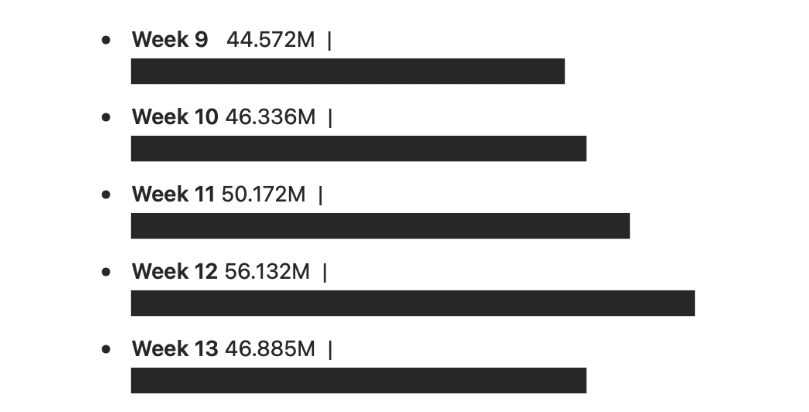
These figures combine Nielsen and Adobe Analytics reports, and show both the strength of viewership and its steady climb throughout the season (with the exception of week 13, which is referred to as “cupcake week” when the SEC programs games against “easier” opponents).
People who watch college football also show repeat viewing behavior, which is advantageous for brands. Storylines can be continued, contests can extend beyond a single game and the relationship between the brand and the consumer can be strengthened when viewers return week after week.
Based on viewership, the loyalty of college football fans and the ability to plan in advance, it seems obvious that certain brands should be making the investment in advertising, sponsorship and outdoor placements. However, the rising cost of this kind of marketing may give you pause.
Reducing risk before committing to a large budget is always smart. Let’s take a look into how brands considering advertising during college football broadcasts can do that.
Testing multiple creative ideas with real fans before launch is one of the clearest ways to reduce risk. Discovering the creative drivers that appeal to audiences can be a surprising process and allows brands to course correct, which can save huge amounts of money and time.
Zappi gives you the tools to test, refine and test again as many times as you need to. Having the right tools means your team can stay on track from the first kickoff of the season to the final playoff game.
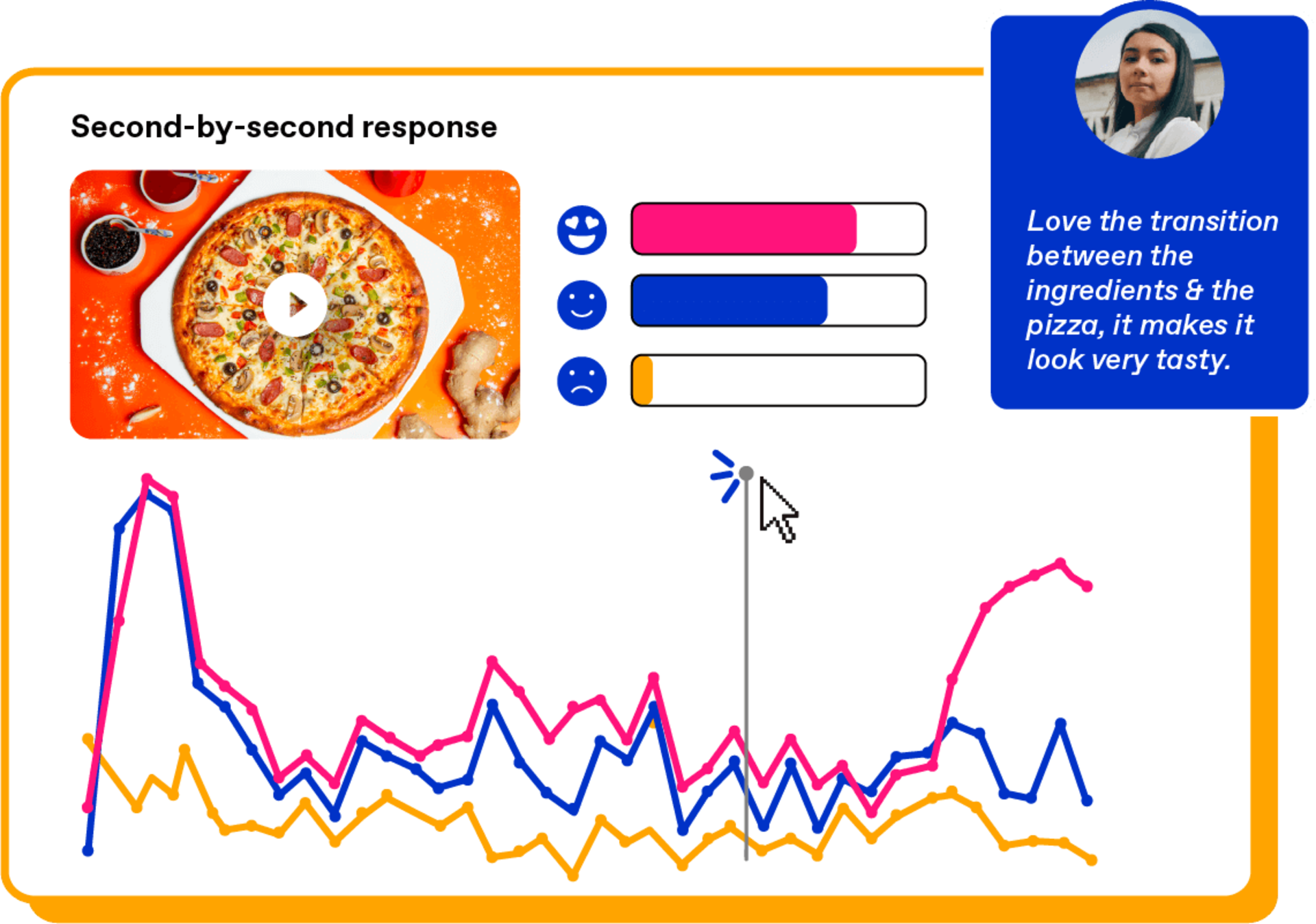
Whether you’re considering broadcast advertising, sponsorship integrations, stadium or outdoor ads you can test the messaging with target audiences first, before committing resources and making high-cost media commitments and find out if college football audiences are the right fit for your brand before allocating budget.
Once you’re armed with audience insights, have pinpointed the best creative elements and chosen the most appropriate avenue for advertising, it’s time to start implementing all of that knowledge. A few best practices to keep in mind:
The chart of viewership numbers above shows how important it is to consider seasonal moments as you plan your campaign. Cupcake week has been happening for two decades, so can be planned around. It’s followed by rivalry week, which pulls much larger audiences—in 2025, more than 18 million people watched one game, Ohio State versus Michigan, during week 14.
Rivalry games, playoff games and championships all offer big opportunities for brands to consider. Aligning pivotal campaign moments with seasonal highlights is a good way to maximize the value of your investment.
Some of the most successful campaigns use campus and regional placements to reinforce broadcast ads.
Source: Brand Innovators
Coca-Cola’s campaign “Fan Work Is Thirsty Work” combines broadcast ads, digital and social media campaigns, in-stadium placements and outdoor advertising—and includes a tour to 53 campuses where the brand will hand out drinks throughout the season.
Validating concepts is a good first step in using consumer data to lower the risk of investing in advertising to college football audiences. To supercharge the investment, smart brands measure outcomes and iterate their campaigns based on what’s working.
Zappi’s platform includes real-time analysis and flexible benchmarks to make it easy to see how your campaign is performing and make adjustments as needed. This means you can validate and optimize your work based on key metrics throughout the season.
College football draws large and growing audiences that show up at predictable times each year, giving brands the opportunity to reach people they might otherwise struggle to get in front of.
Although advertising during games and securing sponsorships isn’t cheap, it can be a valuable investment. And having the tools to lower the risk associated with a hefty investment makes college football a more appealing advertising opportunity for brands.
Stay up to date with our latest insights, tips, and industry news.