

Learn how McDonald's has partnered with Zappi to build its test-and-learn approach to innovation, rather than a "test to earn a good score" approach.

Women control more than $15 trillion in spending power and influence the majority of household purchase decisions, making them one of the biggest growth opportunities for almost every brand.
But instead of deepening that connection over time, advertising is steadily weakening it, with ads feeling less relevant or trustworthy to women as they age.
The consequences to this aren’t theoretical, they’re financial. In fact, we found that nearly three quarters of women have avoided a brand, spent less or lost trust because its advertising didn’t feel made for them.
“This data should be on every CMO's desk this week. When nearly three quarters of women are already changing their behavior because advertising ignores them, that's not a creative problem — it's a revenue problem. The brands that figure this out first aren't just doing the right thing, they're taking the biggest untapped growth opportunity in advertising.”
– Nataly Kelly, CMO, Zappi
To understand where the disconnect really lies, we surveyed 1,000 women across age groups to better understand how advertising relevance changes with age, if brand efforts feel genuine or performative, whether women feel accurately represented and how that misrepresentation affects spending behavior.
Let’s dive into our key findings.
If you look at how women describe advertising relevance over time, the pattern is hard to ignore. As women get older, advertising doesn’t feel more tailored or helpful, it feels less relevant.
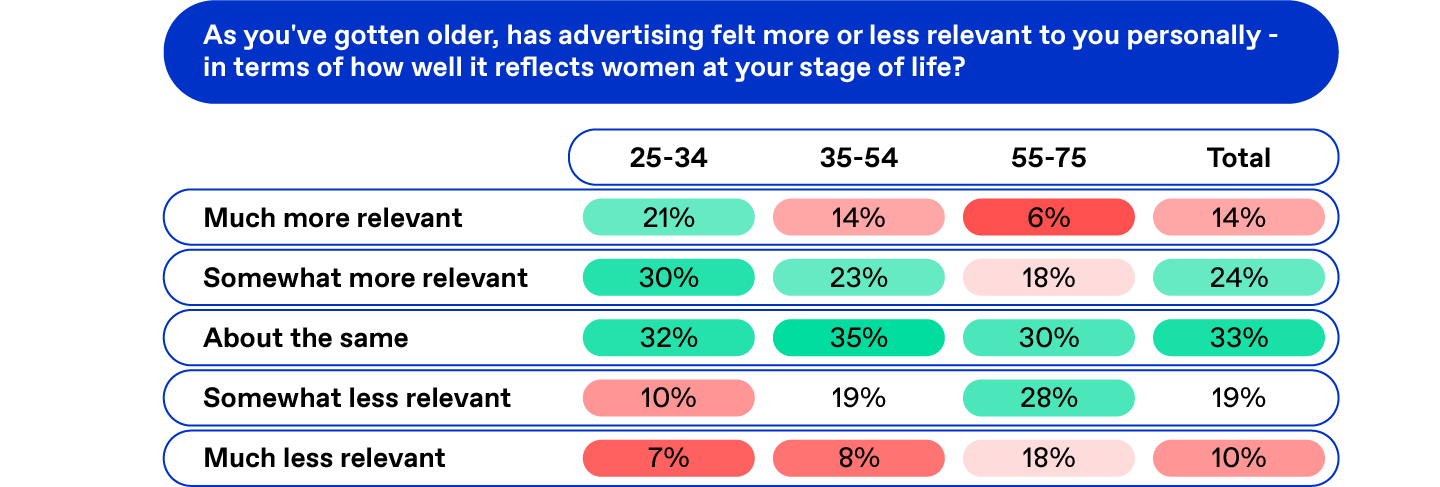
Just 17% of women aged 25 to 34 say advertising has become less relevant as they’ve gotten older. Among women aged 55 to 75, that jumps to 46%. And only 6% of women in that older group say advertising feels much more relevant today.
That’s not a small shift. It’s a steady drop-off.
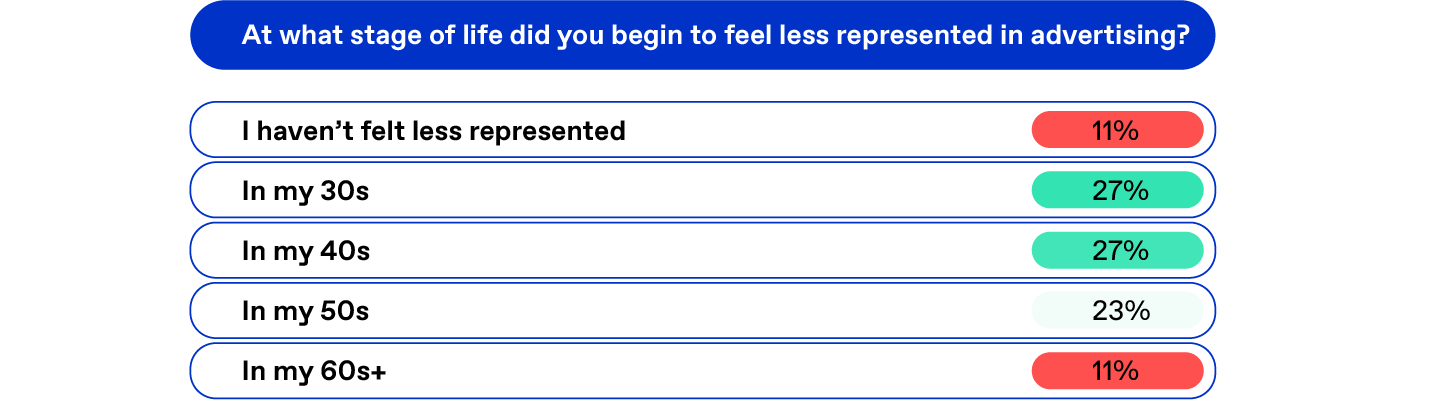
What’s striking is when the disconnect starts. More than half of women say they began feeling less represented in their 30s and 40s, right at the point when careers are accelerating, purchasing power is growing and long-term brand loyalties are being formed.
From a business perspective, this is early-stage attrition. Brands aren’t just missing older women, they’re losing them during their peak earning and peak lifetime value years — and never fully earning them back.
Nearly 45% of women say they’ve changed their spending behavior because advertising didn’t feel like it was made for women like them. That includes 27% who have spent less than they otherwise would and 18% who have actively avoided a brand altogether.
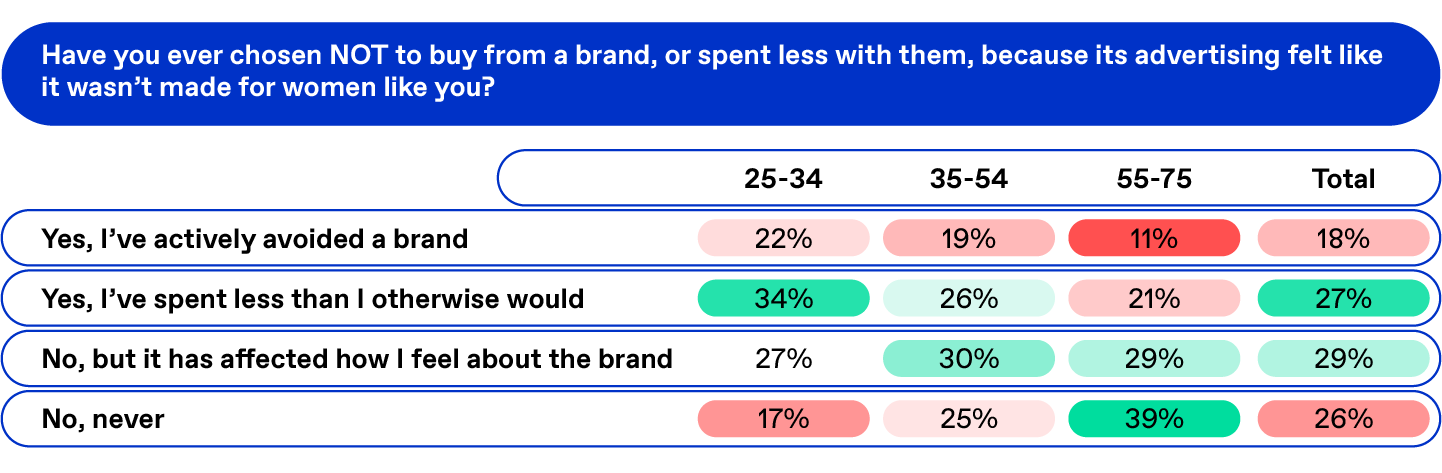
When advertising fails to reflect women accurately or meaningfully, it doesn’t just miss the mark, it drives churn. In other words, misrepresentation is already costing brands money, and the longer it persists, the harder it becomes to reverse.
Fewer than 10% of women think brands are genuinely investing in advertising for women like them.
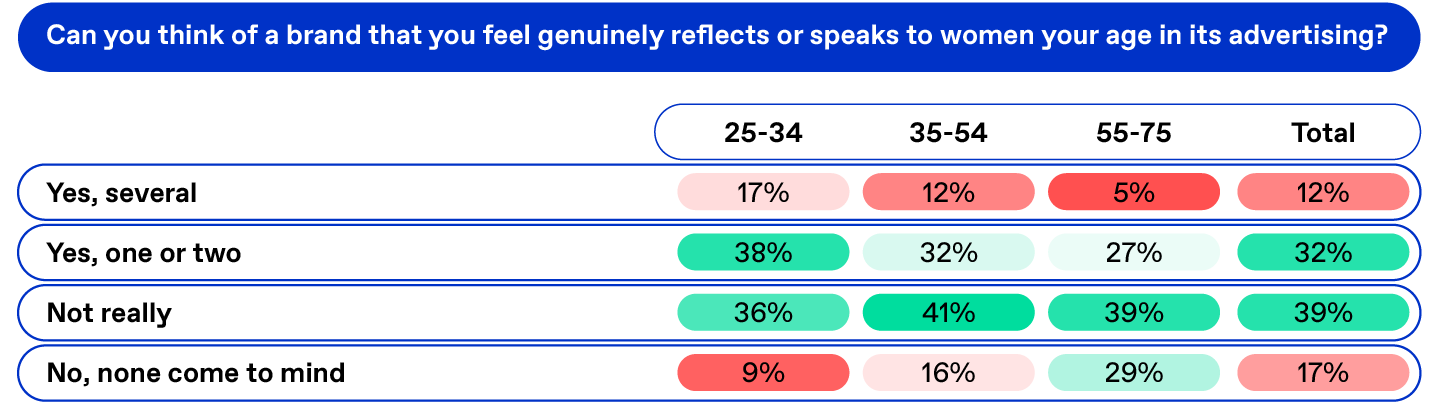
Perhaps most telling: nearly one in three women over 55 (those with the greatest purchasing power) cannot name a single brand that genuinely speaks to them. For brands willing to show up consistently and credibly, that’s wide-open white space.
Despite the volume of campaigns “targeting women,” very few women feel those efforts are authentic.
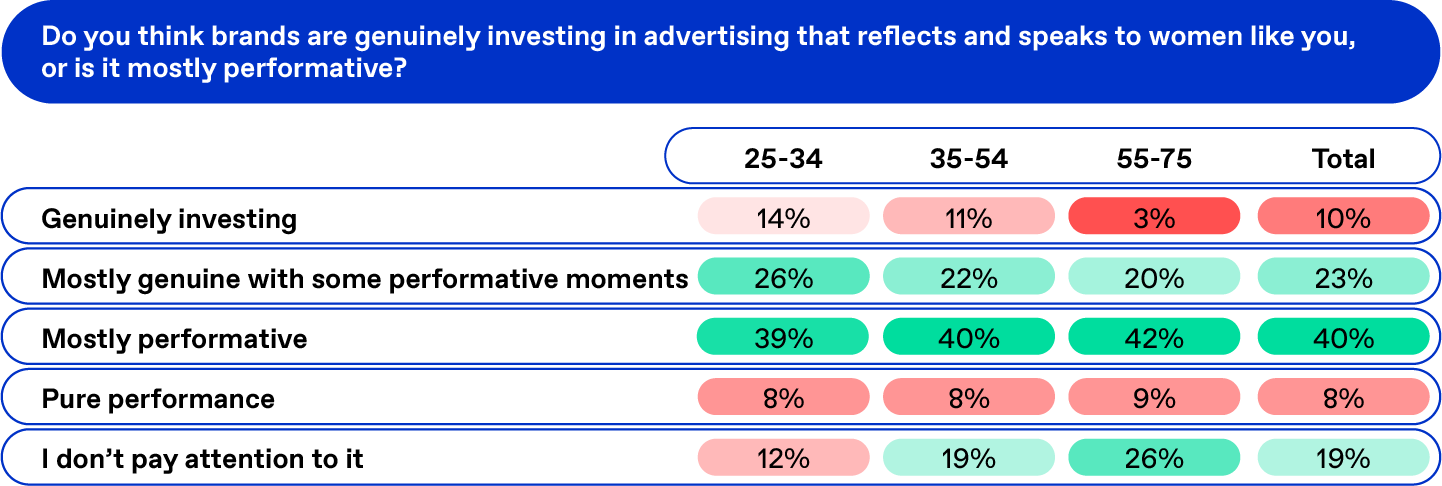
Nearly half of women say advertising aimed at them feels mostly or purely performative.
When audiences question your intent, trust erodes. And that is clearly the case, with just 3% of women over 55 finding advertising genuine.
Cultural moments are meant to build credibility and connection, but for many women, they’re having the opposite effect.
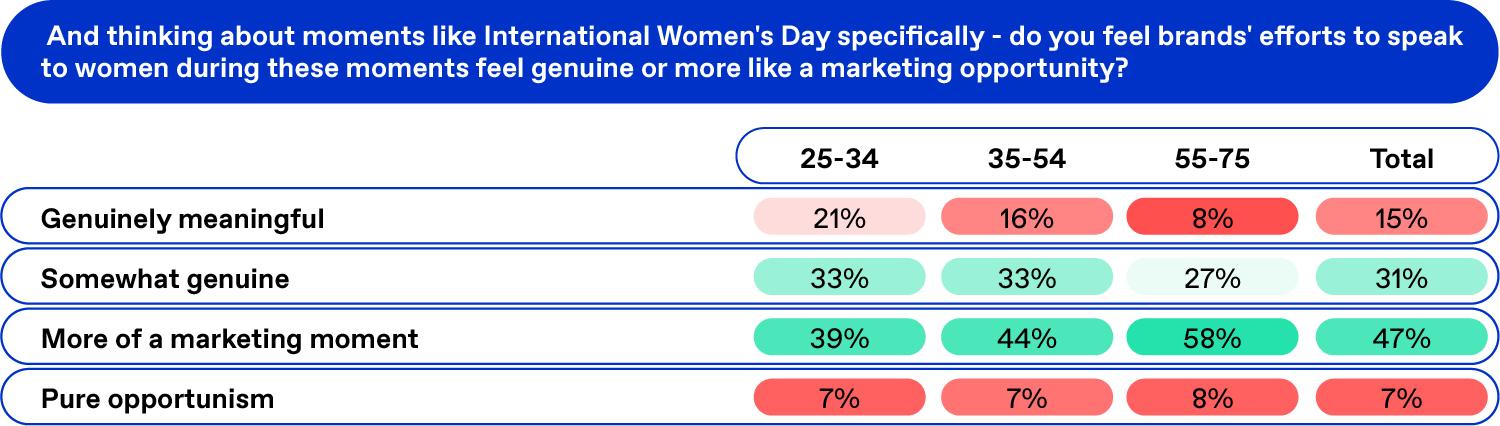
More than half of women say International Women’s Day advertising feels like a marketing moment rather than a genuine investment. In other words, it looks like brands are showing up for the optics, not the long term. And older women, the group with the highest spending power, are the most skeptical. When representation only appears in one-off, calendar-based campaigns, it feels transactional. Consistency is what builds credibility. Without it, even well-intentioned efforts backfire.
Major media moments like the World Cup are often treated as reset buttons — a chance for brands to make a splash and win hearts at scale. But women aren’t assuming that will happen.
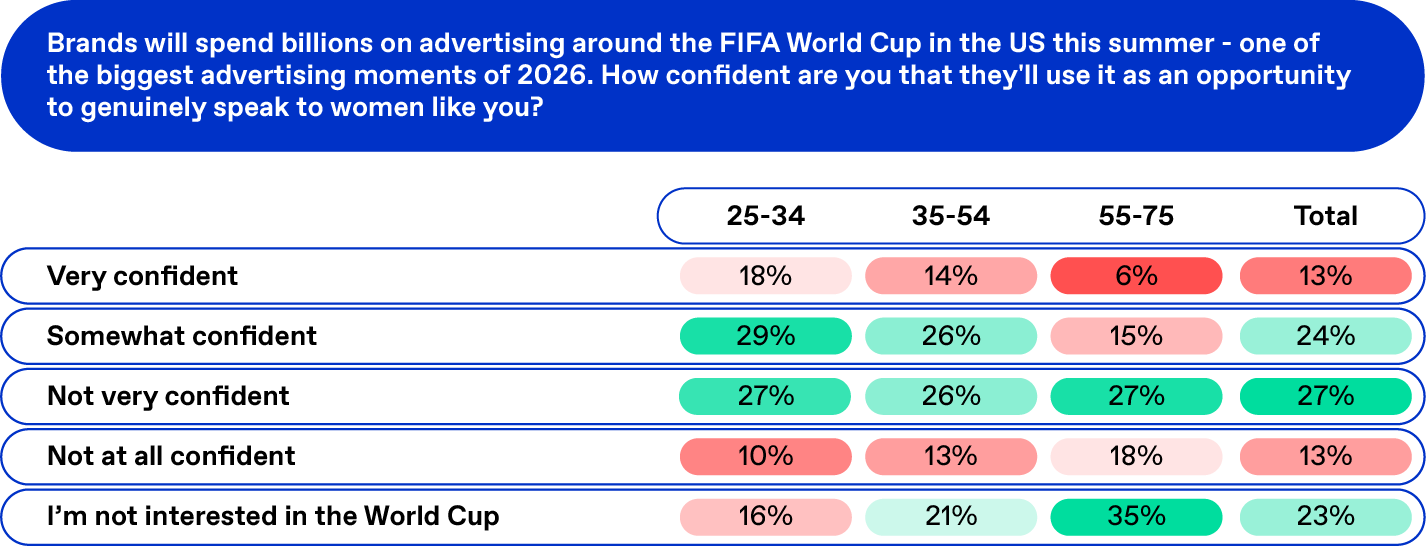
Only 13% say they are very confident brands will genuinely speak to them during the FIFA World Cup 2026.
Brands will invest billions around the tournament, yet most women are already entering that environment with low expectations. Without more thoughtful, inclusive creative, media spend at this major event just risks amplifying the same disconnect, but louder.
If women don’t feel seen, brands don’t grow.
And when women start feeling unseen in their 30s, shift spending away from brands that miss the mark and question whether advertising efforts are genuine, the impact shows up directly.
Brands that win will be the ones that show up consistently (not just seasonally) with creative that reflects women’s real lives at every age.
Stay up to date with our latest insights, tips, and industry news.