Learn how McDonald's has partnered with Zappi to build its test-and-learn approach to innovation, rather than a "test to earn a good score" approach.
Top football marketing campaigns tap into and heighten day-game excitement, are typically built around the fans and often become cultural icons in their own right (just ask the 14% of people who say the ads are their favorite part of the Super Bowl).
For brands, the world of football continues to be a key category for improving reach, increasing sales and growing brand equity. In fact, the NFL saw TV ad impressions grow by more than 12% year-over-year, while the Super Bowl commands the highest TV viewership of all time, with Super Bowl LIX ranking as the most-watched TV event, boasting 127.7 million viewers.
While the football ecosystem, from governing leagues to local teams to college teams, typically uses well-planned football marketing campaigns to build game day excitement, sell more tickets and merch and help strengthen fans’ sense of community and belonging.
In this post, I explore some of the best football marketing campaigns and walk you through how standout campaigns connect fans to brands in meaningful ways.
Taking a look at some of the most successful sports marketing campaigns in football, we see the same common threads. Great campaigns are often hyper-targeted, personalized to the unique needs of either local or national audiences and tap into players’ sense of community and camaraderie.
Successful campaigns typically go viral and become part of the wider cultural narrative, that means that creatives come to the table knowing and understanding fans in-depth — they know what matters to them, their favorite channels, how they consume and share content both before, during and after the game and the content they want to see both when they win and when they lose.
In comparison, poorly-performing campaigns are often half-hearted in their effort. Marketers act reactively rather than moving strategically, slowly and methodically. They react “just after the moment” to fan sentiment and behaviors, rather than bringing in fan insights into their creative direction at the earliest stages of campaign development.
Let’s dive deeper into some of the core aspects of the most successful football marketing campaigns.
The most successful campaigns use strong, clearly-defined objectives to drive creative direction. They also tie campaign goals to broader brand or business outcomes. Think multi-layered campaigns that engage fans across multiple channels with well-timed content aligned to larger brand and business goals.
As I covered in our past post on sustainability in the CPG space, 74% of consumers say that concerns over the environment influence their purchasing decisions. Hellman’s strategically used their Super Bowl campaign to align themselves with sustainable consumers and promote greater sustainability among the wider fan base.
As one of the most effective football marketing strategy examples of how a brand can use their Super Bowl slot to communicate brand values, strengthen brand purpose and support behavior change among consumers, Hellmann’s rolled out their "Make Taste, Not Waste" campaign for the 2022 Super Bowl. The brand informed consumers that the Monday after the Super Bowl ranks as one of the worst days for food waste in America.
Following the campaign, 71% of Americans said they felt more motivated to cut back on their food waste. While the campaign led to a 24.4% rise in social media conversations that included the hashtag #MakeTasteNot Waste.
Effective campaigns align their strategies to fan interests and behavior. The NFL league tracks over 300 attribute markers for each fan — including viewing habits, fantasy football engagements and in-stadium game attendance; automating their marketing to align with fan behaviors.
Much of the non-live content is engaged with by fans within the first 48 hours after a game. Many brands celebrate peak game moments by posting memes across their social media channels the Monday after the game.
Brands also get in on fan activities like the recent fantasy football boom, with over 30 million NFL fans playing the game. Over 651 brands currently invest in fantasy football advertising and promos — a huge jump from 244 in 2013.
NFL Redzone increased fan engagement with a program dedicated to fans’ fantasy players. The program allows fans to review the main game day moments across the league that’ll have the biggest impact on their fantasy team.
Many advertisers have also capitalized on the fantasy football boom, buying inventory directly on the platform:
"This growth in popularity in fantasy football has seen a broader commercial ecosystem grow around it. The data and analytics elements of the game have parallel interest with betting brands for some fans, enticing an already existing audience onto the platform. Now advertisers are buying inventory within the game itself, including several betting companies, such as Draft Kings and 888sport." - Alex Donaldson, Sportcal
Let’s take a look at the football campaigns that moved the needle, from national to team level.
Successful national league level creative and campaigns are built to resonate across large, diverse audiences. Several Super Bowl ads have gone on to become cultural icons in their own right, well outside of the parameters of football. Like Apple’s “1984” Super Bowl ad, directed by Ridley Scott — one of the creative industry's most iconic ads of all time.
Rather than aiming to become part of the cultural lexicon themselves, many successful national football campaigns build their creative around currently-trending cultural moments.
One strong example of a Super Bowl 2025 ad tapping into a current cultural moment was Michelob Ultra’s “The ULTRA Hustle.” The spot leaned into the rapid rise of pickleball, a sport that’s become a mainstream obsession over the past few years. By casting Willem Dafoe and Catherine O’Hara as absurdly competitive players, the ad humorously reflected how seriously people now take the game. The cultural reference was instantly recognizable, timely and well aligned with Michelob Ultra’s brand positioning around active lifestyles, helping the ad feel relevant rather than forced.
For the 2024 Super Bowl, Uber Eats recreated Victoria and David Beckham's iconic Rolls-Royce scene from their recent Netflix documentary, in which David demands Victoria be honest about the posh car her dad used to drive her to school in when she claimed to the camera crew that she grew up working class.
Humor is another key aspect of many of the most successful Super Bowl campaigns. Quick-witted ads with much-loved celebs often appeal to consumers beyond the stadium. Something e.l.f. Cosmetics understands well.
White Lotus star Jennifer Coolidge once told a reporter that her dream role would be to play a dolphin. In response, e.l.f. Cosmetics featured her in their 2023 Super Bowl commercial, where their viral Power Grip Primer helped her fulfill her dream role. On seeing herself in the mirror, the star retorts, “My gosh, it's like I came from the sea!' before saying, 'I look like a dolphin, a baby dolphin.”
Unlike national-level campaigns that look to appeal to a high number of consumers without a specific interest in the sport, team-level campaigns are typically more personalized for the fans. These campaigns are often localized or built around loyal fan orientated activations.
Many local teams look to connect more deeply with the fans by providing "helmets off" content that gives them insider insights into their top players. They give fans digital access to locker rooms, unique interviews with players, live player reactions and behind-the-scenes team bonds.
Across social media, teams personalize content for fans with local prize draws, fan-made content and gameday fan reactions. Take the Jacksonville Jaguars, which have a social value of $1.5 million, who regularly share fan predictions across their social profiles.
Many of the most successful campaigns are built on audience-first thinking. Effective campaigns go all in to engage fans both online and in-person in the style of Pepsi’s Tailgate Crashers campaign. The campaign features NFL stars Josh Allen and Justin Jefferson as the Pepsi Crashers. The stars appear at stadium tailgates, from MetLife to Lincoln Financial Fields and hand out cans of Pepsi alongside gameday food.
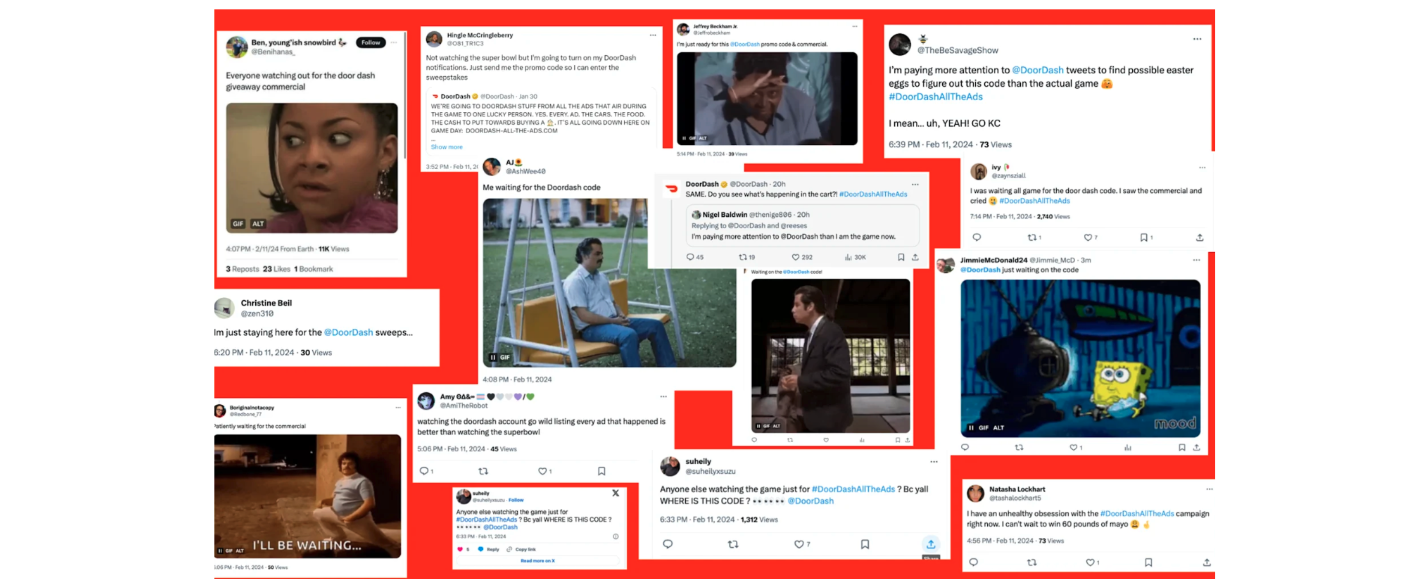
DoorDash capitalized on the cultural phenomenon of Super Bowl commercials by promising to deliver one winner who watched every single ad each product featured straight to their door. As part of their campaign, DoorDash rolled out suspense-building teaser films, social content and influencer shoutouts alongside their official Super Bowl commercial.
As soon as brands announced their Super Bowl ads, the brand dropped their prizes into a DoorDash cart viewable by fans on a custom-made site. Come game day, fans had to successfully solve a promo code to be in with a chance of bagging the goods.
Cue the social media hype:
Source: Wieden + Kennedy
And we couldn’t talk about the best football and Super Bowl campaigns without talking about user-generated content.
Campaigns that draw fans into content generation are one of the most effective ways to tap into game day excitement and build fan engagement. User generated content typically boasts a 6.9% higher engagement rate than brand-made content.
Dorito’s iconic Crash The Super Bowl, which began in 2006 and was recently revived, was one of the first examples of user-generated content in all of advertising. The campaign invites fans to create their own Dorito’s-loving ad, with the winner’s spot released during the Super Bowl.
For the 2025 Super Bowl, more than 2,000 entries were whittled down to three finalists: “Abduction” by Dylan Bradshaw and Nate Norell, “Barbershop” by Zach Shenouda and Ryan Robinson and “Charades” by Mark Blitch. For the next two weeks, fans cast their votes — picking Bradshaw and Norell’s ad, awarding them $1 million prize money.
Let’s take a look at the main ways digital channels have changed football campaigns.
Some of the most effective football marketing campaigns have capitalized on social media communities outside of the typical fan realm.
As one of the best football digital marketing ideas, e.l.f. Cosmetics went beyond targeting the average football fan online in their latest Super Bowl campaign. The brand rolled out interactive livestreams across TikTok, Twitch and YouTube — sharing both game-day beauty advice as well as football commentary.
Twitch was a huge part of the strategy, with e.l.f. taking the game-day rush beyond the average football fan. Livestream watchers could grab their beauty products straight from the app, allowing them to buy their beauty products without missing any of the livestream.
The brand says:
"e.l.f. Cosmetics went beyond targeting the average football fan, looking to attract consumers across [the spectrum] who don't typically buy tickets for the stadium. They rolled out interactive livestreams across TikTok, Twitch, and YouTube sharing both gameday beauty advice as well as football commentary. Watchers could grab their beauty products straight from the app, allowing them to buy their beauty products without missing any of the livestream."
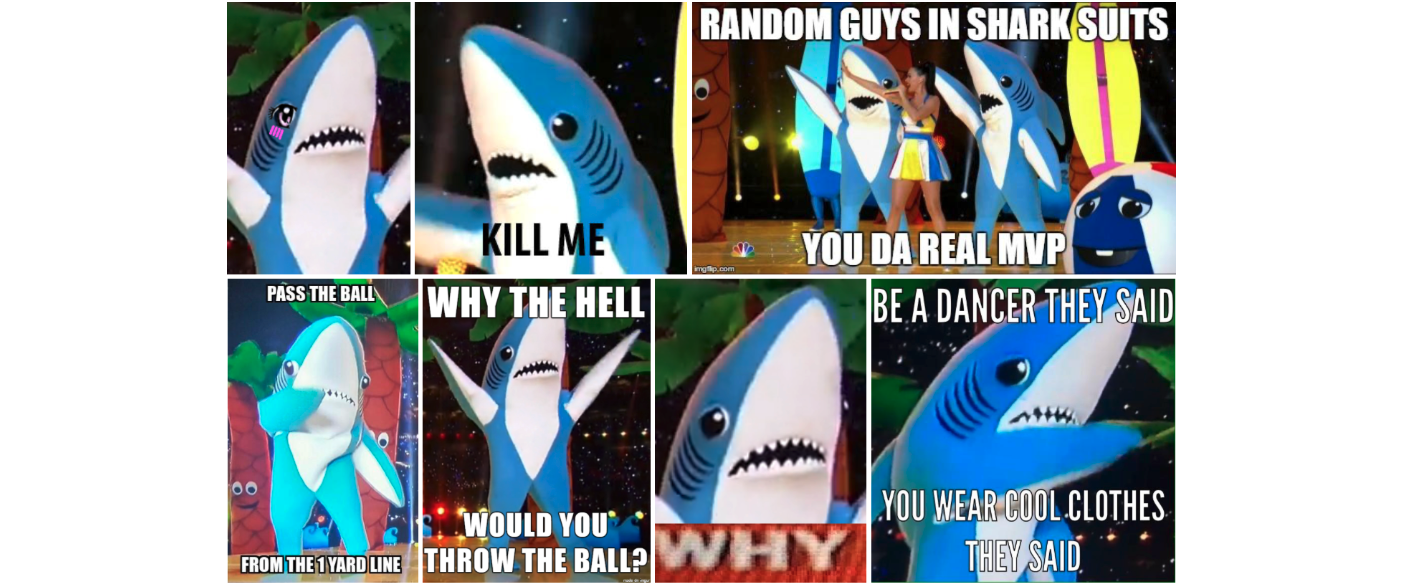
Going beyond the stadium is a running theme when it comes to brands capitalizing on the iconic feel and moments of the Super Bowl. Brands have often played off of the weirdest, funniest or most iconic moments of the game — creating viral memes and content that gets shared by communities that aren’t classic football fans. During the 2015 Super Bowl, Katy Perry’s “uncoordinated” or improvised backup dancer quickly went viral, sparking several internet memes.
Cue the internet:
Source: Know Your Meme
Viral Super Bowl moments are often repurposed into impactful campaigns. Following left shark’s viral fame, Wieden + Kennedy New York's "This Is SportsCenter" campaign for ESPN followed up with an ad that featured the "two sharks" returning to their day jobs at the ESPN offices in Connecticut. The ad uncovered the real identities of the dancing sharks.
In addition, many brands also use fan-favorites to expand the reach, featuring popular players in their campaigns — including the Pepsi campaign featured above. While teams such as the Los Angeles Chargers have gone viral across the socials by sharing "unsung heroes", celebrating overlooked plays and contributions by specific players during the season.
Data-driven personalization is a core part of many of the most successful football marketing campaigns.
Looking back on the 300 attribute markers the NFL tracks for each fan — personalization is a huge part of their success in effectively selling tickets, merchandise and products from partners. This huge wealth of data allows the NFL to create hyper-personalized messaging that mirrors fans’ preferences. Josh Rabenovets, Vice President of Fan Engagement and Product Marketing for the NFL says:
"For the NFL, great fan engagement means delivering experiences that feel personal and relevant to every fan — whether they’re a lifelong season ticket holder or discovering the game for the first time. The challenge and opportunity is to meet people where they are, in ways that resonate.
And that starts with a deep understanding of fan preferences and behaviours and connecting with them in the right way at the right time. That might be a push notification with behind-the-scenes 49ers content for a fan in San Francisco or personalized messaging about international games for a fan in London. Success isn’t just about reach but about building real connections. When fans feel understood, their passion for the game grows."
By analyzing geolocation data and ticket purchase history, the NFL tracks fans who have moved from one location to another, like a Dallas Cowboys fan that now lives in Nebraska — to still meet their audience where they are. Throughout the 2025 season, the League effectively rolled out programmatic Connected TV (CTV) and mobile push notifications to deliver tailored away game travel packages and local watch-party invites.
Sponsorships have been a core part of football marketing for several decades. Jamie Khan at The Football Week perfectly captures the value of brand partnerships with leagues, teams and tournaments:
"If you want to understand why “league partners” and “official sponsors” sit at the center of modern sports marketing, look at the scale and certainty they buy. Global competitions deliver guaranteed, repeatable moments where audiences show up in the hundreds of millions, media schedules are locked for years, and brands can plan multi-market storytelling with the rights to the IP fans love."
No longer just goalpost wraps, brands have become far more strategic about how they increase their brand visibility on gameday with many making brand elements a core part of the fan experience.
Nielsen shares that football sponsorship campaigns with activations typically see a 10% higher lift in purchase intent than passive placements. While perimeter signage and sideline branding are still common, activations like prize draws, live content and immersive brand experiences add to the game day experience; driving brand memorability and engagement.
At the London NFL games for instance, Subway’s Win a Sub competition was rolled out across the screen with the brand awarding the winner with a platter of best-selling sandwiches.
The NFL has several official partners across core product categories. These brands go beyond passive partners, using sponsorship storytelling to deepen their connections with fans. Jersey Mike's is the League's official sandwich partner, while Abercrombie & Fitch acts as official fashion partner and has rolled out team-branded apparel and campaigns featuring fan favorites like CeeDee Lamb, Christian McCaffrey and Amon-Ra St.
It’s important to link sponsorship to measurable brand or business outcomes. Get specific — what are you trying to achieve with your sponsorship? Increased brand awareness? More sales? A boost to your brand equity?
Here are some of the main metrics brands use to track and understand the impact of their sponsorships:
Asset-level attribution: Use AI platforms like Zoomph to measure which specific assets deliver the most brand lift, from ribbon boards to sweatshirt logos.
Brand sentiment: What do people say about your brand online both during and after the game? Brand-sentiment measurement tools like Sprout Social can help you track what consumers are saying online and assess whether your sponsorship left an overall positive, neutral or negative impression with consumers, as well as an up-to-date view of the signals that shape brand health, so you always know what’s shifting and why.
Sentiment velocity: Sentiment velocity measures how quickly positive brand sentiment spreads through the fan base during a game. Say a branded snack food is featured during the game. Sentiment tracking tools can track the "conversion lift" for online searches for that particular brand during the 60-minute game window.
Get continuous in-depth insight into how people experience and respond to your brand in-market.
The most successful football campaigns share common threads: Emotion, relevance and the perfect balance of creative risk and data-backed decision making.
As I cover in our past post, emotional advertising is typically up to 31% more profitable than purely rational advertising.
Game day is all about excitement, community and passion for the team and game. In particular, when fans’ teams win — they get to enjoy a cascade of feel-good brain chemicals like dopamine and serotonin, helping to solidify the win as a core positive memory.
The most successful campaigns understand and capitalize on this, building momentum around team pride, cultural narratives and the biggest game-day plays — from memes capturing fans and players’ celebrations to delivering rewards and prizes for fans on the winning team.
"You’re not selling match tickets — you’re selling belongings.
You’re not selling jerseys — you’re selling identity.
You’re not selling a youth academy — you’re selling hope.
You’re not selling hospitality boxes — you’re selling status and connection.
You’re not selling sponsor visibility — you’re selling emotional association with passion.
You’re not selling content — you’re selling a voice that fans trust and love.
That’s the shift.
And once you make it, your marketing doesn’t just sell.
It sticks. It matters.
Because the magic isn’t in the transaction.
It’s in the transformation.
The shift that happens in the fan.
The meaning they take away."
— Daniel Carciug, Medium
The most strategic brands know how to balance creative risks with data-backed insights. These brands have an in-depth understanding of fans, their target customer base and “unexpected fringe consumers” who may be drawn in by game-day commercials, memes or in-stadium events.
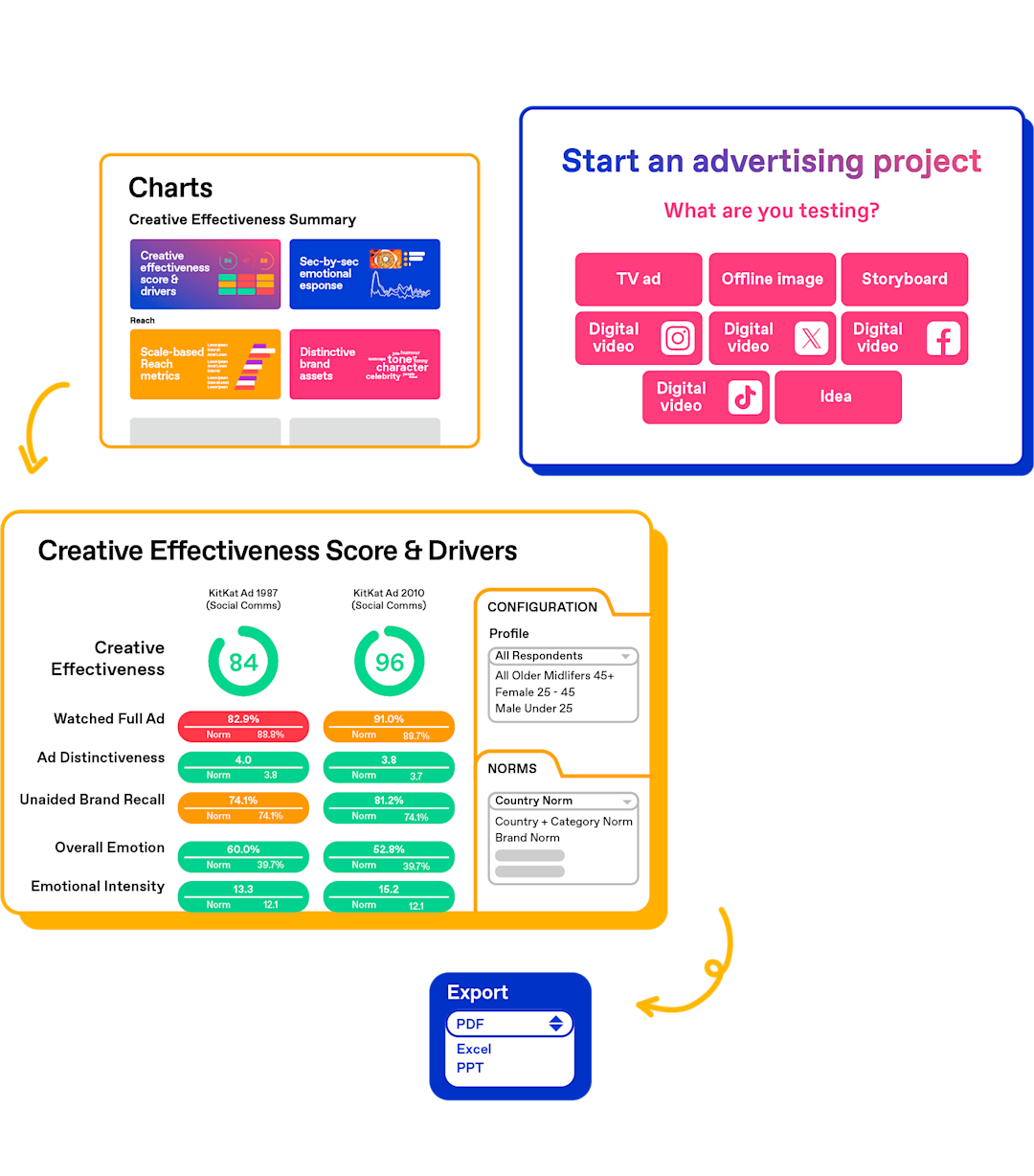
But each creative decision must be data backed. They get consumer feedback often and early, building momentum with agile feedback loops that allow them to pinpoint, measure and refine the perfect creative hooks. From concept to content, Zappi's Advertising System allows brands to directly collect consumer insights that can provide foundational support and connected learnings to help brands create successful campaigns that deliver measurable brand and business success.
Here’s how the most effective marketing teams test and optimize their football marketing ideas to help deliver success come game day.
Leading marketing teams reduce risk and sharpen their creative concepts well before launch. Especially when it comes to the $8-million-dollar Super Bowl ad slot, poorly-executed and conceptualized creative that fails to impress consumers is an incredibly expensive “marketing mistake.” Smart marketers test early and often, using consumer feedback to guide ad development from the earliest stages.
Strategic marketers refine the effectiveness of the ads to a granular degree by testing smaller ad elements, from calls to action to slogan timing.
Zappi’s Amplify Advertising System allows marketers to track consumers’ moment-by-moment emotional responses to their ads, from laughter to love for their team. Marketers can even use Zappi to test consumers’ responses to their core ad elements including messaging, imagery and music.
“Since partnering with Zappi, our creative effectiveness has improved by 30% across all our advertising. This equates to PepsiCo gaining hundreds of millions in value!”
[[- Stephan Gans, SVP Chief Consumer Insights & Analytics Officer, PepsiCo]]
Let’s take a look at how you can build your own top football marketing campaign.
As I explore above, the most successful football marketing campaigns tie directly to business and brand goals. Set up a precise definition of success that all stakeholders agree to and set your objectives and KPIs early.
Whether it’s conversion lift, brand sentiment or emphasizing your brand values and supporting sustainable behaviors like Hellman’s, choose KPIs and objectives that align with wider brand, marketing and company goals.
Memorable football marketing campaigns are always built around the fans.
They’re founded on direct insights into the channels fans use, the content they engage with and the activities they enjoy that surround the game (from entering prize draws to managing their fantasy leagues).
Get clarity on the channels that are most popular with fans, tracking the overlap between fans and current or target customers. Fans typically share game-day highs and engage with memes and videos across socials both before, during and after the game — making a strong-mobile first strategy on channels like TikTok and YouTube a strategic choice for targeting fans.
Track and measure immediate campaign ideas and understand which key elements are shaping consumer sentiment and driving engagement.
Use connected consumer insights platforms like Zappi to get a multi-layered look at what’s driving ad performance, and test key metrics including sales impact, ad distinctiveness, brand linkage, message clarity and overall emotion.
And don’t stop there! Use this data to inform and guide future football campaigns, helping to make your next campaign an even bigger success with the fans.
Stay up to date with our latest insights, tips, and industry news.