Contribute your thoughts to our annual insights report 💬
TAKE A QUICK SURVEYCampaign asset testing for the age of social video

Today’s marketing campaigns operate at a new scale. A single campaign can include dozens or even hundreds of assets, making validating them a challenge. It’s not only the number of assets to look at, but also the number of channels and audience variations.
Engagement metrics are useful after the campaign, but for marketers who want to validate their multi-channel creative before finalizing campaigns, there has been little data to go on. Teams want to strengthen the brand with real consumer feedback as early as possible, rather than waiting until after the fact. That’s the creative validation gap.
Today’s campaigns have scaled faster than creative validation.
In this article, I'll explore what campaign asset testing is, why traditional creative validation hasn't kept pace with today's content ecosystem and how new approaches are making it possible to evaluate far more creative without slowing production.
Amplify AI
Learn more about Amplify AI and how it provides fast brand signals at scale.
Campaign asset testing is the practice of evaluating individual campaign executions to understand whether they are likely to earn attention, communicate the intended message and strengthen the brand.
The concept applies to the growing universe of paid creator partnerships and audience or message variations beneath the larger campaign idea. You may have experienced the fragmentation of one big idea into multiple smaller decisions in your own work.
Take CeraVe’s 2024 “Michael CeraVe” campaign for example. Over a three-week teaser campaign, the brand published social posts, influencer content and other creative content that playfully suggested Michael Cera was behind the skincare brand. The hero ad at the end of it all was aired at Super Bowl LVIII, bringing the joke back to CeraVe’s dermatologist-developed positioning.
Such a campaign can generate an entire ecosystem of assets, from creator reactions to teaser clips to a longer form explainer.
What counts as a campaign asset?
Modern campaigns are no longer built around a single hero ad. One campaign idea can generate dozens or even hundreds of individual assets, each designed for a different audience, platform or stage of the customer journey.
Campaign assets can include:
Paid social videos
Creator and influencer content
Platform-specific edits
Localized creative
Audience or message variations
Each asset represents a creative decision. Campaign asset testing helps marketers evaluate those individual executions before or during a campaign so they can prioritize the assets most likely to strengthen the brand.
Rather than measuring platform performance after launch, campaign asset testing helps answer questions such as:
Creative Power: To get a read on the asset's overall creative strength, plus scores for Reach, Resonance and Response
Emotions: To understand how consumers react and whether it makes people feel something that benefits the brand?
Strengths and Opportunities: To identify what’s working and what areas are in need of optimizing or revisiting
This is different from post-campaign measurement. Campaign asset testing and creative asset testing help predict how creative is likely to perform before or during a campaign. Post-campaign measurement shows what actually happened after the work reached the market.
Together, they help marketers make stronger creative decisions before launch and smarter investment decisions afterward.
Separate from creative asset validation, brand asset validation and brand asset testing is another approach worth mentioning that helps marketers understand if recognizable cues remain effective as campaigns expand. This can also be helpful when managing several creative assets. Logos, taglines, distinctive colors, sonic branding, characters or packaging can all be recognizable cues.
For example, Netflix has the “ta-dum” sound, and McDonald’s has the Golden Arches. These sounds and images are instantly recognizable no matter where you are in the world.
Those recognizable assets become even more important as campaigns expand across creators, formats and markets. Brand asset testing can show whether those brand cues remain recognizable throughout that growing ecosystem.
As a marketer, you want consumer feedback to help shape the campaign direction. There’s nothing like receiving real-time market signals and being able to make adjustments. However, the problem is that today’s creative workflow has outgrown the traditional research workflow.
The existing workflows for concept or copy testing can’t stand up to the explosion of social-first creative. When you start working with creators and influencer partnerships, you deal with dozens or even hundreds of video and image variations, creating a lot more to track and measure. Add in a content calendar that never stops, and the old workflows can’t keep up.
Traditional research was built for depth rather than volume, requiring budget, turnaround time and internal coordination — all of which can fall apart when applied to volume and speed to market. With such constraints, it’s no wonder teams feel forced to launch social assets without understanding their potential impact on brand perceptions.
But while performance metrics such as click-through rates, engagement, view-through rates, shares and CPMs help teams understand whether an asset is reaching people efficiently and achieving the desired effect, they can’t go to the next layer down.
A creator video can earn strong engagement simply because viewers like the creator. A short paid social ad can generate efficient clicks. Metrics show what happened, but they don’t tell markets if the brand was remembered and the message understood, meaning marketers don’t know whether the creative strengthened brand associations or improved brand perceptions.
Turo’s “Skip the Rental Counter” campaign shows why those questions matter. The team tested several creative concepts before finalizing a splashy Philadelphia campaign. They found some of their favorite concepts didn’t show the strongest potential. Armed with those insights, they were able to choose a different creative direction before committing a major media investment. Philadelphia ultimately became Turo’s fastest-growing U.S. market, which demonstrates how creative validation can influence business outcomes before a campaign scales.
“Philly ended up becoming the fastest-growing US market for us a few months after our campaign launch. Zappi gave us the confidence that our OOH and TV creative would work, and it pulled through."
- Matt Kerbel, Head of Global Brand Strategy at Turo
Of course, it’s not feasible to run a full traditional study on every social asset, but you can layer your approach. Use deeper human-led research for the biggest creative decisions, alongside faster AI-enabled evaluation for the larger volume of assets.
These newer approaches use predictive models and synthetic respondents trained against human-response data to provide faster, directional signals across large creative libraries.
Rather than waiting until campaigns are live, teams can compare creative while decisions are still being made.
Campaign asset testing is most useful when it supports decision-making within the workflow.
Consider a skincare brand preparing to launch a new serum. The hero campaign is already approved. Now the team is working on creator content, paid social videos, product demos and regional edits. Asset-level signals can help at four points in the workflow:
1. Before production
When marketers can screen early concepts, scripts or storyboards to identify the most useful hooks; they can choose the best performers.
For the serum launch, that might mean comparing three creator routes: a “morning routine” video, a dermatologist-led ingredient explainer and a before-and-after demonstration. The team can review the metrics to decide which ideas are worth producing and which didn’t land as hoped.
2. Before launch
Once assets are ready, teams can compare the executions competing for paid support. Perhaps you’re comparing a six-second product demo for social feeds. The data will tell you the top performers.
This level of campaign asset validation at scale enables you to test early and refine the creative before committing to budget.
4. During campaigns
In-market performance data can show which assets are earning views, clicks or efficient reach. Asset testing can tell you whether the work also communicates the intended message and reinforces the brand.
4. After campaigns
The final opportunity is to turn individual asset results into reusable learning, and this is when it compounds.
Over time, the skincare brand may find that creator content performs best when the product appears in the first three seconds, that ingredient claims need a visual demonstration to be understood or that a particular color and packaging cue consistently improves brand recognition.
Those patterns can inform the next brief, not just the next edit. This is where campaign asset testing becomes a system for improving creative decisions across the full lifecycle.
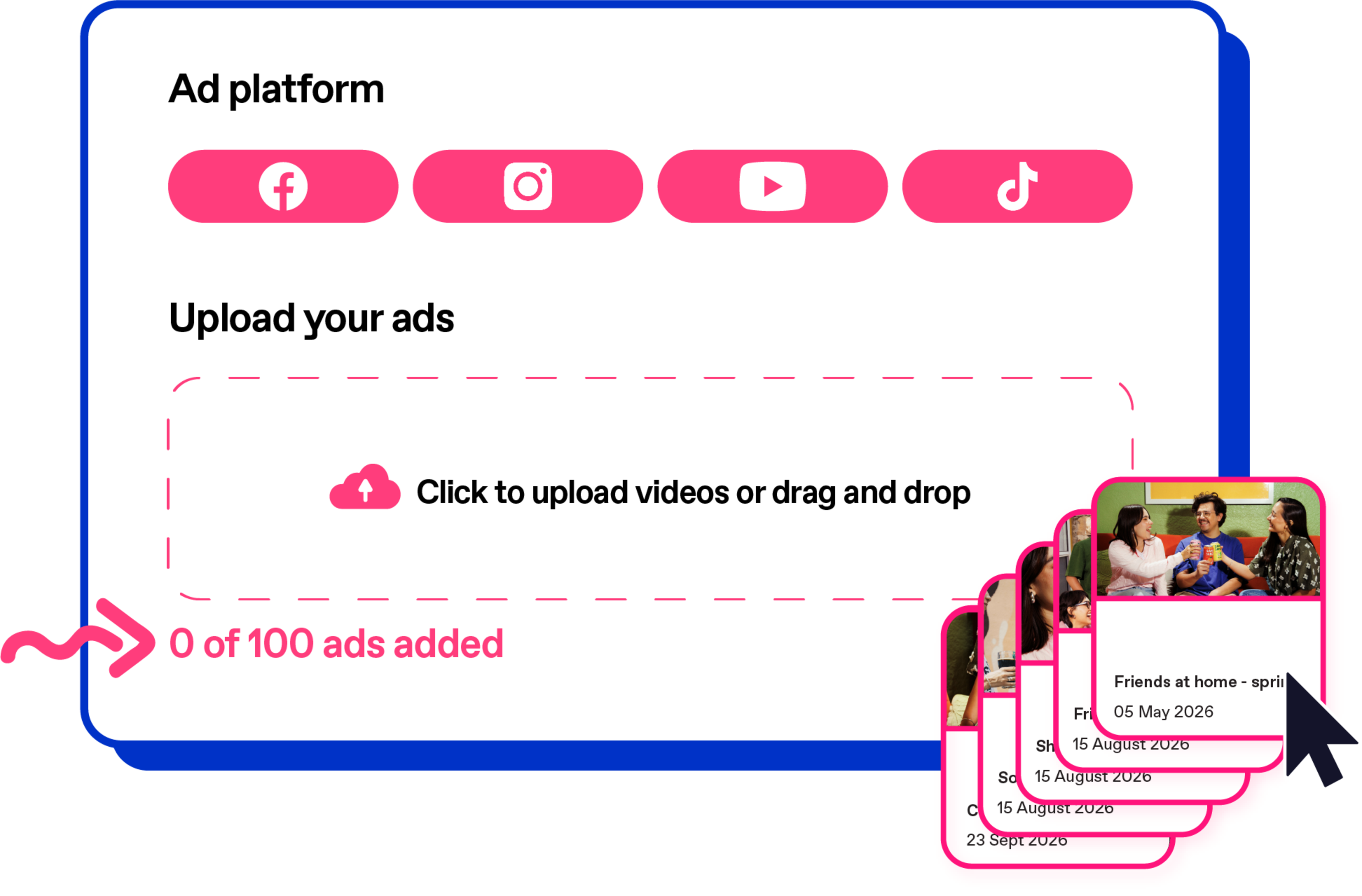
Zappi’s Amplify AI is designed for testing high volumes of social video assets, social ad testing and broader advertising asset testing.
It uses machine learning trained on Zappi’s proprietary human-response data and synthetic respondents to provide AI-predicted brand signals across a large library of creative. Teams can receive those signals in 15–30 minutes, giving them a faster way to compare assets, spot potential weaknesses and decide where to focus attention.
That might mean identifying paid-social edits that need a clearer brand cue, finding creator videos where the product benefit is not coming through or prioritizing the executions most likely to reinforce the associations a campaign is designed to build.
Amplify AI does not replace deeper human-led testing for hero creative, major launches or decisions that require detailed diagnostic feedback. It complements that work by extending consumer-informed evaluation to the social assets that would otherwise rely on internal judgment, platform best practices and in-market metrics alone.
The result is not more research for its own sake. It is a more practical way to make consumer-informed creative decisions without slowing down content production.
Now that campaigns are more fragmented, there are more creative decisions to make. Even if the decision is around a seemingly small execution like a creator partnership or localized variation, those assets together shape the consumers’ brand experience.
Campaign and brand asset testing helps marketers create a better brand experience by incorporating consumer feedback earlier into creative decisions. Instead of relying solely on platform metrics after launch, marketers can understand which assets are most likely to communicate the intended message, strengthen brand associations and deserve greater investment.
The goal is to give teams a practical way to extend consumer-informed decision-making across the full campaign. This means more creative assets can contribute to brand building and not just filling the content calendar.
Amplify AI
Learn more about Amplify AI and how it provides fast brand signals at scale.


