

Learn how McDonald's has partnered with Zappi to build its test-and-learn approach to innovation, rather than a "test to earn a good score" approach.

For this week’s AdMiration feature, we looked at consumer response to IKEA’s “Coming Home” ad, part of their global campaign that’s initially launching in South Korea, China and Belgium before rolling out to more markets throughout the year. We tested the ad meant to run in Belgium in the US to see how the message resonates with US audiences.
Read on to get our 3-2-1 snapshot of the ad (3 facts, 2 learnings and 1 reflection) and learn how their ad was received based on our data.
You can watch the full version of the ad here.
Set to Lucy Dacus’ cover of “Home Again” by Carole King, the ad opens to a woman in a store packing items into her IKEA bag at the end of the day, followed by a brief montage of other people wrapping up their day — from a young woman in a crowded bar to a man sitting in traffic to a restaurant worker stacking up chairs.
The first woman is seen sending a text that reads “C U soon” as she closes up shop, followed by another brief montage of a man running to catch a train to a couple running under an umbrella through the rain, people biking home and more.
The scene comes back to the initial woman, now on the train, who is smiling to herself as she gets closer to home. Each of the people in the previous montages are then shown entering their homes and what that looks like, all experiences different and unique to them.
As one family gathers around a table for dinner, the pricing for IKEA’s Blanda Matt serving bowl is shown before the ad closes and the words “There’s no feeling like home” appear on screen, followed by the IKEA logo.
3 facts
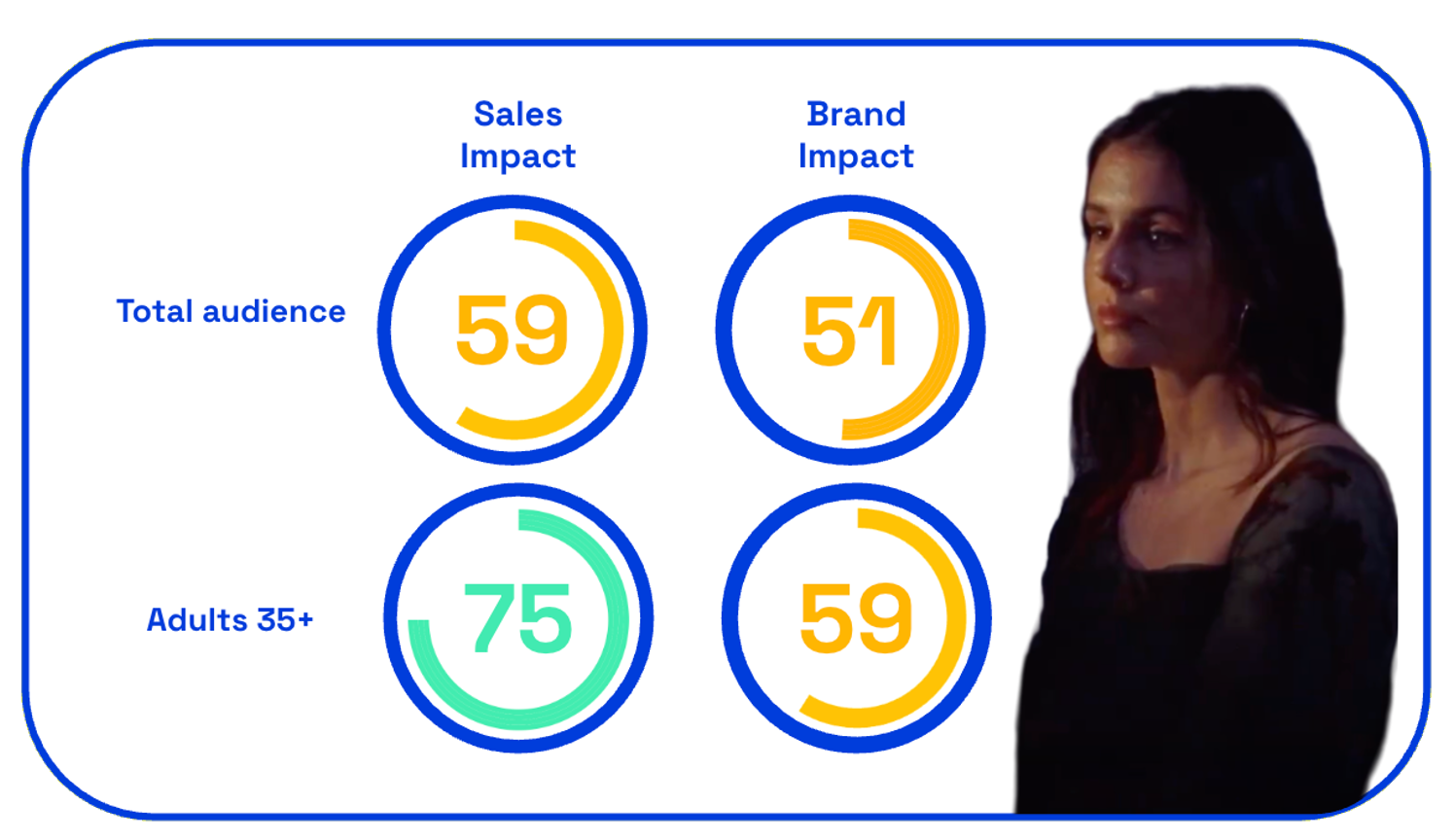
This is a solid ad that lands just slightly better than average in the US overall for driving short term sales (Sales Impact: 59) and brand equity over the long term (Brand Impact: 51).
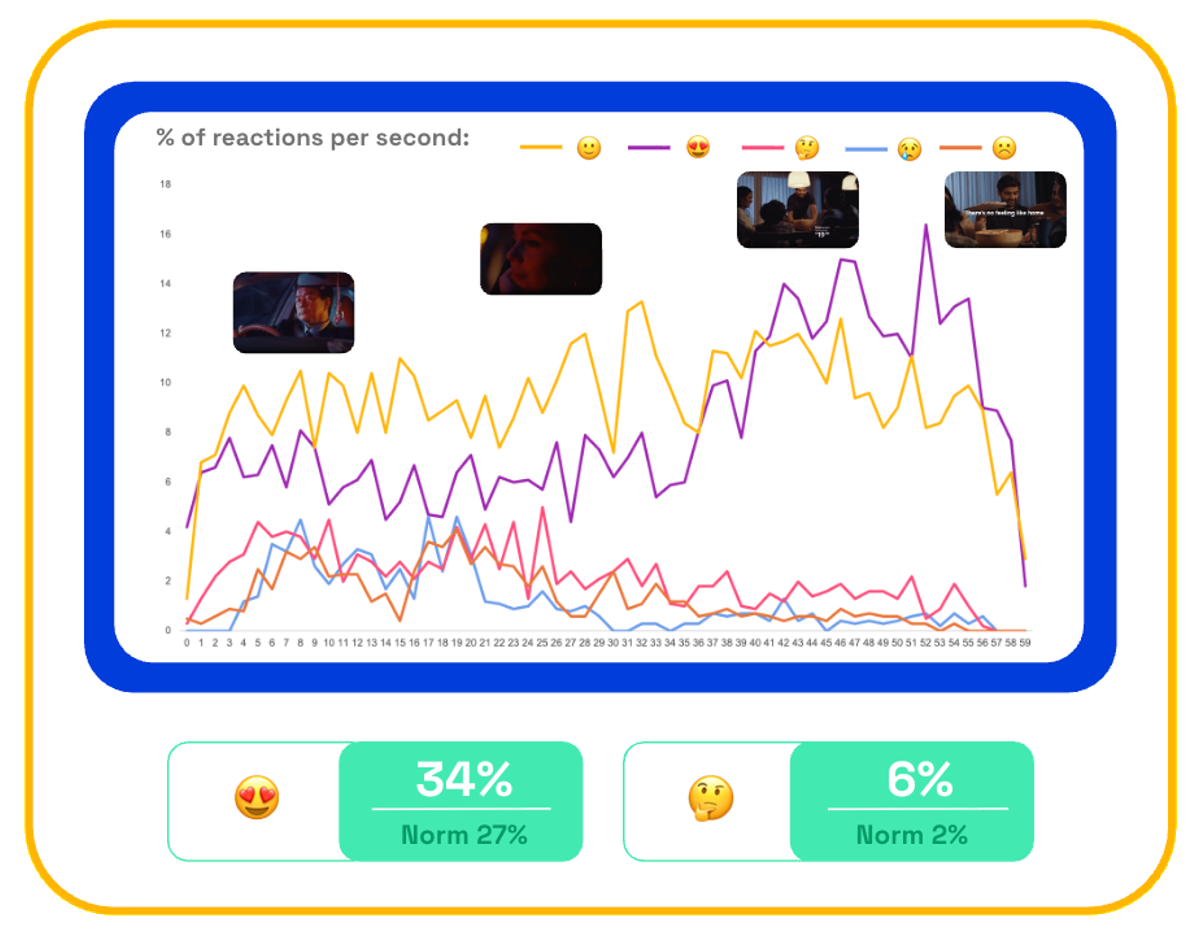
Even though the spot is polarizing, with more confusion (Confusion: 6% vs. 2% norm) and sadness (Sadness: 2% vs. 0% norm) than average, the ad is still more loved than the average ad (Love: 34% vs. 27% norm) with Like showing up as the dominant emotion throughout the first half of the ad and shifting to love as the dominant emotion as all the characters are shown arriving at their homes.
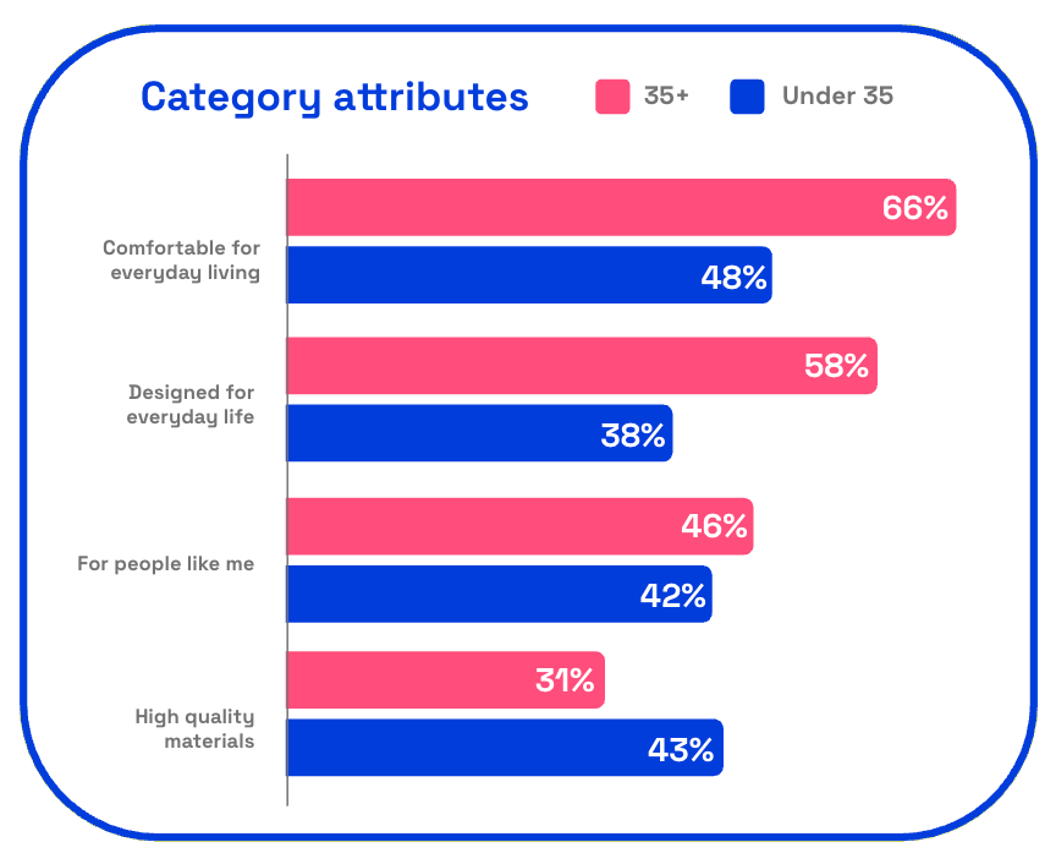
This spot does a great job at conveying important things about the IKEA brand, especially among older audiences —two-thirds of which agreed that the ad conveys that IKEA is comfortable for everyday living and 58% of which also agreed that the ad shows IKEA is designed for everyday life.
2 learnings
Leaning on a true consumer insight can help establish a greater connection. In this case, IKEA did an excellent job at identifying a feeling most people can relate to: How it feels to return home after a long day out in the world. And people certainly related, particularly with the “wanting to get home” feeling and the idea that “home is a safe space” — which was even more true for older audiences (Relevance for total audience: 3.7 vs. 3.7 norm, Relevance for 35+: 3.8 vs. 3.6 norm). Some even shared, "I like how the story unfolded and how it shows that there's no place like home,” “I related to the feeling of coming home to comfort and safety” and “I enjoyed the song, the various storylines of people returning home.”
Implicitly delivering your message can be very effective. Sometimes showing, not telling, is the better route for communicating the message you’re trying to convey. In this case, instead of starting off by saying “There’s no feeling like home,” IKEA shares a montage of what heading home looks like, and ultimately feels like, for different people and family styles in this spot — which creates a lot of love (Love: 34% vs. 27% norm), showing that the message ultimately resonates very positively with viewers as they watch the full story unfold.
1 reflection
If you’re running a global campaign, are you keeping local markets in mind? Ensuring you test your campaign with local audiences before releasing it into their market?
Choosing to localize ads can be a big investment for companies but it's often the right thing to do (and pays off in terms of audience connection and engagement). Think about it: If you’re living in the UK and were served an ad clearly created for people living in South America, it wouldn’t resonate with you as much as it would for them.
In this case, IKEA is launching this ad in specific markets now — South Korea, China and Belgium — before releasing it even more widely later. While we found that the insight behind the global campaign (home is a safe space people are excited to return to) does resonate very well with US audiences, there are a few things that could be adjusted slightly in the execution before this ad is launched in the US to make it most effective for this market. Our research shows that making nuanced variations for local markets can make a big impact.
This isn’t to say an ad needs to be completely changed for local audiences, but if you’re launching a global campaign, local adaptation and cultural relevance can add an extra layer of resonance, which plays a pivotal role in connecting with your audience.
IKEA’s latest global campaign, “There’s No Feeling Like Home,” was created by McCann, with the centerpiece spot “Coming Home” directed by Justyna Obasi and produced by Anorak Film.

Source: AdWeek
Rooted in insights from IKEA's Life at Home report, which shows that two thirds of people globally describe their home as a place of joy, this campaign highlights the profound emotional role home plays in people's lives — centering around that feeling of joy when you step inside the safe haven you call home.
Vincenzo Riili, Global Chief Marketing Officer at Ikea Retail, shares, “We wanted to capture the unique feeling of stepping through your front door—the warmth, relief, and, hopefully, love for your home. It’s something many people can relate to, and we hope it resonates around the world.”
Jim Nilsson and Jacob Bjordal, Global Creative Directors at McCann, add, "Home is more than a place; it’s a feeling like no other. By following people on their journeys home, we've captured a glimpse into the moments that matter. It's Truth Well Told: capturing that universal emotion and showing IKEA's role in bringing that feeling to life.”
The campaign will kick off in South Korea, China and Belgium before launching globally throughout the year. It will run across OLV, TV, paid social, streaming and OOH.
Backed by a true consumer insight, this is a solid ad from IKEA that lands with viewers slightly better than average in the US overall for driving short term sales (Sales Impact: 59) and brand equity over the long term (Brand Impact: 51).
This is even stronger across different audiences, particularly those over 35 (Sales Impact: 75, Brand Impact: 59).
The way IKEA delivers this spot with no dialogue and a compelling track makes the ad stand out, making for a distinctive ad that comes across as unique and different (Distinctiveness: 4.0 vs. 3.7 norm, Brand Distinctiveness: 3.8 vs. 3.7).

That said, it was a polarizing spot, with some mixed reactions from viewers.
People certainly related to the feeling of “wanting to get home” that the ad conveyed as well as the idea that “home is a safe space,” which particularly resonated strongly with viewers who noted how it felt real, authentic and easy to connect with. People also liked how the ad focused on family, friends and togetherness and appreciated the diversity in the ad and how it featured different races, ages, cultures and life stages.
Here’s what some people shared directly:
"I liked everything. The materials, the colors, the comfort, the normal looking living areas, people doing normal, daily things."
"I like how the story unfolded and how it shows that there's no place like home."
"I like the visuals and the diversity of the people and clips shown."
"I like the music and the colors. The ad felt genuine, and not some perfectly staged family. It showed diversity and everyday people."
"Loved this ad. It was very heartwarming.”
"The stories of the people and when they're finally back home, the music was very pretty and could stand on its own, it represented different people and communities, it made you feel like IKEA provides a warm and cozy place."
"I liked the mood of the ad and the music. I related to the feeling of coming home to comfort and safety."
"I enjoyed the song, the various storylines of people returning home."
The music, which played a large role in carrying the story in the ad, was also one of the most frequently praised elements, with most describing it as soothing and beautiful — though it was still slightly polarizing with some calling it “haunting” (Musical Appeal: 4.1 vs. 3.7 norm).

On the other hand, some people found the ad to be confusing (Confusion: 6% vs. 2% norm), as they were unsure who the ad was for until the end and couldn’t follow the repeated montages with quick cuts. Some people also shared that they thought it was too dark to see what was happening and made it feel depressing, with some also sharing that they felt it was too long to get to the point and didn’t hold their attention.
Even though it was a polarizing spot, with more confusion (Confusion: 6% vs. 2% norm) and sadness (Sadness: 2% vs. 0% norm) than average, the ad is still more loved than the average ad (Love: 34% vs. 27% norm).
Diving deeper into how people reacted to the ad, Like is the dominant emotion through the first half of the ad as we see separate people in different situations, but we can see there’s quite a bit of confusion, sadness and dislike as well.
Once the scenes shift to those same people getting home and having moments together with family and friends, the dominant emotion is Love while Confusion, Sadness and Dislike levels drop — with the biggest spike of Love occurring when “There’s no feeling like home” comes onscreen — showing that the message resonates once the full story is unveiled and people love it.
Overall, this shows that the first half of the ad is what causes some conflicting emotions — including confusion as some people struggle to understand what’s happening in the scenes — while the second half is more universally loved as the story becomes clear.
But even with some confusion and a lack of dialogue, the ad still conveys some great things about the IKEA brand, especially among older audiences:
Two-thirds of adults 35+ agree that the ad conveys that IKEA is comfortable for everyday living, while 48% of those under 35 think the same
58% of adults 35+ agree the ad says that IKEA is designed for everyday life, while only 38% of those under 35 think the same
Both age groups feel similarly about the ad saying that IKEA is “for people like me” — likely because of the diversity reflected in the ad
Overall, while it was a slightly polarizing spot, this was a solid ad from IKEA based on an insight that will definitely resonate for US consumers. Clearly, IKEA has landed on an insight that has global relevance!
That said, there are a few aspects that could be changed to make it slightly less confusing for US audiences, as well as some localized and cultural nuances to consider that could help the ad resonate even further when the brand ultimately brings the ad to the US.
IKEA did an excellent job at capturing a true global consumer insight with this one, which is no easy feat! This could easily be an insight the brand plays with for a long time to come, with the opportunity to find more ways to bring this insight to life in powerful and fresh ways over time. We’re excited to see how they roll out the rest of their campaign to other markets. What did you think? Let us know by interacting with our coverage of the ad on LinkedIn.
To make sure you never miss one of our AdMiration analyses, subscribe to our LinkedIn newsletter.
Stay up to date with our latest insights, tips, and industry news.