
Learn how McDonald's has partnered with Zappi to build its test-and-learn approach to innovation, rather than a "test to earn a good score" approach.
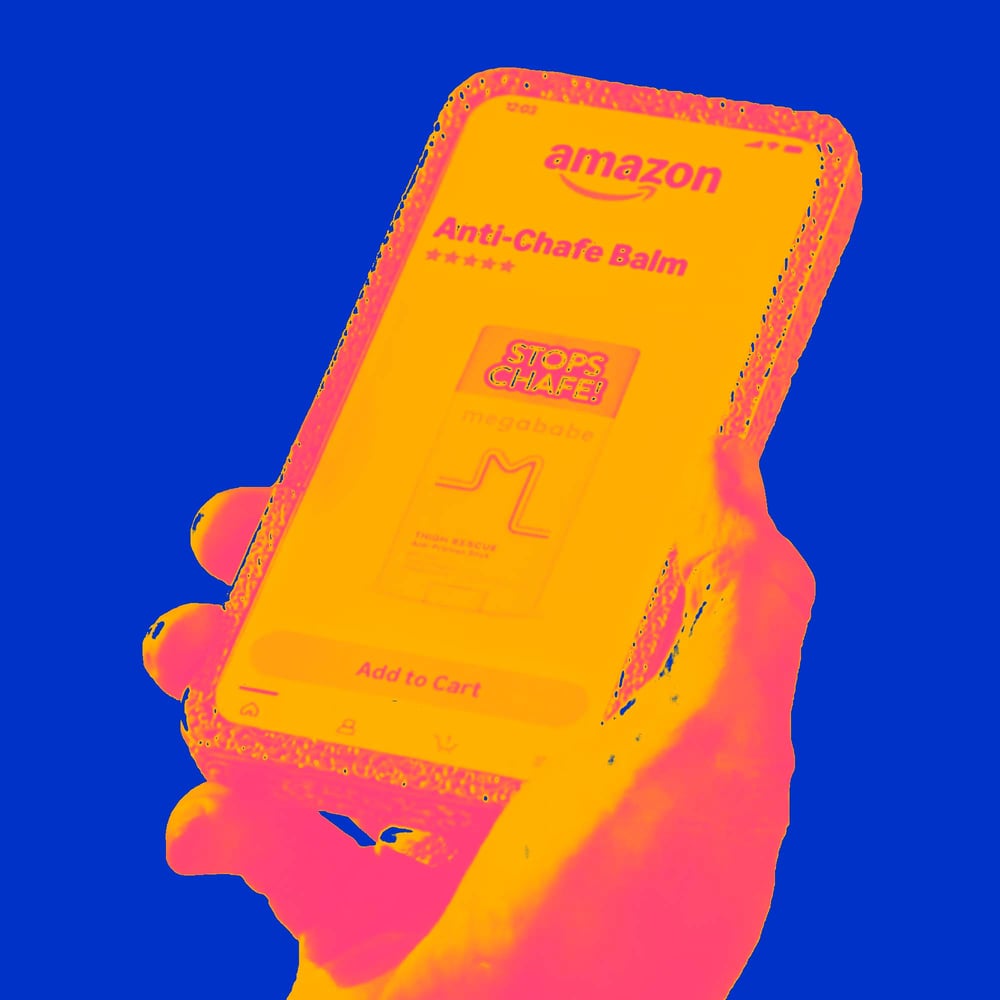
For this week’s AdMiration feature, we looked at consumer response to Amazon’s ”The Good, the Bad, and the Ouchy” ad, part of their “Save the Everyday” campaign, which aired during the Oscars.
Read on to get our 3-2-1 snapshot of the ad (3 facts, 2 learnings and 1 reflection) and learn how their ad was received based on our data.
The ad opens to a close up of a cowboy staring off into a beautiful Western landscape, where a train is spotted chugging across. He turns to his crew of cowboys behind him and says, “Saddle up, it’s pay day.”
The group of cowboys are then seen racing towards the train, as a classic Western soundtrack begins to play, when the main cowboy suddenly loses his hat, causing his long hair to block his vision.
Still on his horse, he pulls up the Amazon app to promptly order a pink silk scrunchie on his phone, then continues to catch up to the chase.
The rest of the group begin climbing aboard the moving train, when the same cowboy pauses again, clearly in pain and falling behind. He pulls up the Amazon app again and orders some anti-chafing balm.
The scene shifts to the cowboys back at their camp, when an Amazon box arrives with the items for the cowboy.
The ad closes with the group of cowboys back at it, with the words “Save on essentials. Save the Everyday.” appearing on screen, ending with the Amazon logo.
3 facts
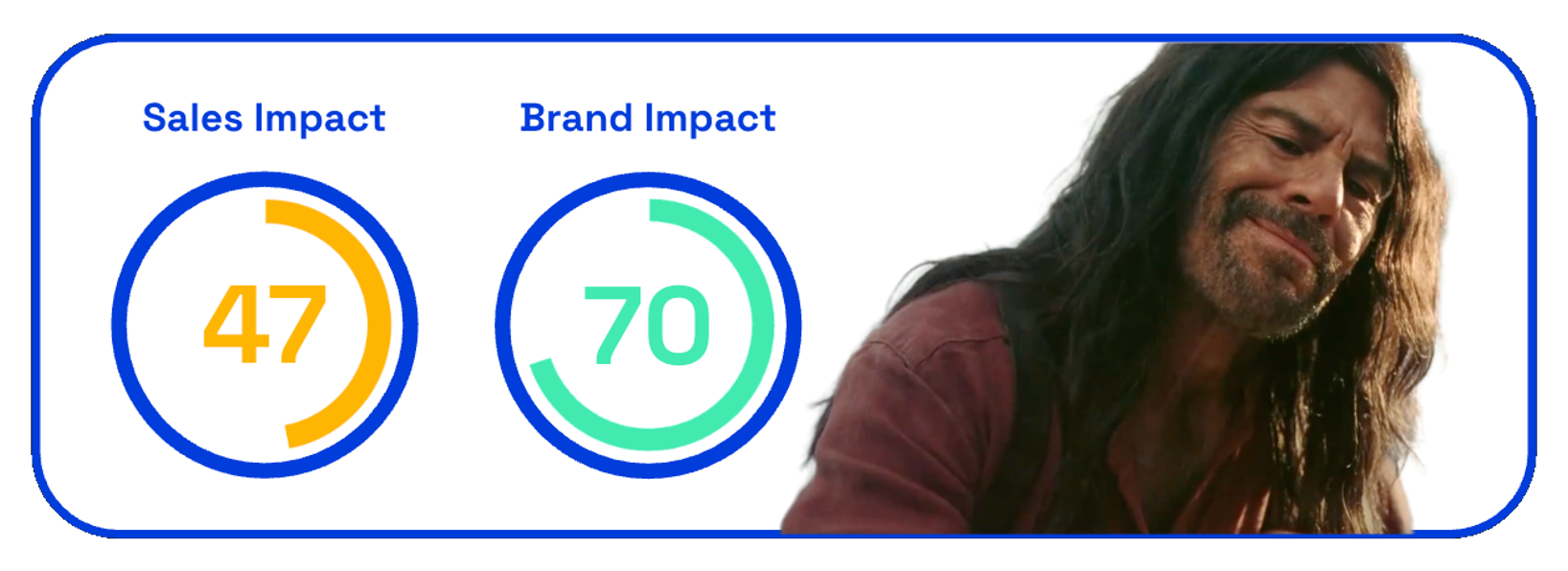
This is a strong brand building ad from Amazon, which lands well above average for long-term impact (Brand Impact: 70) despite a more moderate Sales Impact (47), highlighting its strength in helping Amazon come to mind powerfully and positively into the future.
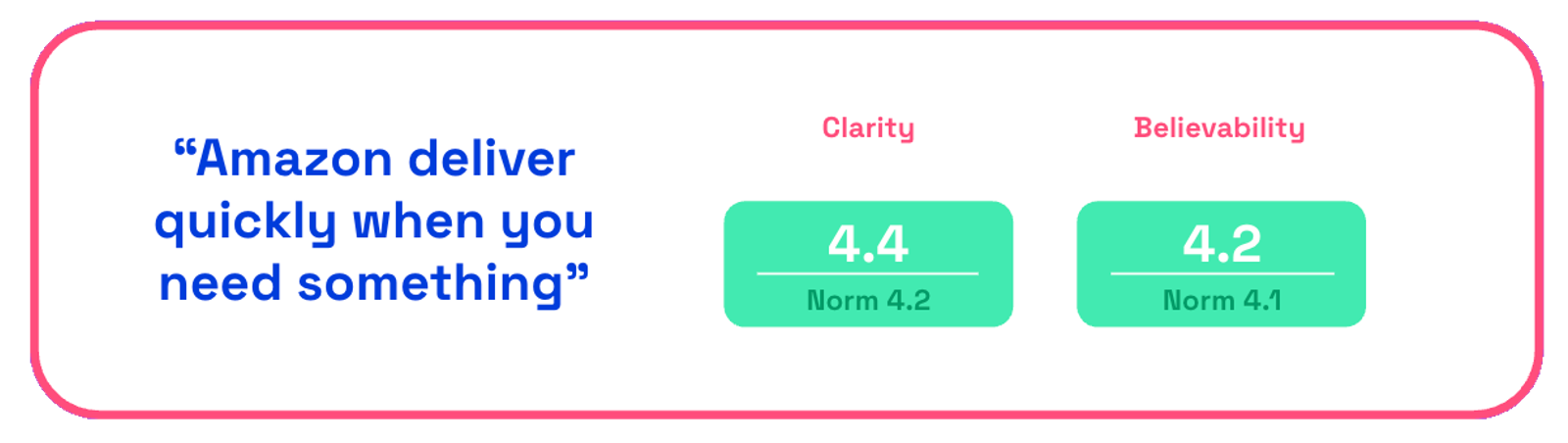
The ad clearly communicates Amazon’s core value, with respondents strongly agreeing that it delivers what they need (Brand Meets Needs: 4.2 vs 4.1 norm) and that “Amazon delivers quickly when you need something” (Clarity: 4.4 vs 4.2 norm; Believability: 4.2 vs 4.1 norm).
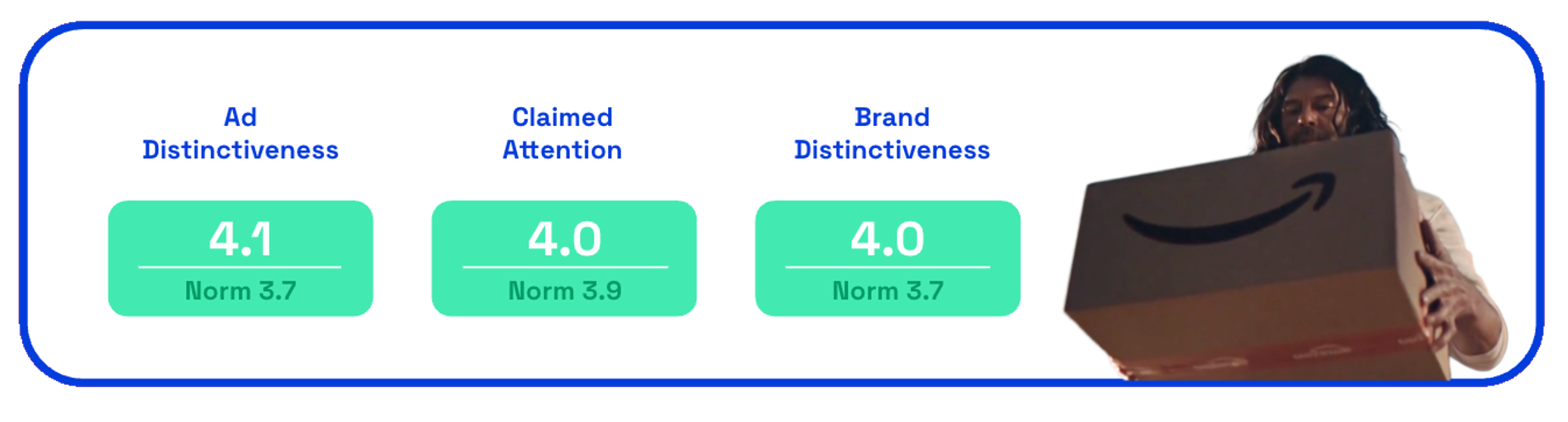
The creative stands out in the category, with above-average distinctiveness (Ad Distinctiveness: 4.1 vs 3.7 norm) and virality (Viral Potential: 62 vs 57 norm), driven by its high-quality Western cinematography and the funny combination of mobile phones, pink scrunchies and fast and convenient delivery within a classic Western movie setting.
2 learnings
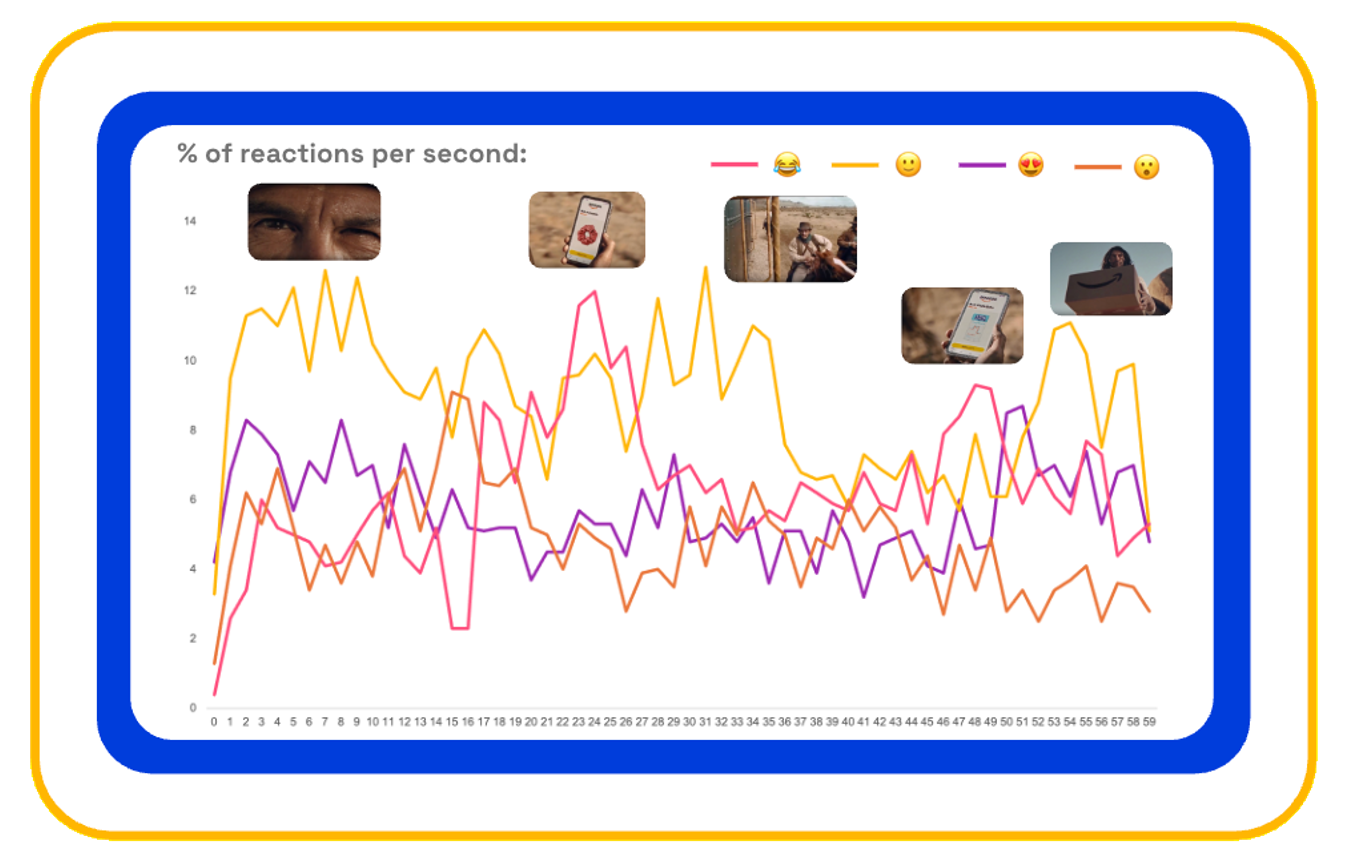
Simple problem-solution storylines work. This ad focuses on small, relatable inconveniences and makes the solution immediately clear. The ad generates positive reactions, with 7 in 10 respondents saying they liked or loved it. Most importantly, laughter peaks at the moment the product is used to order a pink scrunchie (Laughter: 12% vs 7% norm), reinforcing the idea of getting the solution when it matters most.
Showing, not telling is a great way to get your message across. In this case, while there is hardly any spoken dialogue in the spot, the ad does a fantastic job of setting the scene using classic cues to convey a western movie instantly (setting, costumes, music, etc.) and then showing how Amazon solves problems that might be experienced in that setting implicitly. From the immediate “Add to cart” action for the pink scrunchie to the addition of the anti-chaffing balm and the package promptly arriving at the camp — it was easy for viewers to understand the benefits of using Amazon and how easy it is to order what you need, when you need it, leaving viewers feeling that the brand truly delivers what they need (Brand Meets Needs: 4.2 vs 4.1 norm).
1 reflection
Is your ad trying to change behavior or reinforce what people already do?
Amazon’s ad shows that for category leaders, effectiveness isn’t about convincing people to choose you, it’s about reminding them why they already do. By dramatizing everyday problems and resolving them instantly, the ad reinforces Amazon’s role as the default choice in moments of need — and respondents agree, with some sharing: "Fun, interesting, and reflective. The ad shows how to use Amazon while showing a fun scene. It is representative of the fact that Amazon has all kinds of items and how fast they can be delivered" and "I like the fast delivery part of the ad the most. It shows that saving time and convenience is easy."
Even with such a high threshold for increased consideration as a category leader, consideration still rises from an already high 52% to 65% after watching this spot among those who shop at online marketplaces once a month or more often — further indicating that reinforcement like this matters, even if you’re a category leader.
Amazon’s “Save the Everyday” campaign continues into 2026 with the release of its latest Western-inspired spot created by their in-house team, which premiered at this year’s Oscar’s.

Source: YouTube
The campaign initially launched in 2025, with a series of cinema-esque spots that spanned genres, from the action packed “Stain Protocol” to reality TV inspired “Real Housefight” and now Western “The Good, the Bad, and the Ouchy.”
On their latest installment, Jo Shoesmith, Global Chief Creative Officer at Amazon, shares, “We built this campaign around the classic cinema tropes we all love. The Oscars felt like the natural home for it.”
The brand’s clever way of showing how they can deliver what you need, wherever you are, is intended to speak to everyday shoppers navigating daily challenges and curveballs and positions Amazon as the go-to solution.
And the timing is far from incidental in this tough economic climate, where value has become a crucial driver of shopper behavior.
Shoesmith adds, “In this day and age where value is increasingly important for how our customers make shopping decisions, we wanted to remind everyone that they can count on Amazon having the everyday essentials they need when they need them, at a reliably low price. Not only do we do that through the creative, but also the very intentional media placements where Amazon is showing up in those moments when you, or the characters we feature in the campaign, need the day saved.”
This is a strong brand building ad from Amazon, landing in the top 30% of US ads potential to drive long-term brand impact with a more moderate impact on short-term sales (Brand Impact: 70, Sales Impact: 47).
One reason why “The Good, the Bad and the Ouchy” is effective is how it dramatizes a small problem and makes the solution obvious. The storytelling leans more on utility rather than emotion, but still makes for an amusing and entertaining spot with very distinct creative, helping it stay top of mind.
As one respondent aptly shared: "The ad uniquely shows how it doesn't have to be like in the old Western days, you can order things with same day delivery now on a cell phone with ease."
Respondents felt the brand delivers what they need (Brand Meets Needs: 4.2 vs 4.1 norm) and the key message “Amazon delivers quickly when you need something” landed strongly (Clarity: 4.4 vs 4.2 norm; Believability: 4.2 vs 4.1 norm).
12% also found it funny (vs 7% norm), with the key funny moments occurring when the character orders the pink scrunchie and when he orders the anti-chaffing balm from his Amazon app. These positive peaks of amusement coincide with the product being used, ensuring the ad and brand go into memory together.
Some respondents shared:
"I liked the unique concept of using Western cowboys. I found it funny and amusing that the cowboys had a phone and the ad overall was appealing."
"Funny to think a train robber in the Wild West had access to a phone and could get online and order same day delivery."
"I liked the cowboys and the comedy of a cowboy using Amazon to order a scrunchie. It was straightforward and funny."
"It's high-quality, funny, and I completely understand the nuisance of long hair getting in your face.
The cinematic Western setting is what makes the ad feel different from typical online marketplace advertising — no easy feat in today’s environment. This is reflected in the strong distinctiveness scores (Ad Distinctiveness: 4.1 vs 3.7 norm; Claimed Attention: 4.0 vs. 3.9 norm; Brand Distinctiveness: 4.0 vs 3.7).
The ad’s distinctiveness also contributed to its high viral potential (62 vs 57 norm), with one respondent describing it as “a scene out of a movie.”
But the ad’s creative was also effective in the way it honed in on the core category attributes — over half of respondents associated Amazon with being reliable (57%), offering convenient delivery (55%) and being easy to use (53%).
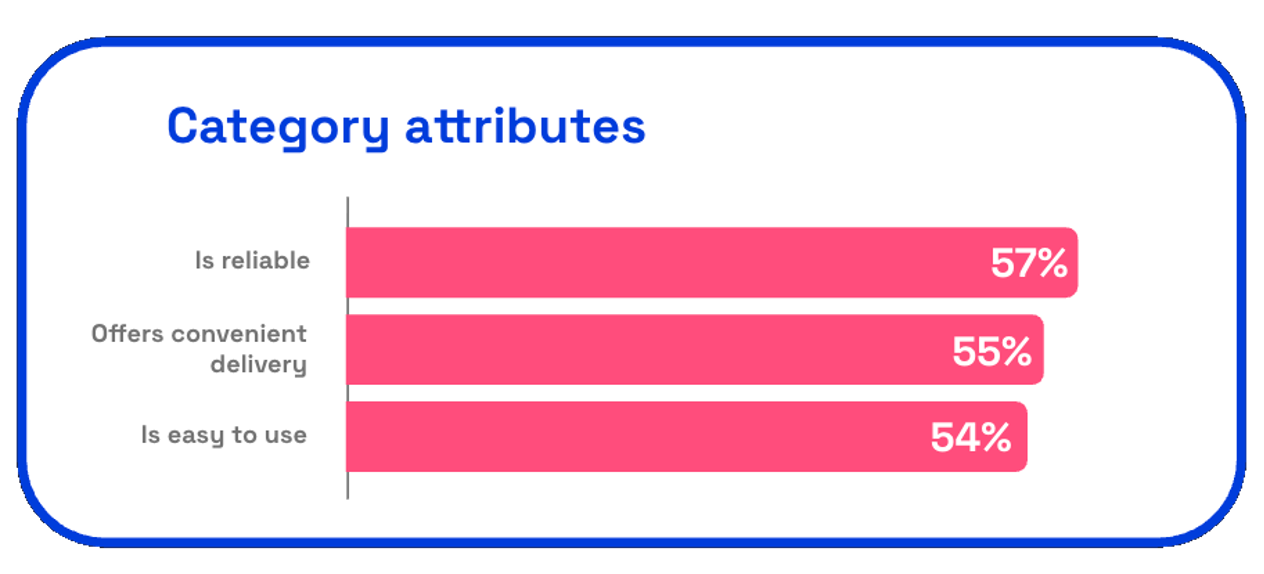
Rather than focusing on the breadth of choice, the ad brings Amazon’s value to life through an easy problem-solving experience. It successfully showed how the brand fits into everyday moments and removes friction seamlessly.
As some respondents shared:
"Fun, interesting, and reflective. The ad shows how to use Amazon while showing a fun scene. It is representative of the fact that Amazon has all kinds of items and how fast they can be delivered."
"I like the fast delivery part of the ad the most. It shows that saving time and convenience is easy."
"I liked the clear message, simple visuals and focus on convenience and fast delivery."
This combination of distinctiveness and convenience conveyed by the ad is what drove such a high Brand Impact score (70), reinforcing both what makes Amazon stand out and why it remains the default choice.
Finally, it's worth noting that Amazon already starts from a very high baseline of consideration in the US. When we asked respondents which online marketplace they’re likely to visit first next time they shop, 45% picked Amazon, meaning there’s limited room for the ad to further grow consideration. This made the lower-than-average purchase uplift (14% vs 22% norm) no surprise to see.
As a category leader, Amazon is already embedded in everyday purchasing behavior and the focus is on repeat usage. That means the job to be done with this ad is to ensure their brand stays top of mind for all relevant occasions and needs, while feeling like a positive choice. And their spot does just this.
That said, consideration still rises from an already high 52% pre-exposure to 65% post-exposure among those who shop at online marketplaces once a month or more often.
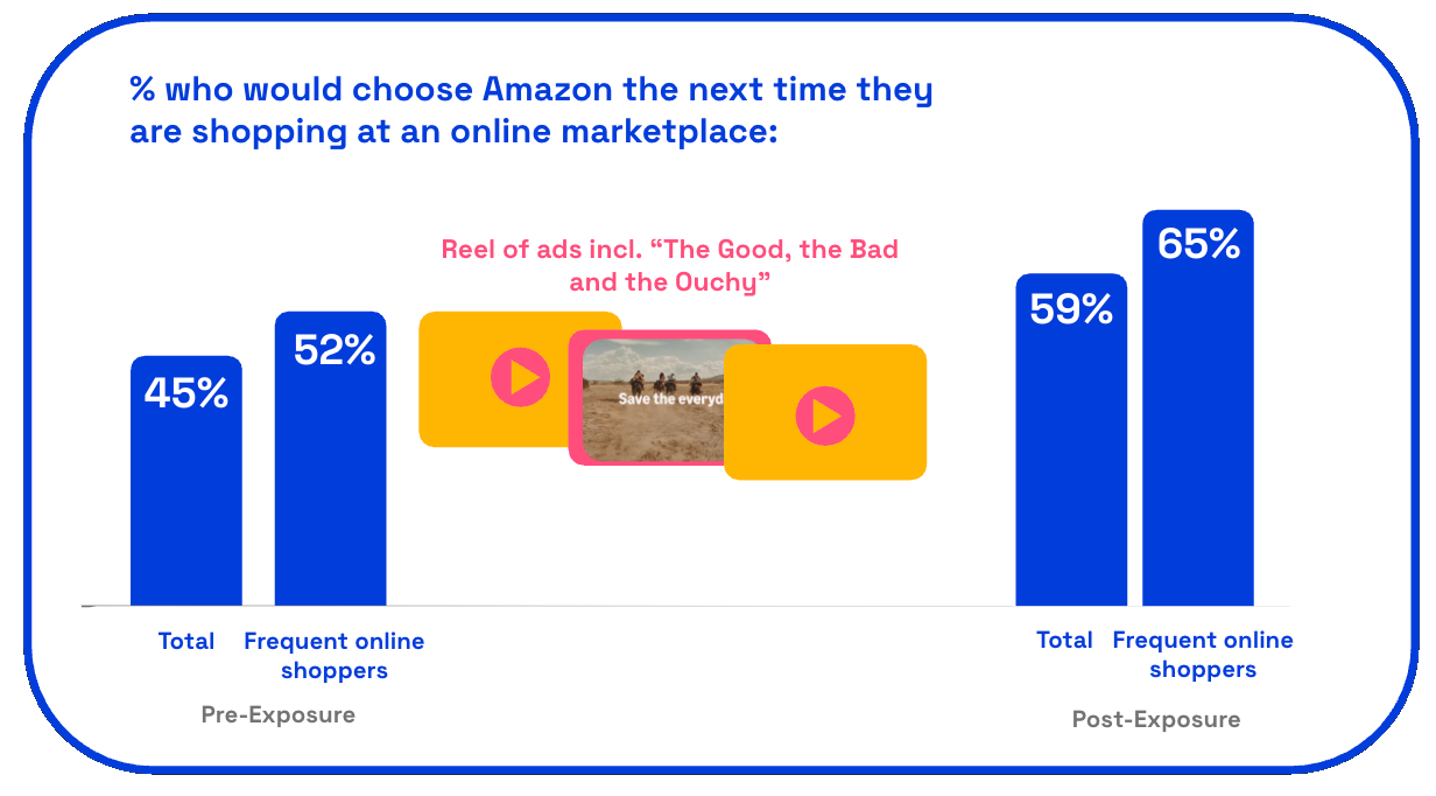
This suggests Amazon's ad is most effective at strengthening existing behavior and loyalty, a great way to solidify their spot as a category leader!
This was a beautifully shot and distinctive spot from Amazon, reinforcing their claim as a category leader. What did you think? Let us know by interacting with our coverage of the ad on LinkedIn.
To make sure you never miss one of our AdMiration analyses, subscribe to our LinkedIn newsletter.
Stay up to date with our latest insights, tips, and industry news.