Learn how McDonald's has partnered with Zappi to build its test-and-learn approach to innovation, rather than a "test to earn a good score" approach.

Learn how McDonald's has partnered with Zappi to build its test-and-learn approach to innovation, rather than a "test to earn a good score" approach.
In 2026, it’s no longer enough for consumer packaged goods (CPG) brands to win in a single area like taste, price or convenience. Consumers are weighing multiple priorities at once, from improving their health to saving time to managing tighter budgets.
To uncover what consumers are truly looking for today, we surveyed 2,000 US consumers and compiled learnings from Bain & Company, McKinsey, Deloitte, PwC, Infosys and more to examine how rising grocery prices are changing purchasing decisions, brand loyalty and product discovery.
The goal is to give CPG leaders a clear, comprehensive view of the forces defining 2026.
Read on for our key takeaways on what consumers really want from CPG brands and what’s influencing their purchasing decisions in 2026.
50% want less ultra-processed food (Bain)
But 62% say cost is the #1 barrier to eating healthy
Functional claims (protein, sugar) outperform clean-label signals (natural, no additives)
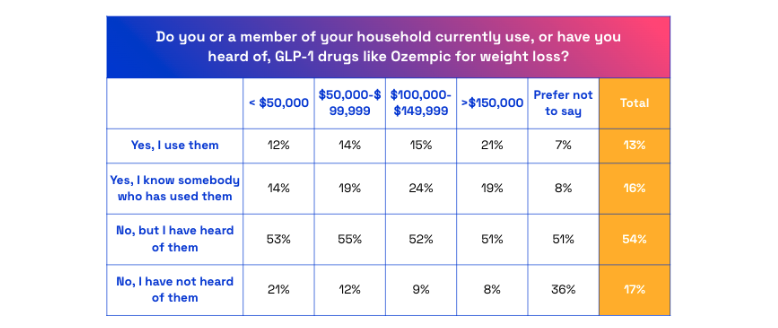
GLP-1 awareness is at 83% and reshaping expectations across the grocery aisle
Behavioral changes persist even after stopping the drugs (Bain)
GLP-1s could reduce US caloric intake 1–3% over the next decade (Morgan Stanley)
The supplement market is a $40B opportunity growing at 9.5% CAGR to $60B by 2035 (Infosys)
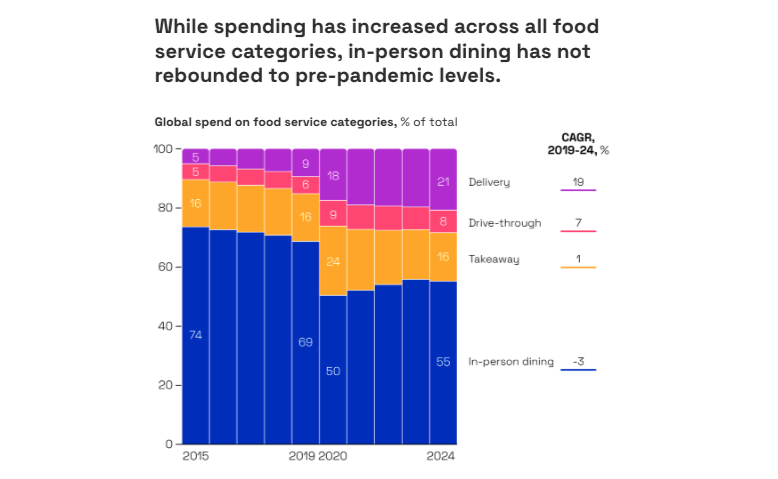
Convenience is non-negotiable: food delivery's share of food service spending rose from 9% to 21% in five years (McKinsey)
Health is no longer a point of differentiation for CPG brands. It’s the new baseline.
Across Europe, the US and China, consumers are more health conscious than they were before the pandemic (and that shift is sticking).
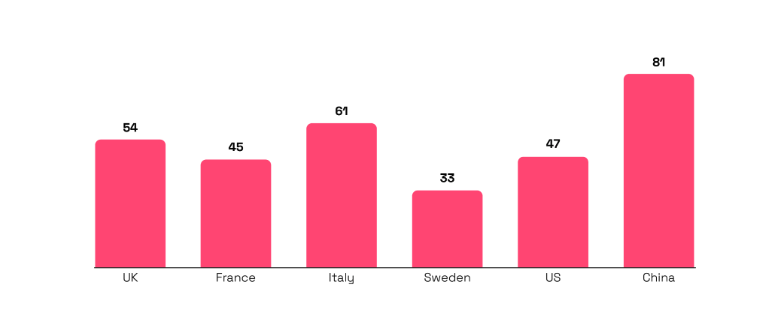
Source: Bain & Company EMEA, US, and China Covid-19 Consumer/Shopper Survey Wave 4, conducted with Dynata
We’re also seeing the rise of the “biohacking” mindset. The $40 billion supplements market is a clear signal that consumers are looking for ways to optimize sleep, energy, metabolism and long-term health. In other words, health is expanding beyond nutrition into a broader lifestyle focus — and it’s one of the few areas where consumers are still willing to spend more.
More than a third of consumers say they’re more likely to buy healthy products than they were a year ago, and 35% report increased interest in healthier snacks and beverages.
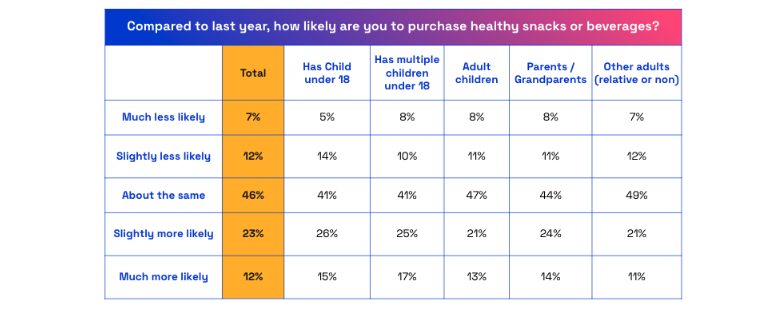
At the same time, categories associated with heavy processing are starting to stall, with consumers saying they want to cut back on ultra-processed foods.
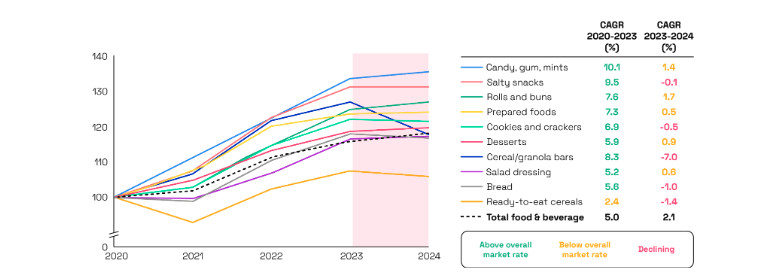
Sources: Nielsen data; Babak Ravandi et al., "Prevalence of processed foods in major US grocery stores," Nature Food, January 13, 2025; BCG analysis.
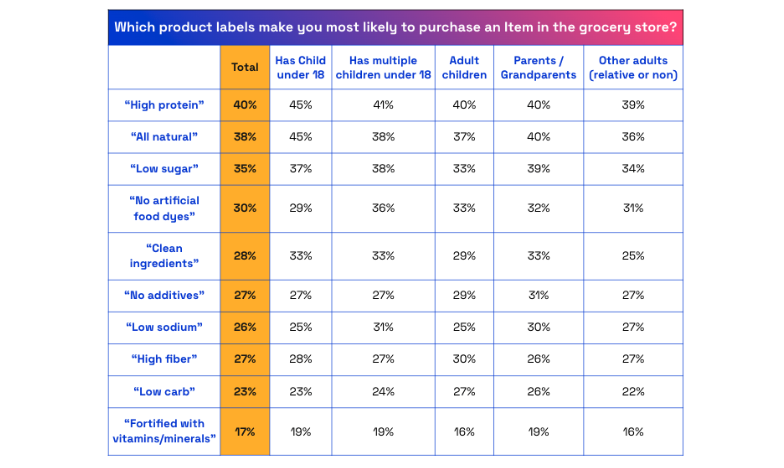
When it comes to what actually drives purchase, functional benefits are leading the way. Claims like “high protein” (40%) and “low sugar” (35%) carry more weight than broader cues like “clean ingredients.” That said, ingredient quality still matters, especially for parents, who are more likely to prioritize “all natural” products for their families.
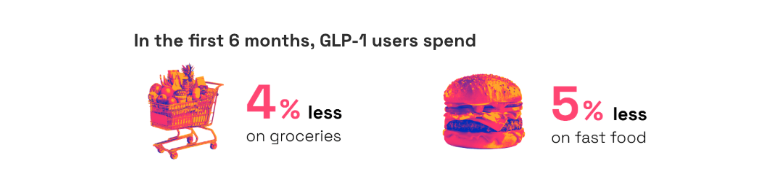
GLP-1 weight-loss drugs are starting to have a real impact on how consumers approach food.
Within the first six months of use, GLP-1 users are spending 4% less on groceries and 5% less on fast food. This signals a meaningful shift towards smaller portions and more intentional eating.
At the same time, awareness has gone fully mainstream. Today, 83% of consumers are familiar with GLP-1 drugs, up significantly from just a couple of years ago. This is accelerating conversations around appetite control and changing how people think about consumption overall.
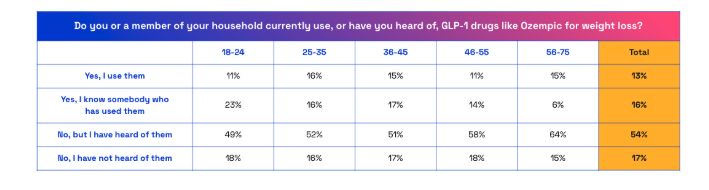
The bigger divide now is access. Higher-income consumers are more likely to have direct exposure, with nearly 1 in 5 in $100K+ households knowing someone who has used GLP-1s. As access expands, particularly across income groups, the ripple effects on food and beverage demand will only grow.
For CPG brands, this points to a longer-term shift. As appetite changes, so does what “value” looks like.
Convenience isn’t just a nice-to-have anymore, it’s expected. And for younger consumers, especially Gen Z, it’s often worth paying extra for.
Source: Euromonitor International
Food delivery is a clear example. Its share of global food service spending has more than doubled since 2019, reaching 21% in 2024. So what started as a pandemic behavior has become part of everyday life.
Over 90% of consumers in the US and China have purchased from an online-only retailer in the past month and nearly 40% of consumers across the US, UK and Germany have used grocery delivery in the past week.
Gen Z is leading this charge, not just in usage, but in willingness to pay for it. Delivery fees and service charges aren’t dealbreakers for them; they’re part of the trade-off for saving time and effort.
As a result, expectations are rising. Consumers have less tolerance for friction, and speed and ease are quickly becoming non negotiable. Even as food service spending grows overall, in-person dining hasn’t fully bounced back — another sign that convenience-led behaviors are here to stay.
For all the changes in consumer behavior, one thing still hasn’t budged: cost is still the biggest barrier to purchase.
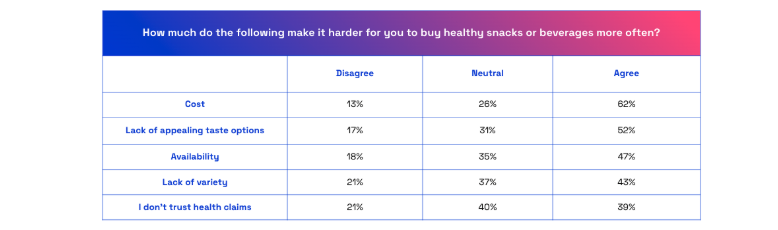
Fewer consumers today are willing to buy products “at any price,” and even small increases can have a big impact. A 5–10% price bump is enough to stop many shoppers in categories like snacks and beverages.
That sensitivity is shaping how people shop. Nearly 70% say they’re willing to accept fewer options if it keeps prices down, and 1 in 4 feel strongly about it. In fact, price and value now outweigh taste as the top drivers of purchase decisions.
Nearly one-third of consumers will choose the cheapest option that meets their needs, regardless of brand. Promotions, discounts and larger pack sizes are also becoming more influential than novelty or variety.
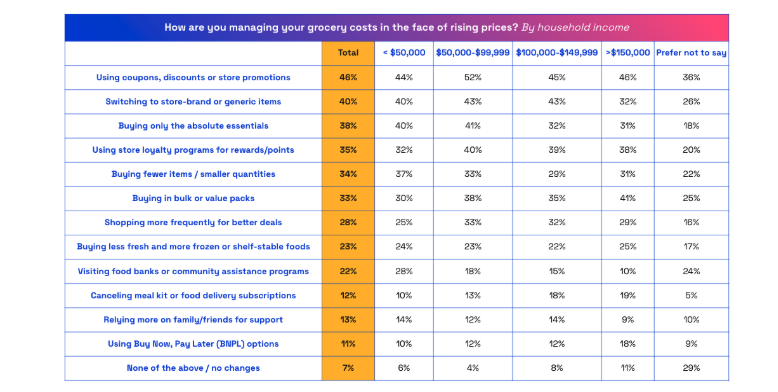
This is having a clear impact on brand loyalty. Fewer shoppers are sticking exclusively with brand names and most are now mixing in private label options to manage costs.
For CPG brands, this creates a balancing act. Consumers still want health, convenience and innovation, but they also want to feel like they’re getting value.
These trends point to a consumer who is more intentional than ever. They want to feel healthier, save time and stay in control of their spending — all at once.
For CPG brands, success in 2026 will come down to navigating that balance. The opportunity isn’t just to innovate, but to do so in a way that clearly delivers value, whether that’s through proven health benefits, true convenience or formats that better match how consumers are actually living and eating.
The brands that win won’t be the ones chasing every trend, but the ones that can connect these shifts into products and experiences that feel both relevant and worth paying for.
Stay up to date with our latest insights, tips, and industry news.