
Learn how McDonald's has partnered with Zappi to build its test-and-learn approach to innovation, rather than a "test to earn a good score" approach.

For the past three years, CPG growth has been powered by a relatively simple formula: Raise prices, protect margins and let inflation do the heavy lifting. Inflation provided cover, retailers accepted higher costs and consumers absorbed them.
But all of that is coming to an end.
Inflation hasn't just squeezed wallets, it’s rewired how people make decisions. And that has real consequences for how brands grow. If price is now the number one purchase driver in your category, the whole playbook needs to be rethought.
To better understand consumer purchasing decisions, we surveyed 2,000 US consumers and compiled learnings from Bain & Company, McKinsey, Deloitte, PwC, Infosys and more to examine what CPG growth looks like today.
Read on for what we uncovered.
5-year shareholder returns for top CPGs have been cut in half (Bain)
49% of CPG execs say their business model won’t survive the decade (PwC)
Only 10% of consumers now buy brand-name items exclusively — down 11 points in 6 months (Zappi)
75% of US consumers are trading down or delaying purchases (McKinsey)
Most CPG growth hasn’t come from selling more products, it’s come from charging more for them. But that dynamic is starting to reverse.
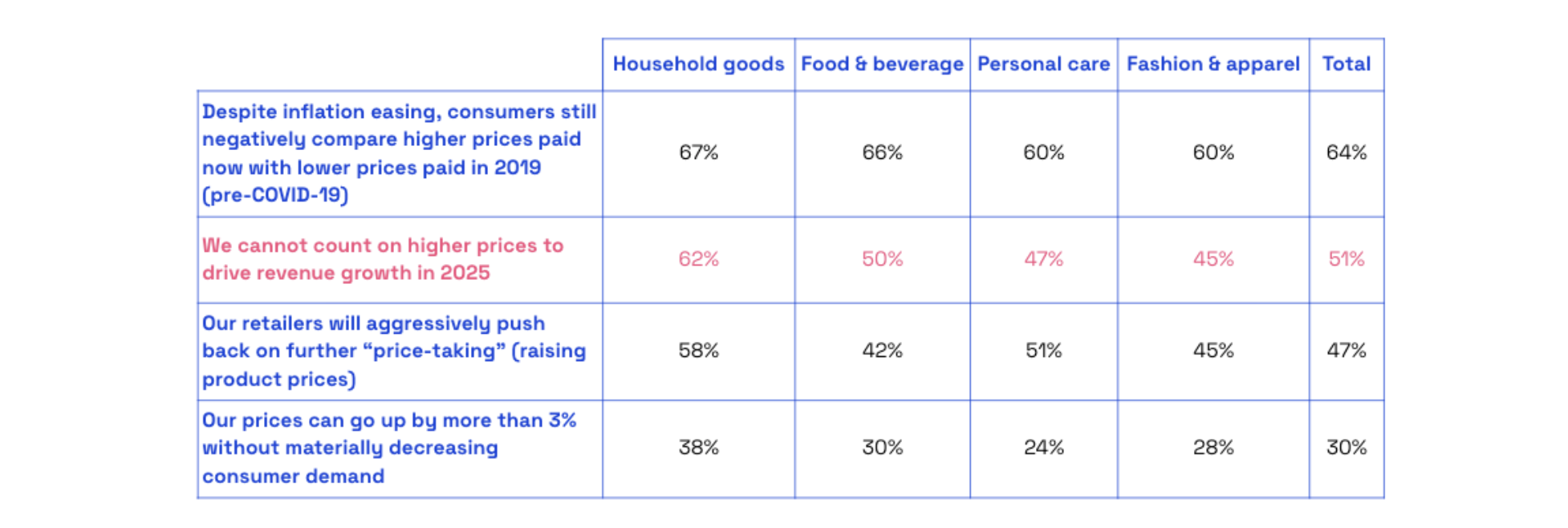
The majority of CPG executives now say they can’t rely on price increases to drive growth in 2025.
Source: Deloitte
Retailers are also becoming more resistant, pushing back on additional price hikes and limiting how far brands can go.
At the same time, consumers haven’t reset their expectations. Many are still comparing today’s prices to what they paid before the pandemic — and they don’t like the difference.
That’s creating a clear ceiling. Only a small share of brands believe they can increase prices by more than a few percentage points without materially impacting demand.
In fact, a 5–10% price increase would stop purchases for the majority in categories such as snacks (55%), fast food (60%), beverages (51%) and cosmetics (62%).
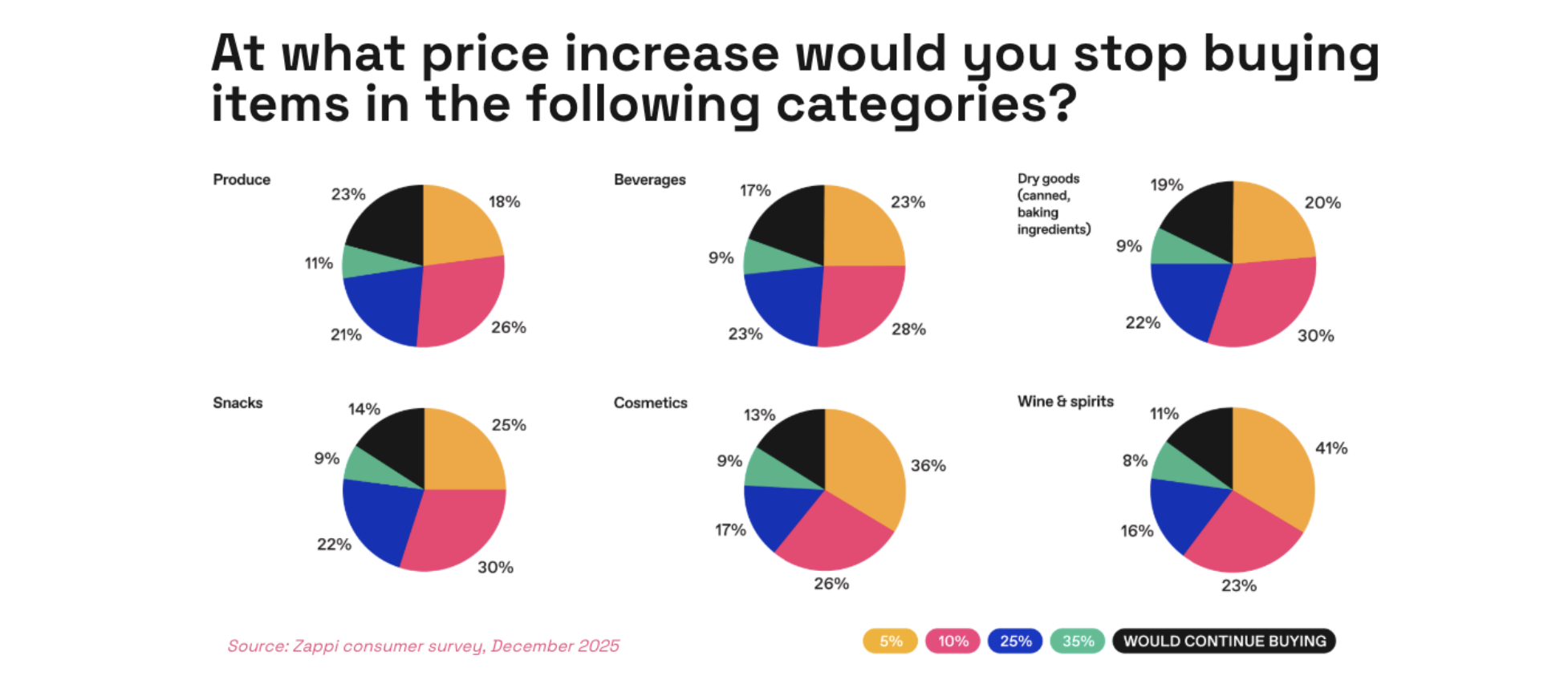
The result: Pricing power hasn’t just weakened, it’s structurally constrained. Even small increases are enough to stop purchases for the majority of shoppers in CPG categories.
If pricing power is fading, it’s largely because consumers are feeling the squeeze and adjusting their behavior accordingly.
Grocery bills have risen sharply. Today, 82% of consumers say their weekly grocery spend has increased in the past six months, with more than one in four reporting increases of $50 or more.
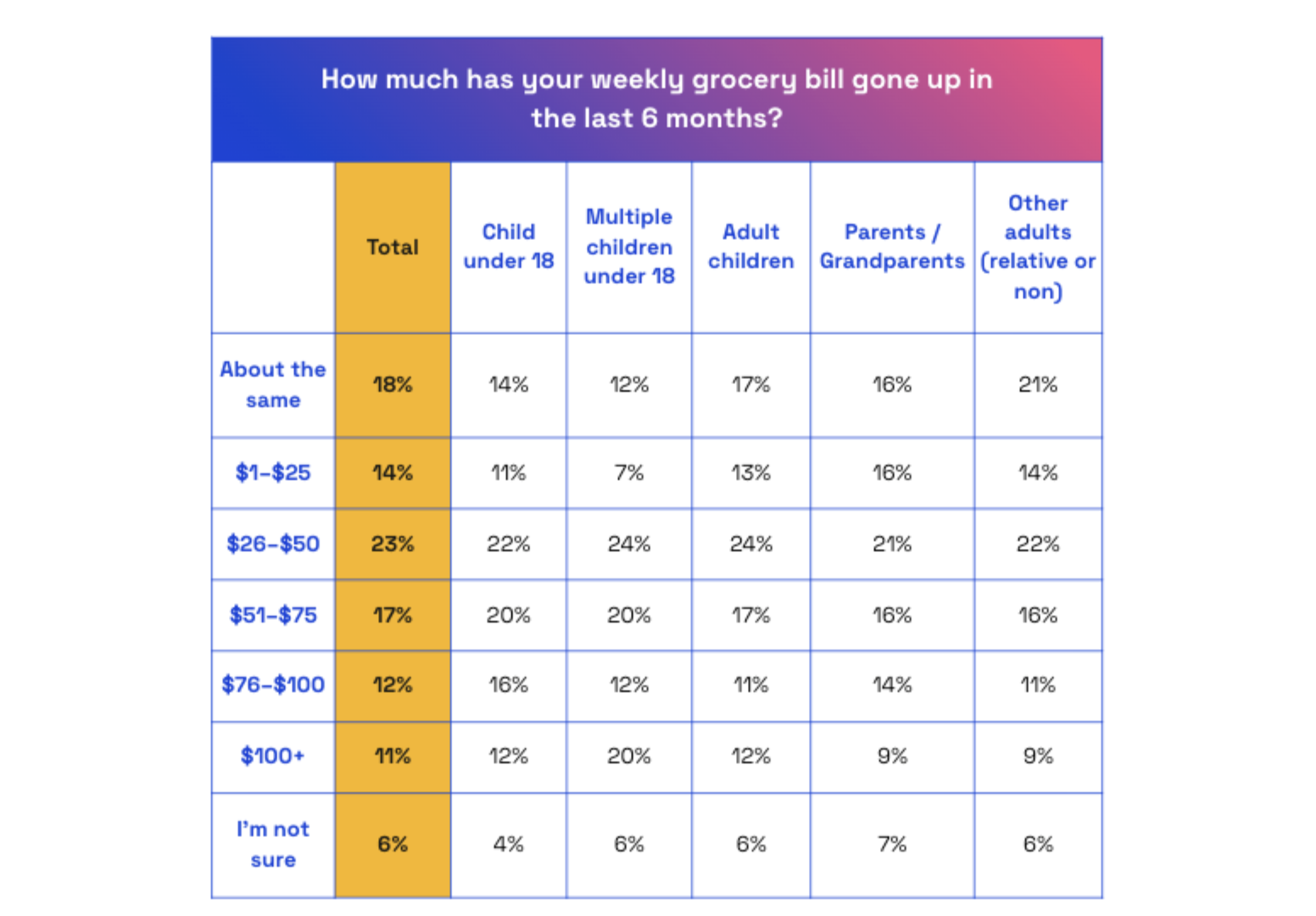
Nearly 60% of households now spend over $150 per week on groceries, and one in four spend more than $250. For larger families, the pressure is even more intense, with many spending $300 or more each week.
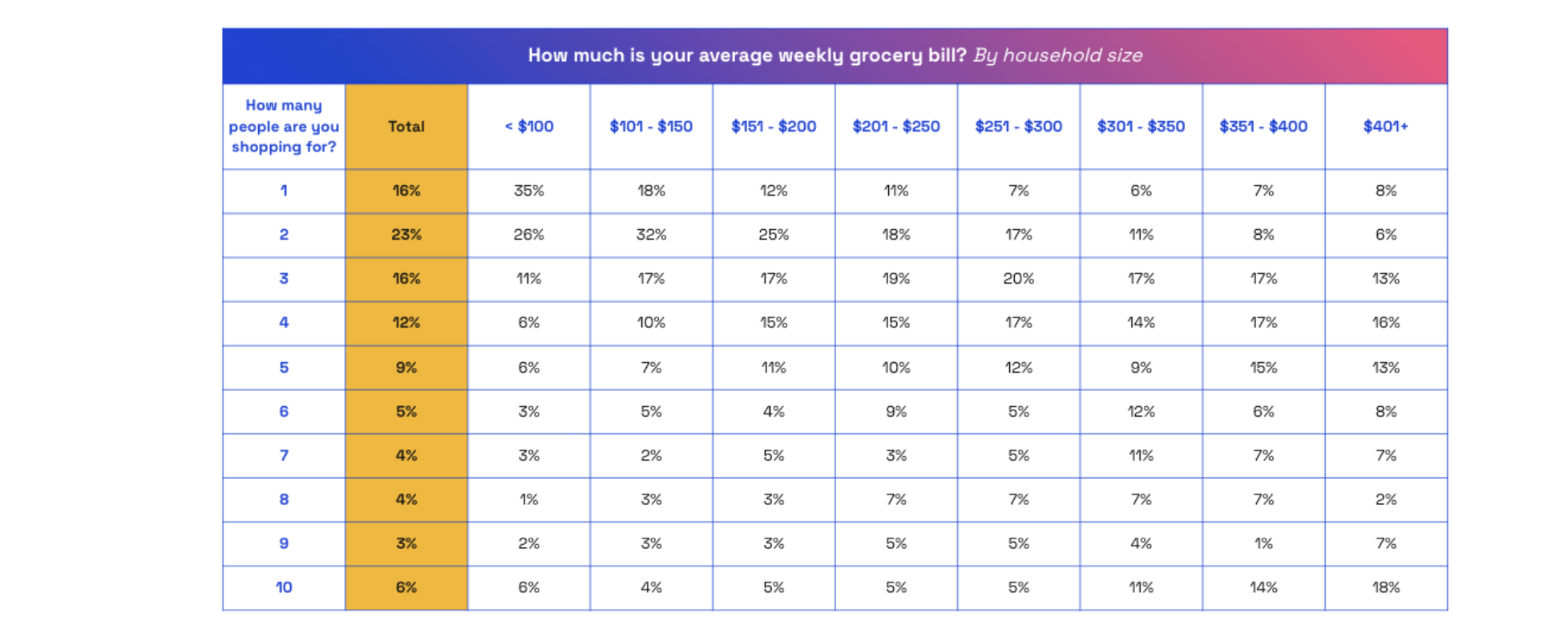
And yet, consumers aren’t necessarily buying more, they’re often buying less. Americans are spending more on groceries while purchasing fewer items, a clear signal that purchasing power is declining.
External pressures are only adding to the strain. Tariffs alone are estimated to cost the average household an additional $1,000 per year.
The result: Consumers who are far more sensitive to price changes.
As pressure builds, consumer priorities are shifting. Value-seeking is no longer a reactive behavior, it’s becoming the default.
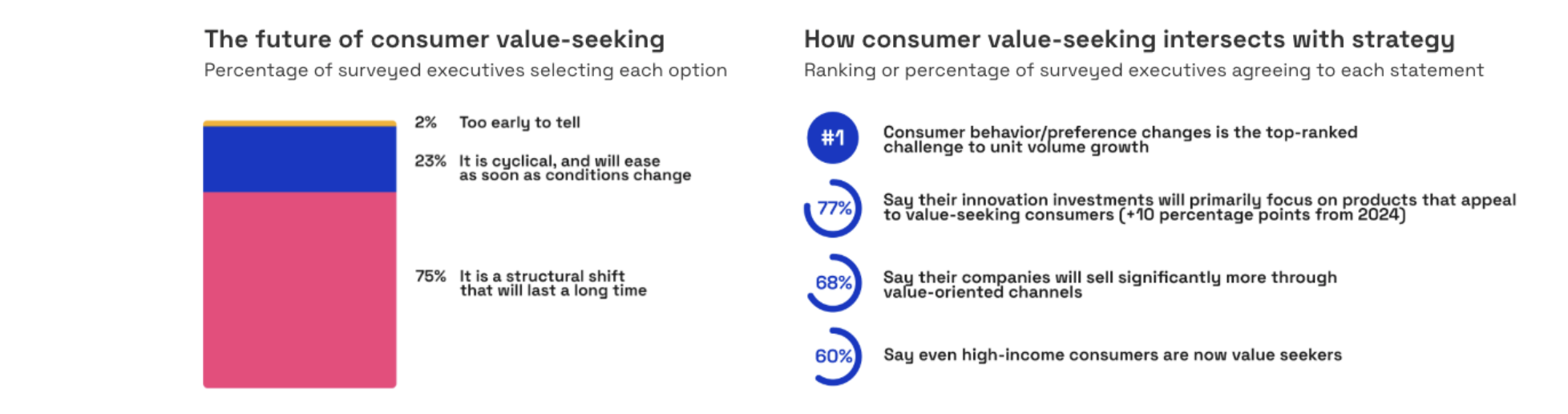
Source: Deloitte
Globally, 47% of consumers now identify as value seekers, including more than a third of high-income households. These consumers are actively making trade-offs, from switching brands to sacrificing convenience, in order to manage costs.
But value doesn’t simply mean cheap.
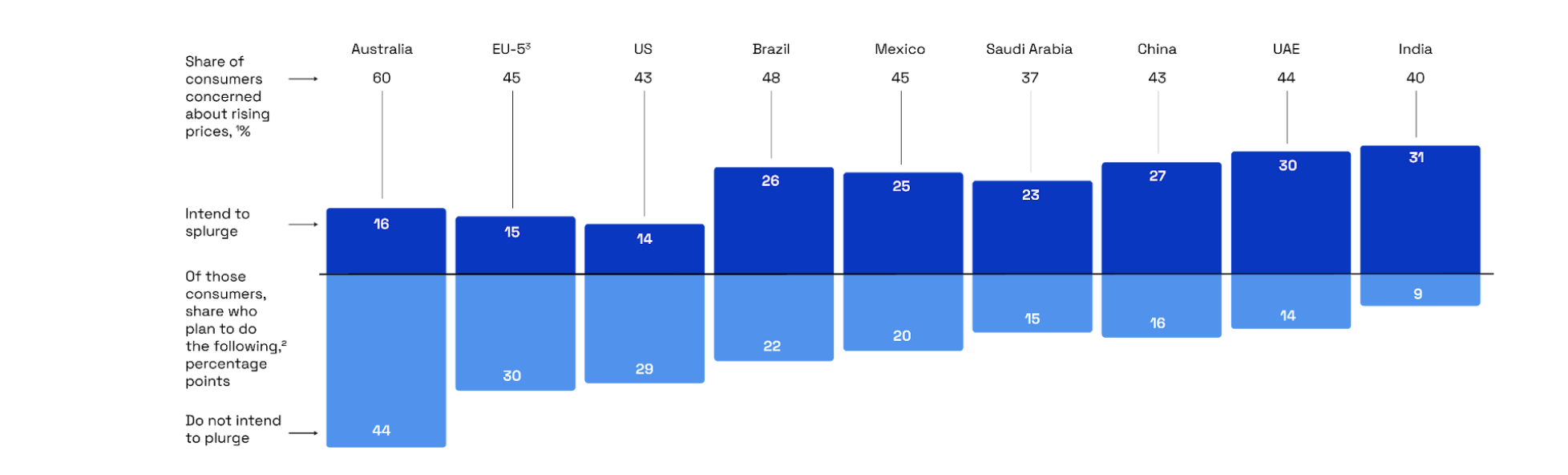
Source: McKinsey
Consumers are becoming more selective about where they save and where they spend. They might trade down in everyday categories while still splurging on products that feel worth it. In fact, many are continuing to treat themselves even as they express concern about rising prices — a sign that the relationship between sentiment and spending is becoming more complex.
This creates a new bar for brands. Only about one-third are currently perceived as delivering “more value for the price.”
The result: Growth will favor brands that consistently justify their price, not just those that lower it.
And it’s not just consumers who are questioning the sustainability of price-led growth, investors and executives are too.
Over the past five years, shareholder returns for major CPG companies have been cut by more than half. This decline reflects weakening margins and reduced confidence in the durability of pricing-driven performance.
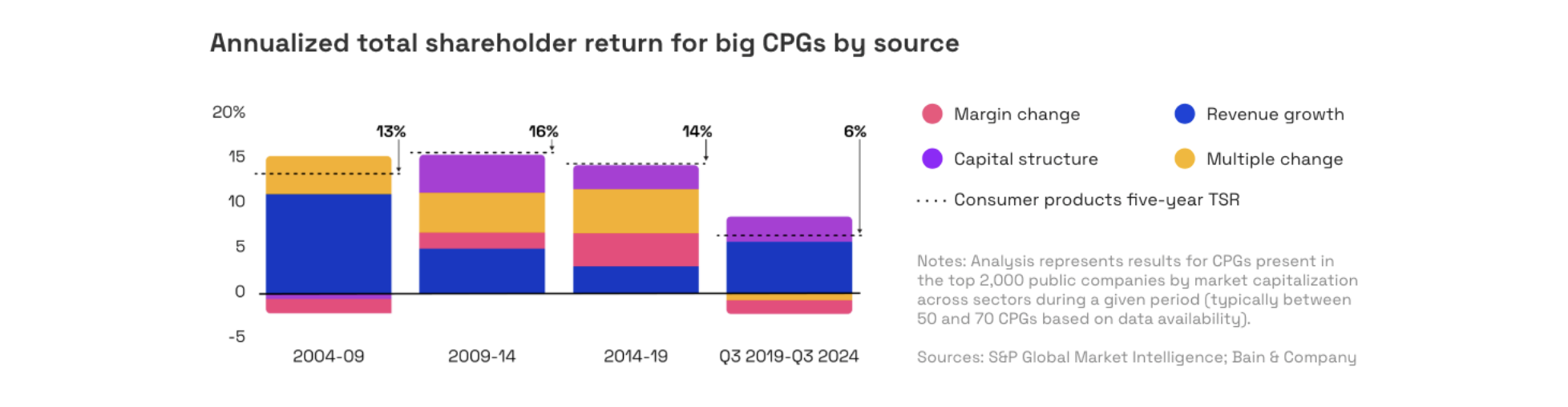
Compared to sectors like tech and healthcare (where companies have leaned into digital transformation) CPG is now lagging.
Inside organizations, there’s a growing recognition that the model is broken. Nearly half of CPG executives say their current business structure won’t hold up for the next decade, and 60% say their financial reporting doesn’t align with how their business actually operates.
And yet, despite that awareness, many companies are slow to act. Nearly 30% of executives who see the threat aren’t planning to restructure at all.
The result: The gap between recognition and action is becoming a risk in itself.
The era of price-led growth gave CPG brands breathing room, but now that pricing power is fading, those challenges are coming into sharper focus.
"The era of growth driven by price increases is coming to an end. Consumers are under real financial pressure, and with nearly one-third willing to buy the cheapest option that meets their needs, brands need to compete on value instead of price."
- Nataly Kelly, CMO, Zappi
Consumers are more intentional, retailers are less flexible and investors are demanding more sustainable growth.
The path forward isn’t about abandoning pricing altogether. It’s about using it more strategically alongside real value creation.
The question brands need to answer isn’t “How much can we charge?” It’s “Why are we worth it?”
The brands that win won’t be the ones that push prices the furthest, they’ll be the ones that make consumers feel like they’re getting more than they paid for.
Stay up to date with our latest insights, tips, and industry news.