
Learn how McDonald's has partnered with Zappi to build its test-and-learn approach to innovation, rather than a "test to earn a good score" approach.

What’s the connection between the NFL and Beyoncé? Or soccer and Pokemón? Sports, music, film, gaming and even the fine arts are more connected than you might think. All of them fall under the broad umbrella of entertainment and all influence culture in sometimes surprising ways.
The options for consuming media continue to multiply, but brands and marketing teams have found that playing in sports and entertainment offers a way to bring fans together as long as the campaigns are planned carefully and timed to capture the zeitgeist.
Culture and fandoms influence purchasing decisions and good marketing makes it easy to connect across many forms of entertainment and their channels.
Let’s dive into the world of sports and entertainment marketing and what it takes to be successful.
What can you learn from great examples of World Cup marketing this year? Get our exclusive report with the best tips and takeaways.
When you think about sports marketing, maybe you think about sponsorships or Super Bowl commercials. When you think about sports and entertainment marketing, maybe you imagine more out of home advertisements or activations at specific venues.
But, do you think about Flavor Flav and the United States women’s water polo team? You probably didn’t prior to 2024, but that particular sponsorship demonstrates how the fractured media landscape can create surprising opportunities that delight fans.
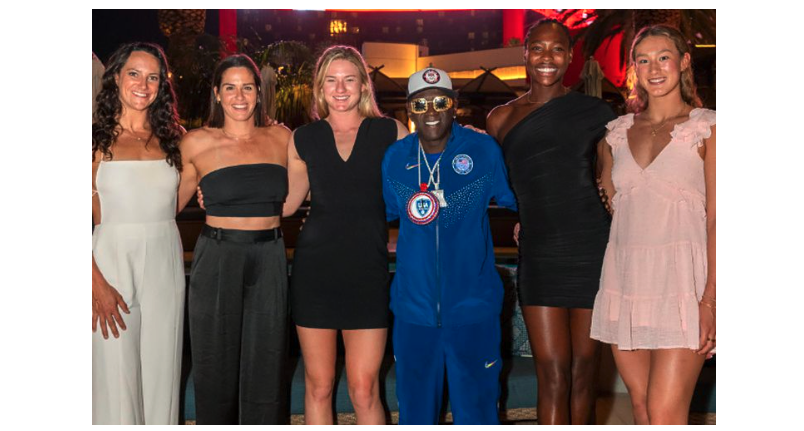
Source: People Magazine
The US women’s water polo team went into the 2024 summer Olympics hoping to win a fourth-straight gold medal. It would have been a record. Rapper Flavor Flav, best known as a founding member of the group Public Enemy, saw a post on Instagram by Maggie Steffens, a member of the team. The post brought attention to the fact that most of the women on the team had jobs outside of water polo. “When the women aren’t in the water playing water polo and everything, you know, they’re home, working active jobs—one, two and three jobs. These girls are out here busting their butt to make the United States look good. So when they’re out here playing and practicing, it takes them away from their work. So I said to myself, why not step in and try to help these girls out?”
- Flavor Flav, in an NPR interview
That’s how the rapper became an unofficial hype man for a little-known sport. The relationship is outside the realm of what most people think of as a traditional sponsorship, but it still offers lessons for marketers and brands. The power of social media, unusual-but-appealing combinations, sincerity and enthusiasm came together to build a whole new fandom.
Audiences respond to sports and entertainment marketing differently than to other forms of marketing because they are fans. Fans feel an emotional connection to their team, favorite musicians and actors and others within the sports and entertainment industries. And while modern technology makes audience segmentation and targeting more precise than it’s ever been, sports and entertainment allows for even more granular demographic targeting.
The crossover between Flavor Flav fans and women’s water polo fans probably wasn’t especially big, but it grew. Sometimes those connections are clearer, and more profitable to highlight. Snack and beverage advertisements during football games make sense, for instance.
FanDuel Sportsbook sponsors leagues, teams, halftime shows and promotional activities. Such collaborations are profitable and they bring fans exclusive content.
Another more well-known example is the collaboration between musician Rihanna and NBA team the Miami Heat. Aside from being a famous musician, Rihanna also owns the lingerie and leisurewear brand Savage X Fenty, which she used to collaborate with the team on merch.
“Rihanna’s collaboration with the Miami Heat brought a new level of glamour to the NBA. Her involvement extended to designing exclusive merchandise and curating playlists for game-day events,” writes Elena Garcia in Gigwise. “The Heat x Fenty merchandise line achieved record-breaking sales, with items like jerseys and accessories generating over $5 million in revenue within a month.”
And these collaborations and campaigns are continuing to grow rapidly as people, particularly younger generations, seek more lifestyle, fashion and entertainment integrations.
Successful sports and entertainment marketing campaigns require extensive planning, particularly when they include multiple channels, influencers and are tied to a specific event.
From choosing the sport or the event, the teams, athletes and entertainers, to nailing the timing and context, each step builds toward success.
Mission critical in brand marketing is communicating the essence of the brand’s personality. The idea of a company or product having a personality may seem strange, but consider the subtle differences between two similar brands, Poppi and OLIPOP.
Both are newer soda brands and they have quite similar branding, but they are advertising to two different audiences. “Poppi appeals to health-conscious individuals who want to be forward-thinking trend setters, whereas Olipop connects best with those who love and miss regular soda but want a healthier alternative,” says Haley Mashtare of marketing firm London Middlebury.
When it comes to sports and entertainment marketing campaigns, aligning brand values with the right influencers can be the difference between a home run and a foul ball. Trying to force a match between artists or teams with brands that aren’t a good fit is a recipe for interactions that feel forced and transactional.
For instance, Jennifer Anniston is known for her robust good health, so it makes sense for her to appear in Pop Secret’s popcorn ads. It would be less appealing if Anniston, who has answered hundreds of interview questions about her health routine, to partner with a brand like Hostess, that sells delicious, not exactly good for you snacks.
In short, when considering these types of collaborations, brands need to make sure it makes sense and is a right fit for their brand.
Making sure the brand’s values and the talent fit together well is only the beginning.
In sports and entertainment marketing, tours, seasons, premiers and live events have an enormous impact on whether or not fans even see the advertisements. Red Bull is a brand famous for its association with extreme sports and has mastered creating campaigns based on big moments.
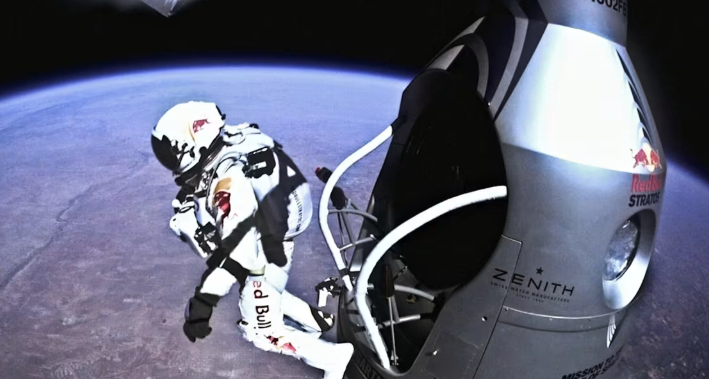
Source: Red Bull
Red Bull’s sponsorship of Felix Baumgartner’s Stratos jump is one of the best all-time examples of sports and entertainment marketing. The brand, talent and event were perfectly matched, and the timing of the ads and the buildup to the event itself worked perfectly.
Beginning with media buys may seem like the most reasonable way to stay within budget and make decisions about a campaign, but some of the most successful sports and entertainment marketing efforts of all time have been built around a particular moment that makes sense for the brand.
Moving from a strategy to execution isn’t always as simple as following the plan. At its core, a multichannel sports and entertainment marketing campaign is about building an entire ecosystem that gives fans access, follows a narrative and extends the excitement of a moment.
Now that we’ve covered some examples of sports and entertainment marketing done well, let’s get into the different types of activations.
The word “fan” is short for “fanatic,” and what fans want is more—more content, more access and more stories. The best marketing campaigns extend live moments across digital and social channels and offer fans behind-the-scenes, narrative-driven content.
One example is a decade old, but still shows how one joyous moment for fans can be savored. The Chicago Cubs won the World Series in 2016, for the first time since 1908. Budweiser took the moment of the win, combined it with footage of Harry Caray, legendary announcer for the Cubs and created an ad that’s emotional, tells a victory story that fans cherish — staying true to their brand as well.
When fans actually get to participate in the campaign, they’re even more enthusiastic. In-venue or on-site activations, campaigns designed for a specific audience segment, or campaigns that invite fans to take some action such as using a certain hashtag, get a big response. Passive exposure is well and good, but engagement is just more fun!
During the 2021 Super Bowl, the NFL and TikTok created the #TikTokTailgate campaign, where fans shared videos, participated in challenges and used the hashtag. The campaign now draws millions of views every year.
Another great example is the Sacramento Kings Virtual Venue, where fans can feel like they are sitting courtside in the arena. It’s described as “a live, in-game, 360 virtual reality experience.” The Kings partnered with Verizon to create this experience, beginning in 2018.
“This is an extension of our commitment to using technology to enhance the way fans engage with the team—whether live streaming a game in virtual reality, downloading real-time statistics via our award winning dual mode app, or watching 4K replays on our ultra HD videoboard, technology allows us to create and deliver engaging content.” - Sacramento Kings CTO Ryan Montoya, 2018
We’ve already looked at numerous examples of how brands can leverage the world of sports and entertainment to create engaging, exciting campaigns, and the possibilities are infinite. With the right alignment and timing brands and fans can continue to interact in new and beneficial ways.
Here’s a unique cross-industry example worth mentioning:
Spotify, the music-streaming app, partnered with Spanish soccer team FC Barcelona in 2022. For Spotify it was a first venture into sponsorship, and FC Barcelona got some relief from the financial pressure they were feeling. The collaboration brought in numerous artists, perhaps most notably, Drake.
During the El Clasico match with rival Real Madrid, the team switched out the Spotify logo on their jerseys for the owl logo of Drake’s OVO fashion line. The jerseys celebrated Drake being the first artist on Spotify to reach 50 billion streams on the platform.
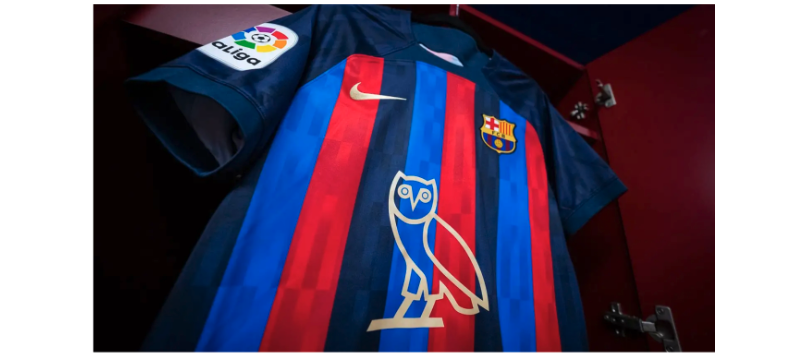
Source: Front Office Sports
Taking it a step further, the team hosted a drawing for one of the jerseys, which wasn’t available anywhere else, and gained 72,000 registrations in just the first 24 hours. “In the end that gives us qualitative leads. Sixty percent were new and the campaign was 100% organic,” said Sergi Ricart, FC Barcelona’s chief marketing and revenue officer.
Drake benefitted, too. His Instagram post revealing the jersey got more than 4.5 million likes. And Spotify has been able to use the data they’re gathering to better showcase new artists.
Turning ideas and even successful campaigns into repeatable programs means brands can reap ongoing rewards over time from solid sports and entertainment marketing efforts. In the Spotify-FC Barcelona example above, Drake was just the first artist. Rosalía’s MOTOMAMI album cover was featured on the jerseys in 2023 and in 2025 Travis Scott’s Cactus Jack logo was on the uniforms.
Here’s a few tips for planning your own sports and entertainment marketing campaigns:
As with any type of marketing, success can only be measured if it’s defined in advance. Before executing a sports and entertainment campaign, brands should be clear about what they want to achieve, whether the goal is brand lift, engagement, sales or some combination of objectives.
Data can serve as a guide for marketers, but it’s easy to get lost in metrics that ultimately don’t help you meet your objectives. Measuring beyond impressions and reach and getting into granular details about whether consumers remember an ad and measuring their sentiment about it are far more powerful indicators.
You can learn more about the types of KPIs to track in this article.
Consider the number of organizations and people involved in the Spotify x FC Barcelona promotions alone. Each collaboration requires careful timing, with the El Clasico match as a centerpiece.
Managing multiple stakeholders and moments is one part of the coordination necessary, the other is to keep messaging consistent across all channels.
“A global icon co-curating with us for the world’s biggest game and performing live for fans in Barcelona—that’s the power we’re unlocking.”
- Marc Hazan, Vice President, Partnerships and Marketing, Spotify, discussing the Travis Scott partnership
Sports and entertainment marketing can pay huge dividends, but can also introduce risk for marketing teams. Advertising spots for the biggest games are notoriously expensive, and are often purchased far in advance. Reducing the risk by conducting research before making the commitment is a smart move for brands.
Testing ideas, making changes based on results and testing again is the best way to make sure that you’re on the right track. You need to know if your idea will resonate with both your audience and the cross-over audience, and you need that information before you commit budget to a big, complex campaign with multiple elements and stakeholders.
What if soccer fans weren’t interested in the artists Spotify chose to highlight? The story about that particular collaboration wouldn’t have such a happy outcome. Spotify uses the data they collect from each campaign, along with geotargeting and other technologies to decide which artists to feature in order to activate soccer fans to become Spotify fans.
Testing how fans respond to teams, individual athletes, entertainers or even specific properties can’t entirely eliminate the risk, but it can certainly mitigate it. Testing multiple ideas to narrow down which concepts resonate the most further reduces risk and highlights the strongest direction for the campaign.
Zappi runs these types of tests with real audiences and allows brands to get the information they’re looking for in hours. Each consecutive test gives brands evidence to support the best ideas. The platform is fast and flexible, too, so that you can easily understand audience sentiment, the why behind what’s working or what’s not and more.
One successful campaign is fantastic. Building on that first success to make the second one even more exciting to fans is even better. And making each campaign better over time based on what you’ve learned is true success.
Because sports and entertainment marketing campaigns usually involve multiple stakeholders and platforms, tracking results across channels and moments provides a clear picture of how your campaign is performing. Watching how engagement changes over the course of the campaign creates a fuller image of what works and what could be improved.
When you use Zappi, you can make adjustments based on real-time consumer feedback, ideally before your campaign hits the market and see the impact of those changes among your actual audience. These learnings can also be applied across different formats and cuts of your campaign, so you can see which versions perform best in each environment.
Just as the NFL and TikTok built on the first year of #TikTokTailgate to delight fans, brands can gather insights to apply to the next season, tour or launch. Testing, iterating and optimizing offer an avenue for gathering institutional knowledge over time — which will only make your campaigns better.
Contact the Zappi team today to learn how our platform can help your brand delight your fans and expand your audience in the world of sports and entertainment marketing.
What can you learn from great examples of World Cup marketing this year? Get our exclusive report with the best tips and takeaways.
Stay up to date with our latest insights, tips, and industry news.