Learn how McDonald's has partnered with Zappi to build its test-and-learn approach to innovation, rather than a "test to earn a good score" approach.
Welcome to Innovation Spotlight! Each month we’ll spotlight a brand that’s capitalizing on a current consumer trend with a new product innovation.
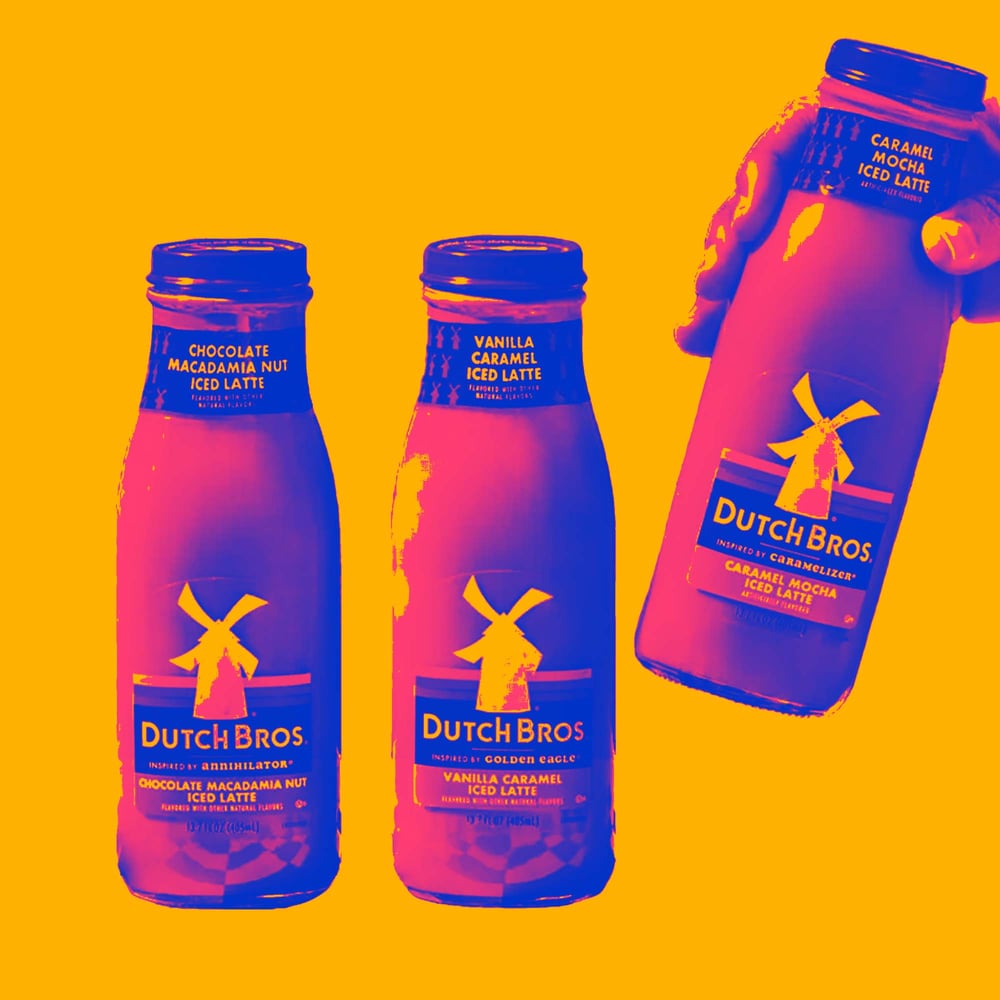
This month we researched Dutch Bros Ready-to-Drink Iced Lattes, a new line of bottled iced coffee drinks that are part of the drive-thru coffee chain’s new expansion into CPG. Read on to get our analysis of the product's in-market potential, the audiences it appeals to, as well as what you can learn from it to innovate smarter.
Dutch Bros is a fast-growing drive-thru beverage chain founded in 1992 — with a large cult following with passionate fans. It delivers customizable espresso drinks and other beverages like energy drinks, smoothies, teas, etc. served quickly through drive-thrus. It currently has over 1,000 US locations in the South, Midwest and West Coast of the US.
The company is growing quickly — fueled by its drive-thru-first format, high-energy service culture, heavy customization across a variety of beverages and rapid store expansion throughout the country.
This year, Dutch Bros announced its first foray into the CPG space with its Dutch Bros At Home Assortment, which includes single-serve ready-to-drink iced lattes, multi-serve ready-to-drink iced lattes, single-serve coffee pods, ground coffee and creamers.
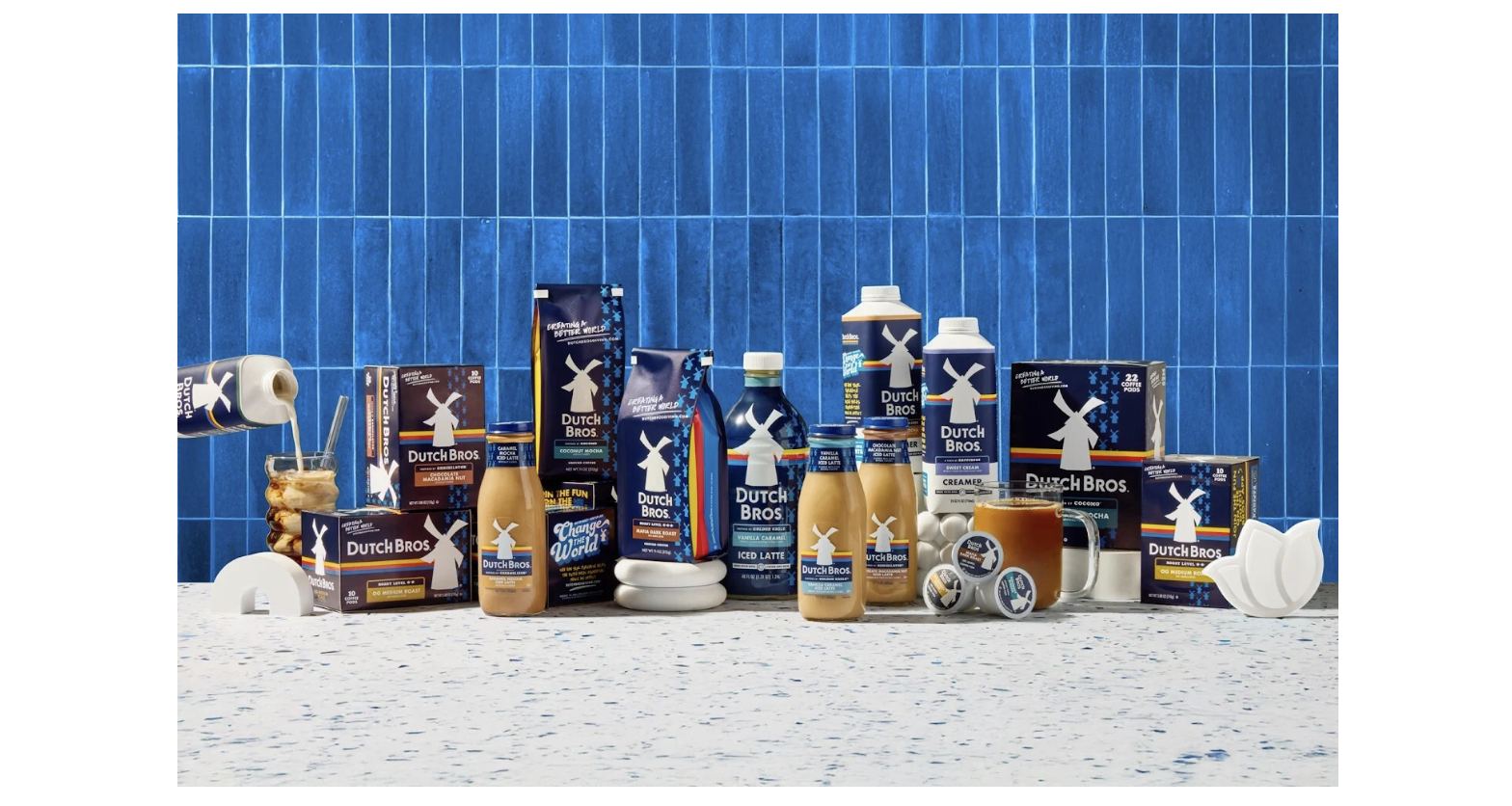
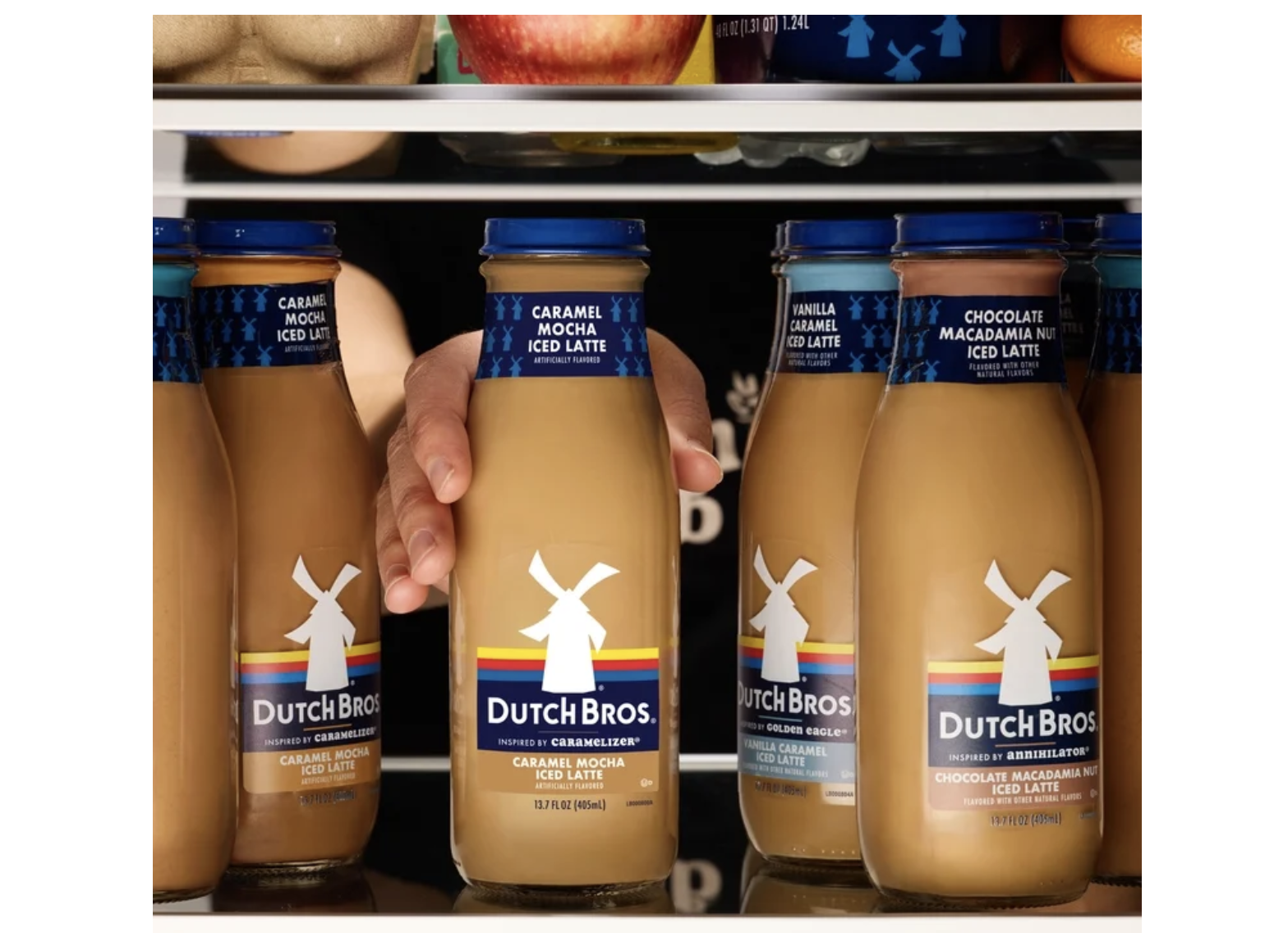
The ready-to-drink single-serve iced lattes bring the drive-thru coffee experience into the refrigerated aisle. The line features bottled iced lattes made with premium Arabica coffee, blended with creamy milk and fun flavors inspired by the brand’s existing fan-favorite drinks.
The line’s current flavors include:
Vanilla Caramel (inspired by Golden Eagle)
Chocolate Macadamia Nut (inspired by Annihilator)
Coconut Mocha (inspired by Cocomo)
Caramel Mocha (inspired by Caramelizer)
Christine Barone, Chief Executive Officer and President of Dutch Bros, said of the launch: "It's a new way for customers to bring the flavors they love into more of their everyday moments."
It’s always interesting when a QSR brand extends its recognizable brand name into CPG. Dutch Bros is already known for its coffee, so this extension into retail makes sense for the brand.
And as cost pressures rise for Americans, many are cutting back on their coffee trips outside the house. It appears to be a smart move for the brand to offer at-home options now. Moving into CPG now creates a new growth channel for the brand to reach those who aren’t going out for coffee as often.
Yet while Dutch Bros is growing quickly through the US, it isn’t universally known in every region. Is there enough awareness and interest to drive sales for the brand? Let’s find out!
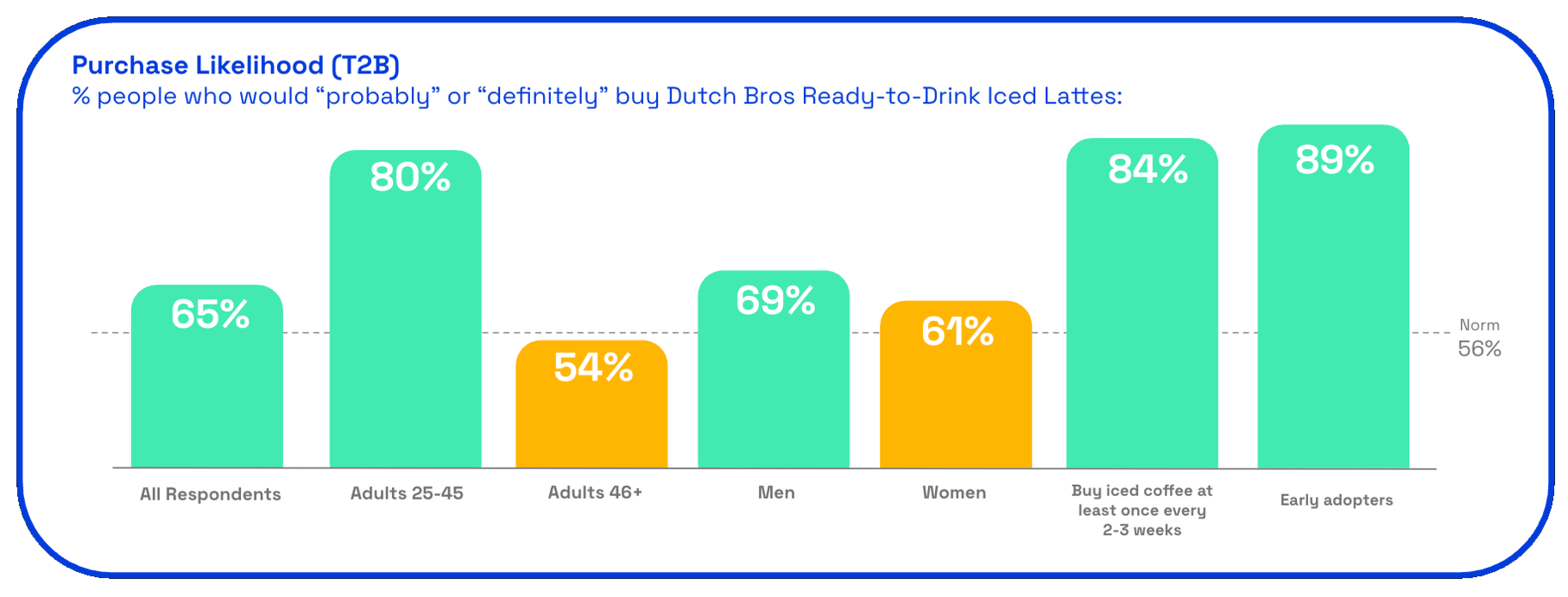
A strong entry into grocery stores, with room for further differentiation: Overall, this is a strong new entrant into CPG from the drive-thru brand, with a high trial potential that puts it in the top 10% of US beverage innovations. But breakthrough potential is lower than the average, indicating that there’s room for the brand to differentiate itself in the grocery aisle and highlight its differentiators through its advertising. But getting someone to try a new product is a huge challenge, so Dutch Bros is positioned well to succeed with these! That’s even more clear when we look at early adopters — they rate the RTD lattes as both distinctive and advantageous, and have an incredibly high purchase likelihood of 89%! It’s always a good sign when those most familiar with the category rate the product favorably, and the early adopters are likely to try the new products and share the news with their circles.
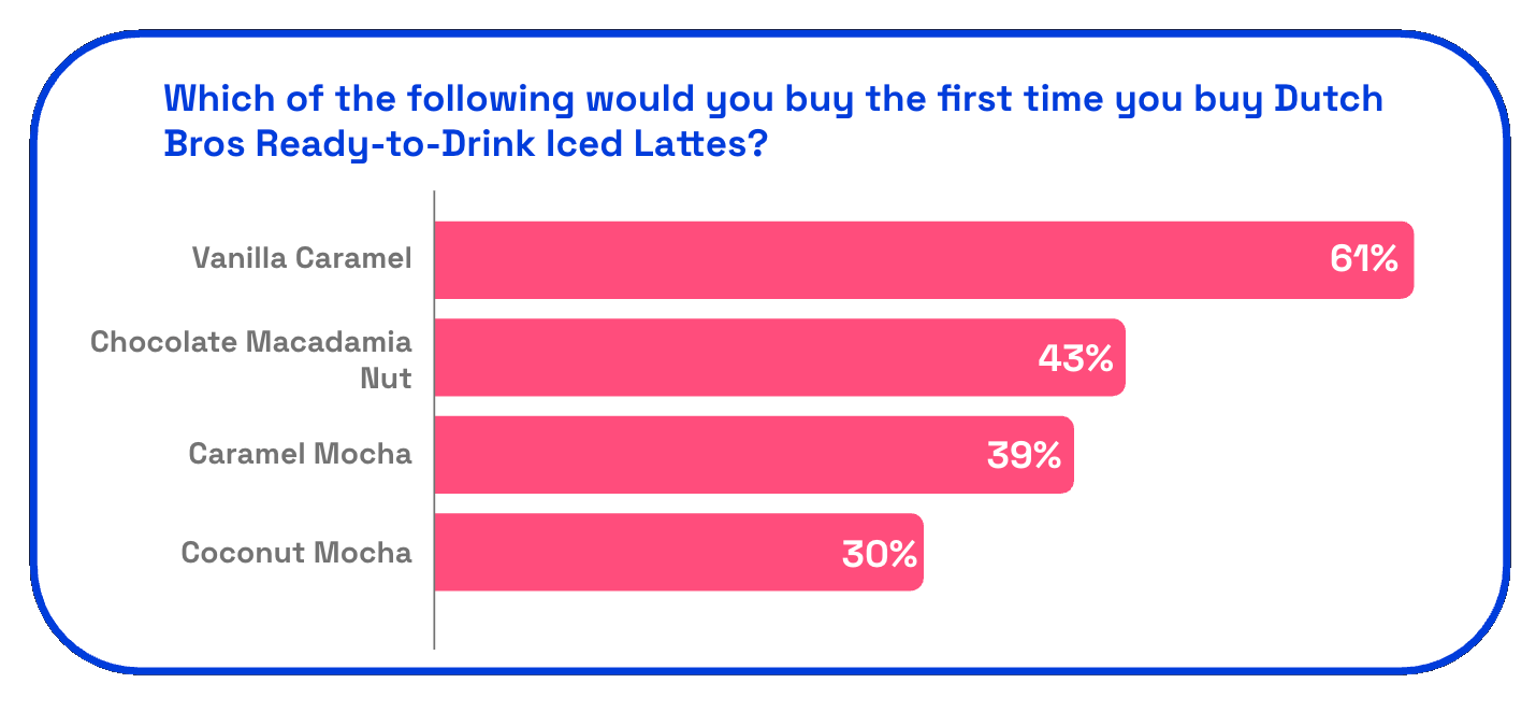
The power of compelling flavors: The flavors were far and away the most exciting thing about the new line, with people citing them over and over again as intriguing and something they wanted to try. Vanilla caramel is the most compelling, with 61% of people saying it would be the one they buy when they first try the product. For a brand that’s known for its unique flavor combinations, flavors appear to be a great, on-brand way for Dutch Bros to differentiate its at-home assortment.
Diversifying at the right moment: Dutch Bros have been rapidly expanding through the US in recent years, but with many consumers feeling the impact of tariffs and inflation, this new launch allows the brand to reach people with their coffee flavors at home. We looked at just the RTD iced lattes in this study, but the whole line is a smart move by the brand to diversify their portfolio and allow people looking to save money to buy their RTD drinks, ground coffee or creamers instead.
When we asked what people liked about the idea, four main themes emerged:
The most consistent positive theme we saw was flavor variety. Consumers repeatedly mentioned that they liked the different flavor options and found the combinations unique or interesting.
The flavors were seen as strong, sweet and indulgent, with many assuming they wouldn’t taste “too much like coffee” — which appealed to lighter coffee drinkers.
The image below shows that the majority of people clicked on the flavors as the part of the product description they liked the best.
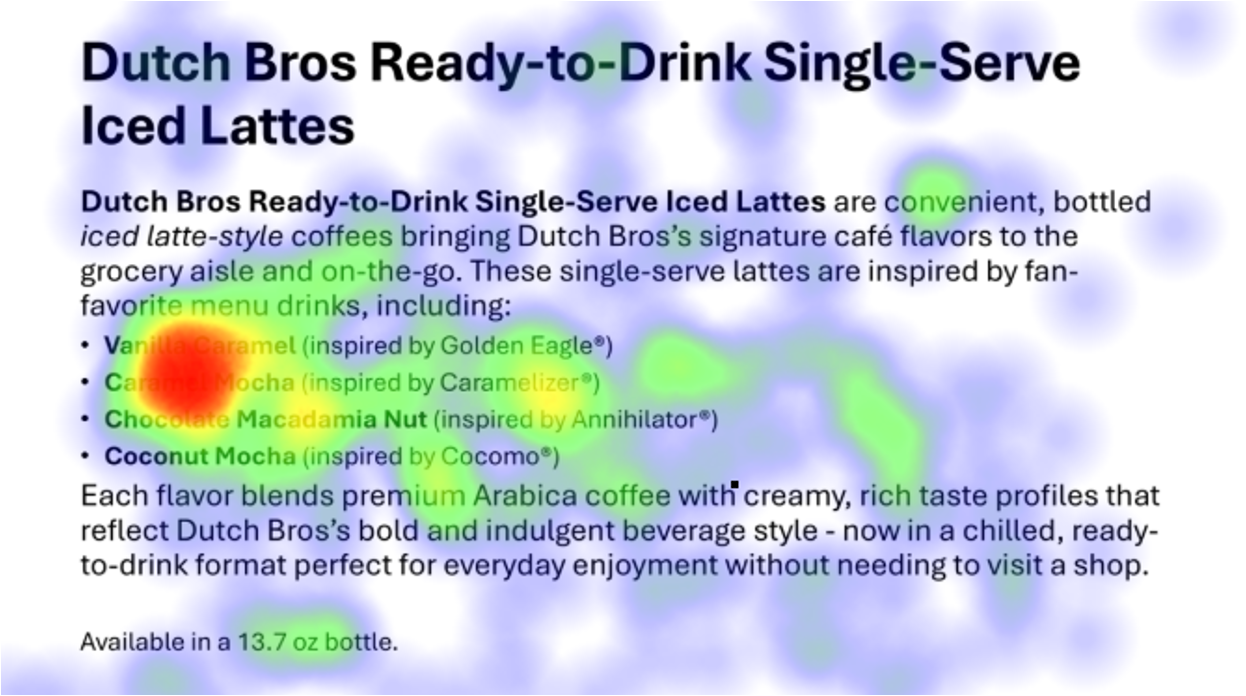
Many said the flavors sounded “yummy,” “delicious,” “sweet,” or “interesting,” and several specifically called out caramel, coconut mocha, chocolate, and macadamia as exciting options.
The second strongest theme was the grab-and-go convenience. People appreciated that the lattes:
Are ready to drink (no prep required)
Save time (no waiting in line)
Are easy to grab on the way to work
Can be kept at home or in the fridge
Are single-serve and portable
Several respondents framed it as replacing a drive-thru visit with something quicker and easier.
Brand love plays a meaningful role for this new line. Many said that they already love Dutch Bros as a drive-thru brand, so they trust the quality and assume the product will taste good because it’s Dutch Bros. Many expressed excitement that the franchise brand is now available in stores.
Some compared it favorably to Starbucks or Dunkin’, suggesting that Dutch Bros has better coffee.
Finally, many expressed that the product “looks good” and “sounds tasty.” They seemed interested in trying it and were curious about the new flavors. It suggests strong trial potential driven by flavor and brand — which we’ll see in the data itself in a moment!
A few negative comments emerged as well. Some wished for dairy-free versions of the lattes and others had concerns about the sugar content. Others don’t like flavored coffee and, of course, the non-coffee drinkers were not interested at all!
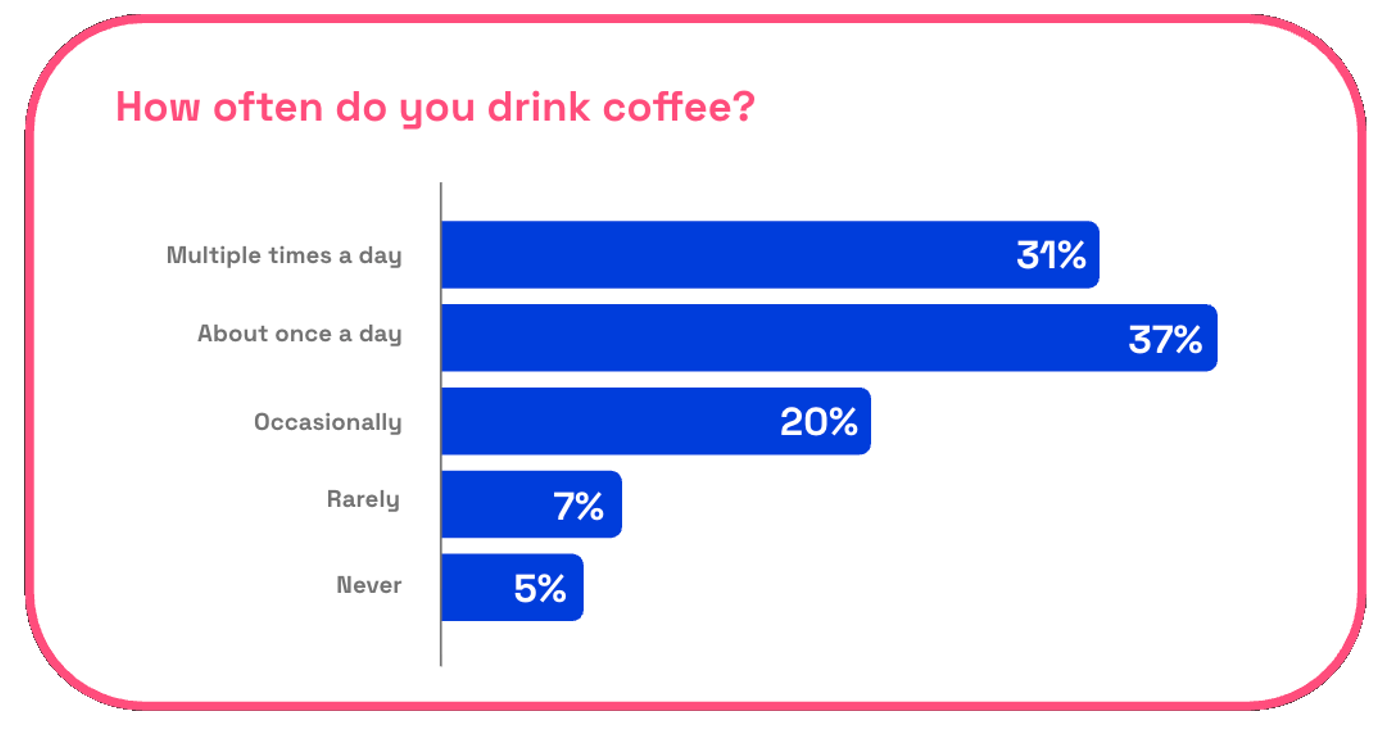
Although it’s worth noting that coffee is nearly universally consumed in the US. Only 5% of respondents say they never drink it at all! Most people (68%) drink coffee at least once a day.
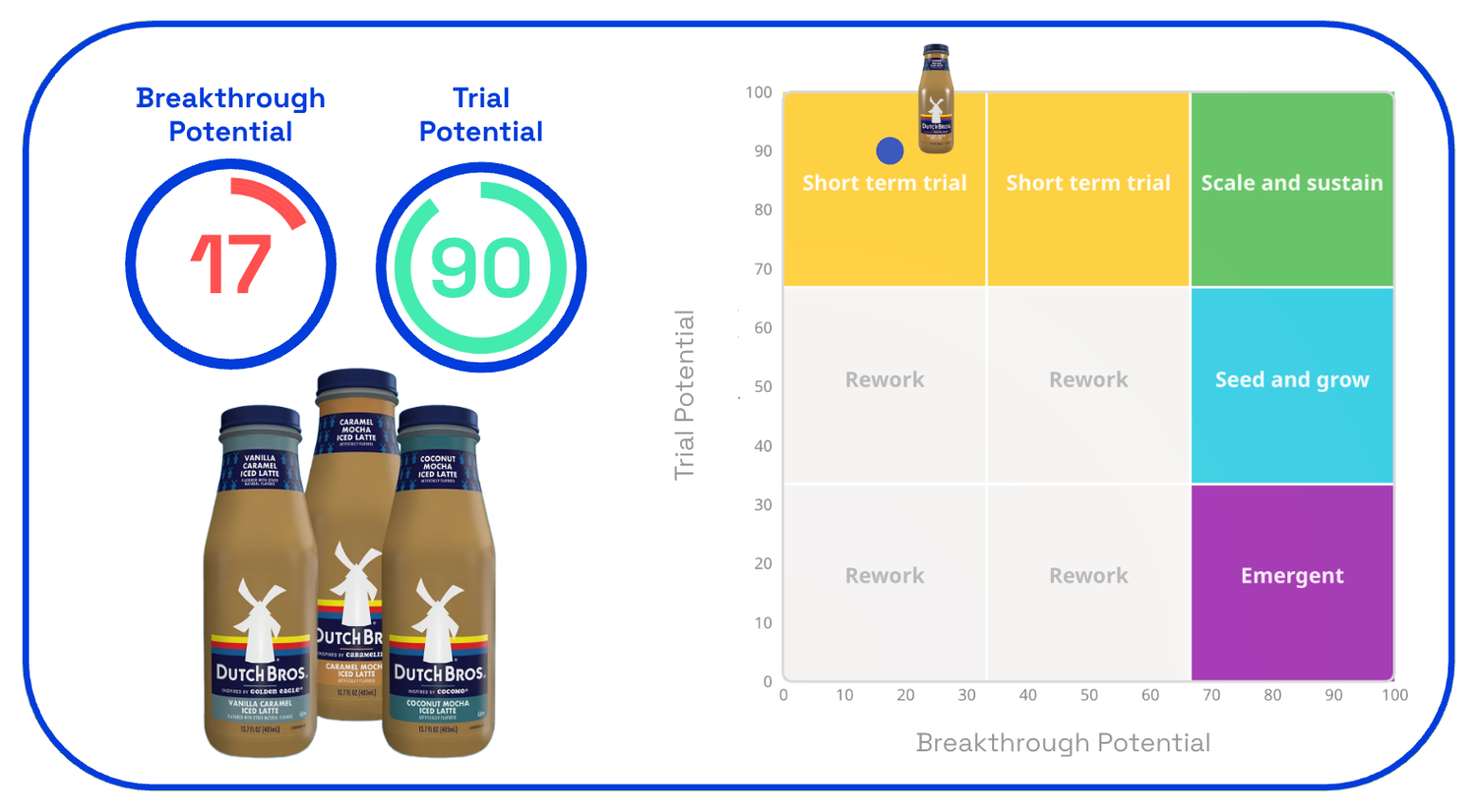
Dutch Bros Ready-to-Drink Iced Lattes scores in the top 10% of US beverage innovations for trial potential and the bottom 20% for breakthrough potential.
These scores put the iced lattes in the “short-term trial” section of our quadrant. This means they’re likely to drive high initial trials, but are not seen as significantly different or better than what’s on the market — yet.
Let’s unpack more about why this innovation scores this way.
We use two key measures to determine breakthrough potential:
How different a product is (distinctiveness)
How superior a product is compared to what’s already available in market (advantage)
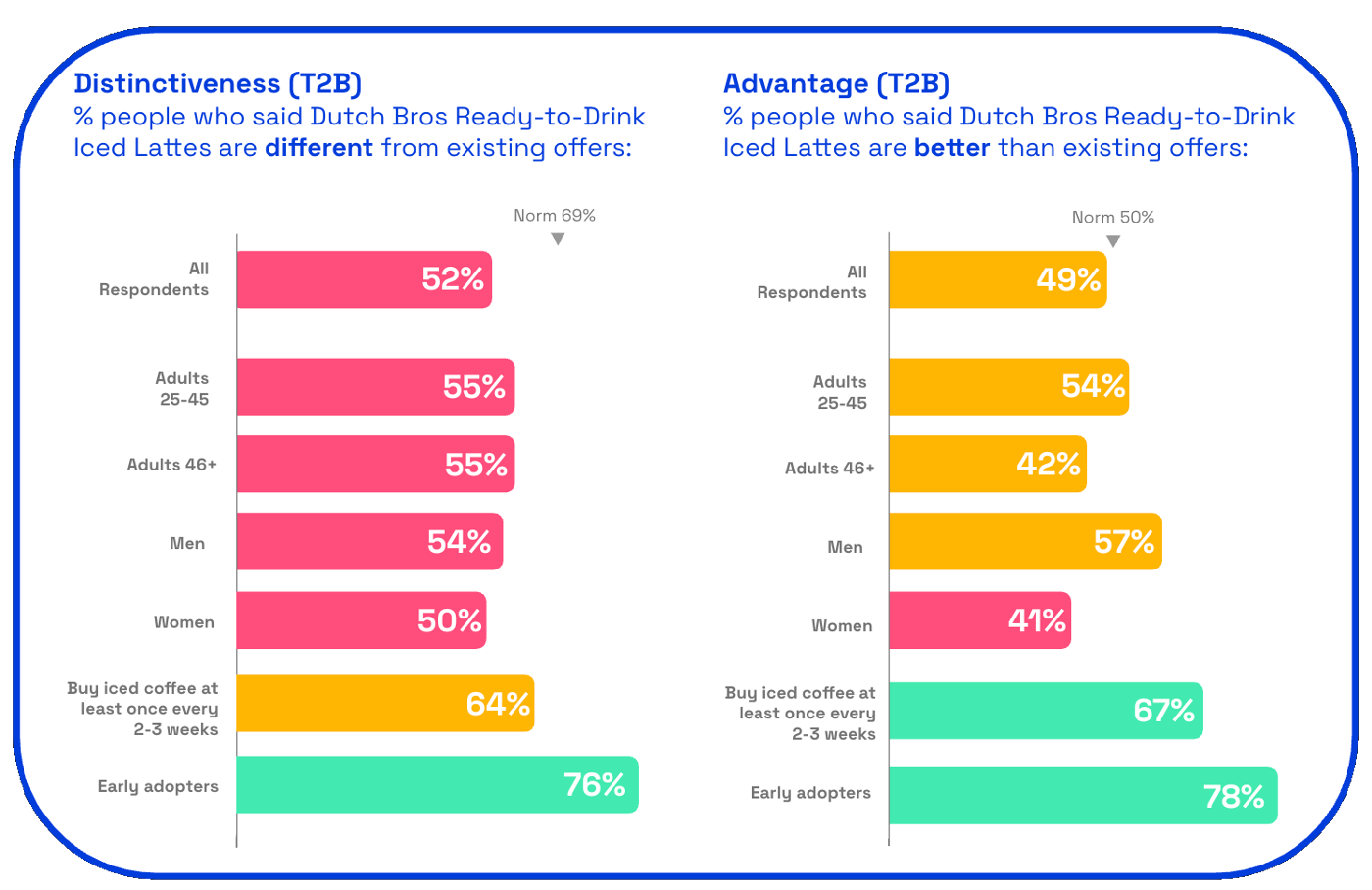
Dutch Bros Ready-to-Drink Iced Lattes are seen as below the average US beverage innovation in distinctiveness (Distinctiveness T2B: 51.7% vs 68.6% norm). But those who buy iced coffee at least once every 2-3 weeks score it in line with the norm on distinctiveness and, most importantly, early adopters score it above the norm.
Dutch Bros Ready-to-Drink Iced Lattes score in line with US beverage innovations for advantage (Advantage T2B: 49.1% vs. 49.6%). But those who regularly shop the category and early adopters see it as significantly more advantageous than the average US beverage innovation.
As we saw, the flavors were the most appealing aspect of the iced lattes for people, but they are apparently not enough to drive higher distinctiveness and advantage. We have a few theories here as to why this is.
One of the most well-known bottled iced coffee beverages shoppers likely recognize is the Starbucks bottled iced frappuccino — which has been on the market for over 20 years. The bottle shape of the Dutch Bros iced lattes is quite similar to this product, so it’s possible people don’t see them as unique because they’re so familiar with the look of the Starbucks option.
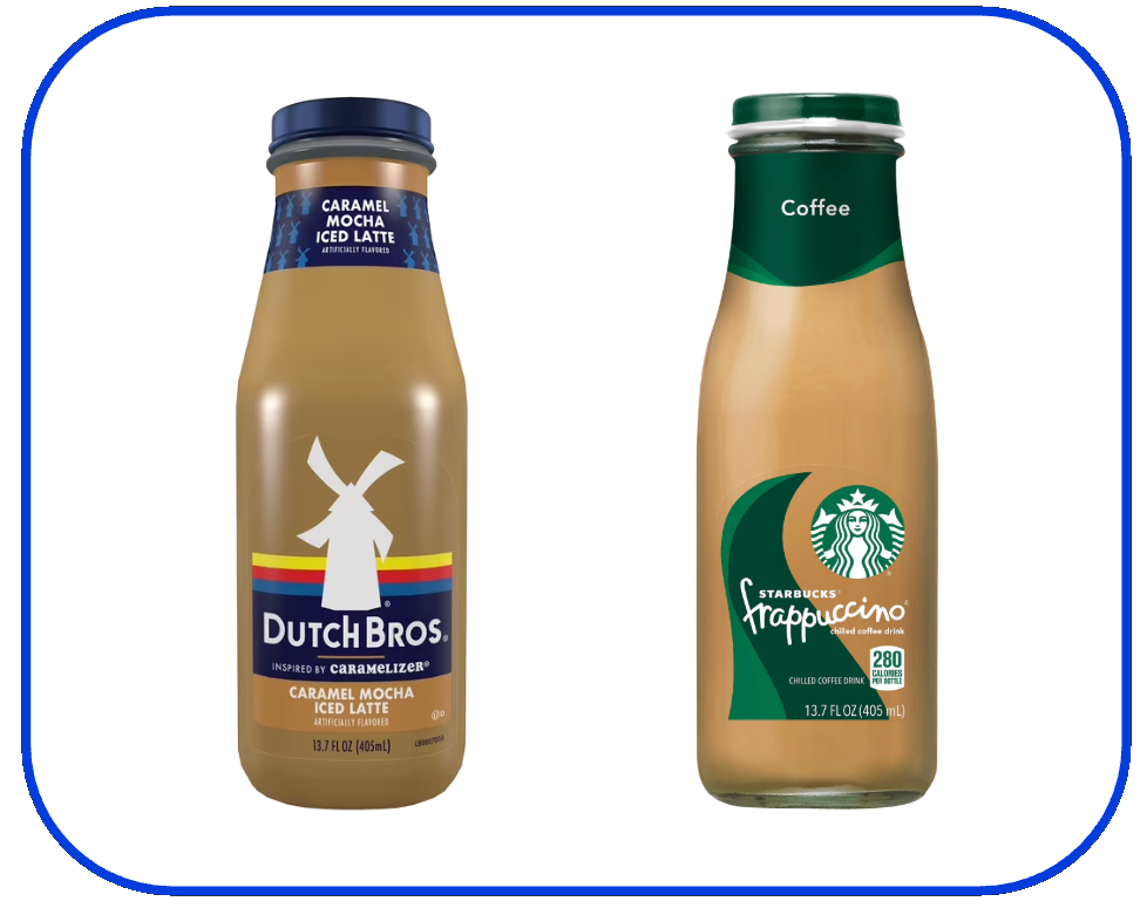
However, many people in our study called out the bottle design as something they enjoyed, saying things like “I like the logo and design of the bottle. I also like that it's served in a glass bottle instead of a can.” So the look does appeal to people. Our theory is that it doesn’t stand out as distinctive because it doesn’t look distinctive.
Additionally, Dutch Bros differentiates itself from other drive-thru coffee chains through its customizable and unique flavor combinations. These RTD iced lattes are based on some fan favorites from the store locations like the Golden Eagle, Caramelizer and Annihilator. This connection is indicated on the packaging of the lattes but very few people called that out in our research from the packaging. That differentiator may be something to make more apparent on the pack or to highlight in the advertising to make people aware that these lattes are unique!
However, early adopters are already aware of the distinctiveness and advantage of these RTD lattes, so that’s a very good sign that the rest of the audience can catch up eventually.
But as we saw earlier, the key strength of the Dutch Bros Ready-to-Drink Iced Lattes lies in its purchase likelihood. 65% of people would purchase the iced lattes if they were available at a reasonable price, which is significantly higher than the average US beverage innovation (Purchase Likelihood T2B: 64.9% vs. 56.0% norm).
Purchase likelihood is much higher among adults 25-45, frequent category buyers and early adopters — over 80% of those groups say they would be likely to purchase!
Which flavor would people be willing to try first? Vanilla Caramel stands out as the flavor with the broadest appeal, with over 6 in 10 people saying it would be the flavor they would try the first time they try the product. Coconut Mocha had the least appeal, with some people citing dislike for coconut.
But really, all the flavors were exciting to people. Some of the things people said included:
“Vanilla caramel sounds delicious.”
“I love vanilla and caramel everything.”
“Love, love, caramel.”
“Finally, a coconut option in my coffee!”
“The flavors are unique. I want to try the coconut mocha one.”
“Both the caramel mocha and the chocolate macadamia nut varieties sound good.”
This is an exciting new expansion into CPG from Dutch Bros we’ll definitely be keeping an eye on — and trying these new flavors!
Looking to expand into a new category? You can test and optimize your innovative new concepts before launch with Zappi’s connected Innovation System. Get a demo to learn more.
And to make sure you never miss one of our Innovation Spotlights, subscribe to our LinkedIn newsletter.
Stay up to date with our latest insights, tips, and industry news.