

Learn how McDonald's has partnered with Zappi to build its test-and-learn approach to innovation, rather than a "test to earn a good score" approach.

“In today’s environment, static segments based on outdated behaviors or assumptions can do more harm than good.”
[[- Leigh Admirand, American Marketing Association]]
Some segmentation frameworks were built for a media and purchasing environment that no longer exists. Cultural change, digital fragmentation and new purchase behaviors are reshaping how consumers cluster, and segmentation must evolve from static exercises to dynamic, continuously validated frameworks.
In this article, I break down traditional segmentation and the shifts taking place, as well as some more modern approaches and frameworks.
Download our guide to learn how CMOs can leverage consumer insights to build winning brands, while navigating today’s complex reality.
One of the key ways brands can effectively market is to make sure their message is personalized, and a key to personalization at scale is segmentation: a strategy in which businesses categorize potential customers into distinct groups based on shared characteristics.
Consider a brand like L’Oreal, a globally recognized beauty brand targeting multiple consumer segments.
L’Oreal is publicly committed to providing beauty products to a diverse audience of people who have different beauty needs, skin tones and hair types. They also offer products at a wide range of price points, from mass market to high end. L’Oreal needs more than the simple demographic information that traditional segmentation depends on.
For instance, along with traditional information about age, gender, income level and lifestyle, L’Oreal considers market trends, customer experiences and responses to personalized engagement in order to make sure the right messages are reaching the right customers.
The brand even greets website visitors with their “Beauty Genius” an “AI Beauty Assistant” to help customers have a more personalized and helpful experience.
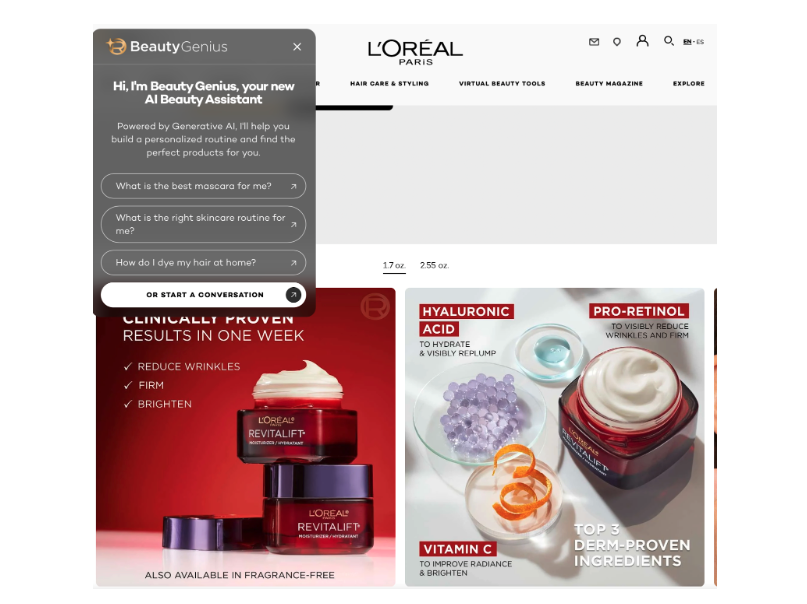
Source: L'Oreal
If you look at advertisements for beauty products from the 1930s or even the 1950s, it’s easy to see how values and identity markers evolve over time.
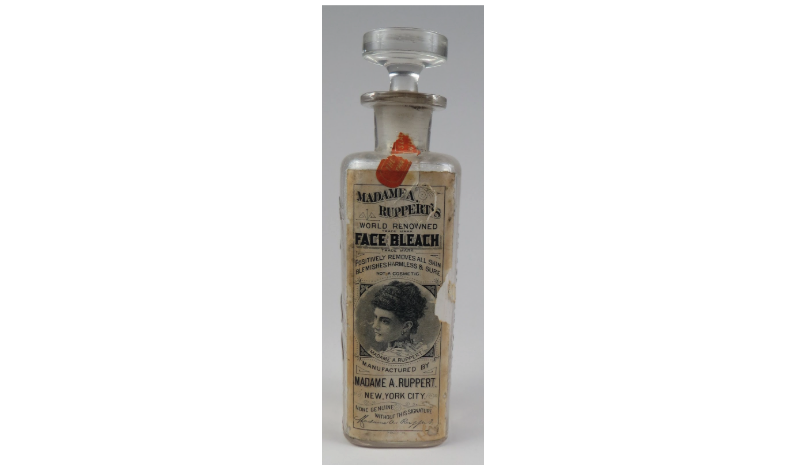
Source: National Museum of American History
Generational shifts are relatively easy to spot and there are many differences between the preferences of Gen X, Millennials and Gen Z. Cultural shifts occur much faster and can bring together the opinions of people who are in completely separate demographic categories.
Old and young alike may be enamored of a particular style or trend. Brands that keep pace with those faster cultural shifts have an advantage compared to those that maintain more rigid demographic segmentation strategies.
In the not-so-distant past, brands had many fewer avenues for advertising: radio, billboards, newspapers and magazines and eventually television. Now, the options are nearly endless and encompass everything from traditional formats to influencer marketing and retail media networks. Many of the platforms available today didn’t even exist 20 years ago.
This fragmentation of the media environment also means that consumers engage across platforms, which can offer opportunities as well as create challenges for brands, such as hybrid purchasing behavior.
Online, offline, subscription and impulse models intersect in sometimes unexpected ways.
Brands that expect consumers to stick to one lane are leaving much to chance. The question of what motivates consumers to make purchases online or offline when they are planned or impulse decisions is one that has been studied by psychologists and marketers, and the answers aren’t always clear cut.
In one study of shoppers in Germany and Poland, researchers identified 23 motives for which channel consumers chose. They found that the most important motives had to do with search outcome, purchase outcome and how easy or difficult the shopping process was, while pleasure and ethical issues were second.
“Results further show that Polish respondents are more demanding and rate most motives as more important than German customers, except motives related to maintaining habits and supporting physical stores. We explain these results by different economic conditions and retail structures in Western and Eastern Europe.”
- Stephen Zielke and Marcin Komor
These results encapsulate the complexity of audience segmentation in modern times. Beyond traditional demographics, exact location, economic conditions, habits and many other factors contribute to how customers make buying decisions, which influences how brands can reach and therefore segment their audiences.
Traditional, demographics-based segmentation may not be as useful as it once was, but segmentation is still a crucial tool.
Marketers just need to adjust how they approach segmentation to include behaviors and attitudes, dynamic clustering, AI-driven tools, micro-segmentation and identifying sub-segments among other new avenues to understanding what consumers want and expect.
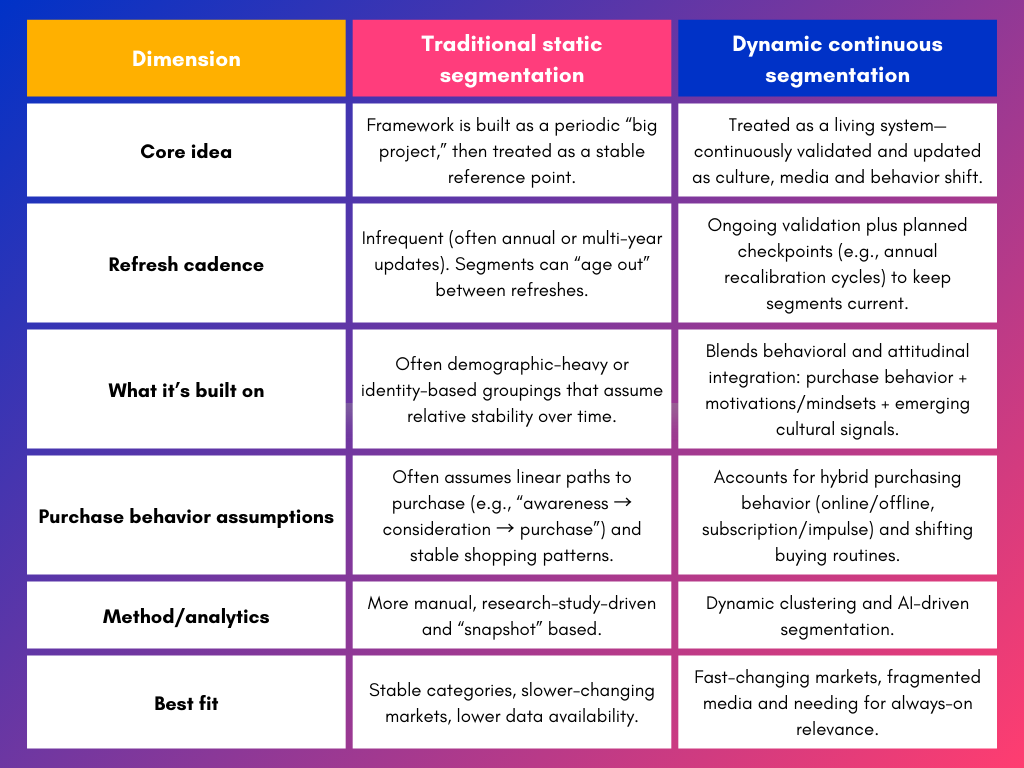
Combining purchase data with mindset and motivation can reveal insights that would otherwise remain obscure. Knowing that a particular consumer made a purchase is useful, but knowing why they made the decision to buy at the precise moment they did is far more powerful.
A snack company, for example, benefits from understanding that a busy mom would rather offer a healthier option when she’s rushing from school pick up to swim lessons, but might allow a more decadent snack to celebrate a great report card.
“Companies often identify segments based on a single approach, such as how much the customer spends, and frequently rely on limited, static data from internal sources. This approach to segmentation can overlook qualitative data about customers’ needs and behaviors—information that, when combined with quantitative data, can provide insights into further spending.” - Deloitte in CMO Today
One of the limitations of traditional segmentation is that it’s slow. Brands end up with personas that they use for years—even as people and circumstances change and evolve. Dynamic clustering, driven by AI and machine learning, solves the issue of static audience segments and personas.
Tools like machine learning can reveal patterns and detect shifting audience patterns, which can inform new segments and also lead to personalization. Consumers want brands to tailor their communications, and importantly, get frustrated when they don’t.
AI can also help brands define segments very narrowly, which means better, more tailored offers and improved conversion rates. It can become a problem, though, without some carefully considered rules in place.
Setting a minimum audience size, campaign length, differences in groups and evidence standards are some of the strategic guardrails marketing teams should consider when implementing micro-segmentation. Such constraints prevent having too many segments and keep the goals for promotions or offers clear.
Most marketing teams already have some audience segmentation in place, and starting from scratch isn’t usually the most efficient way to move to a modern segmentation. Updating segments can be a faster and more effective method than starting over.
Some assumptions are so ingrained that we don’t even realize they exist. When it comes to audience segmentation, recognizing core assumptions then testing to see if they still predict behavior is one key component of success.
A good example of why to test assumptions is how Febreze came to market. Originally, the spray was marketed as an odor neutralizer—it would make bad smells go away. Sales were lackluster, so P&G began conducting market research to find out why. One of their tactics was to conduct in-home usage tests (IHUTs). In one IHUT, two researchers interviewed a homeowner who had nine cats. The researchers described the smell of the cats as being overpowering, yet the homeowner said that cat smell wasn’t a problem and that the cats hardly smelled at all.
Upon discovering that people who live with even very strong smells become “noseblind” to them, P&G changed their marketing approach from describing the product as an “odor neutralizer” to serving as a finishing touch to consumers’ cleaning routines. The change worked and today Febreze is a billion dollar brand.
If revalidating core assumptions is step one in refreshing existing segments, overlaying new signals is step two. The ability to detect granular behaviors and patterns is useless if that information doesn’t inform how and when brands engage with consumers.
Looking within legacy segments to find emerging trends or early divergence offers an opportunity to further personalize engagements. Harnessing fast-moving cultural trends is tricky, but using AI and machine learning to also find patterns early helps.
Segments should drive outcomes and actionable decisions. The consumer may be motivated by targeted marketing and make additional or different purchases. The brand, too, may make changes based on how well (or not) segments work. Creative elements, distribution channels or product development can all change based on how the audience is segmented.
Testing how different segments respond to positioning and messaging can show whether or not a segmentation strategy is working well or not. Compare new segments to old ones, perform A/B tests with one variable and analyze variation in the results.
Distribution is an area of opportunity for brands, but also one full of potential pitfalls. For segments to remain valid and useful, they should remain distinct across channels.
Most people have heard of Spotify Wrapped even if they don’t use the platform.The Wrapped list makes each listener’s data into a personalized playlist, and the rollout is coordinated across channels instead of delivered only within the app. But, Spotify also offers Wrapped for Advertisers, which can be used as a tool to help confirm your media spend is being used to effectively target distinct audience segments.
For instance, audiobooks and podcasts about outdoor adventures may offer opportunities for a brand selling camping equipment. A snack brand focused on packaging sustainability may focus on an eco-conscious segment of people who watch or listen to nature content on Spotify.
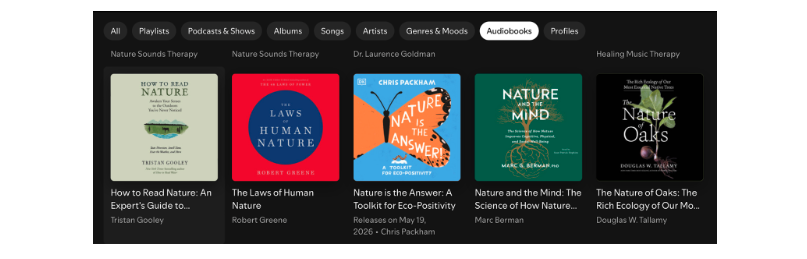
Source: Spotify
For most brands, a successful product appeals to more than one segment. Innovation can feel risky, but as Wendy’s Frosty Swirls and Fusions shows, it can pay off. The key is to test the change across segments.
Wendy’s added two new kinds of Frosty’s, Swirls and Fusions, to their menu in the summer of 2025. Swirls add sauces to the much-loved chocolate and vanilla Frosty flavors. Fusions include sauces plus mix-ins like brownie batter, strawberry-flavored Pop-Tarts pieces and others.
Changing one of their original and most successful menu items was a bit of a risk, but thoroughly testing the messaging and consumers reactions to the new line helped to uncover whether there was appeal across their audience segments.
Using a consumer insights platform like Zappi can help brands test concepts for appeal, relevance, and creative and messaging resonance among various audience groups to help brands learn whether refreshed lines work with their target audience and if it’s an idea worth pursuing..
Let’s dive into how consumer insights can inform a robust segmentation strategy.
For most of the history of marketing, brands had to periodically test and overhaul their audience segments. Now, it’s possible—and advisable—to shift to ongoing validation. Zappi provides insights fast, so that brands can see what works and what doesn’t across target segments.
Here’s a simple overview of how to approach this:
Scheduling structured refresh checkpoints offers a way for brands to keep segments from becoming stale or irrelevant.
Ongoing validation shows how your brand is performing, and regular checkpoints keep you from getting stuck on autopilot. Think of it as stopping for gas in your car. An annual recalibration is more like getting a yearly tune-up. It’s a way to stop drift and a chance to add overlays. This is how you make sure all of the major components of your audience segmentation strategy are in good working order and ready for the next stage.
Siloes are a near-universal issue in modern business. For marketing especially, cross-functional alignment among the brand, media and innovation teams is crucial as it helps disseminate learnings across the whole organization.
By aligning with cross-functional teams, you can make sure any learnings that are uncovered about your audience are updated — whether it be at an ad hoc or quarterly/monthly meeting cadence.
“With Zappi’s platform, we have a collaborative workspace where we all have access to the same tests with one click of a button.”
[[- Georgina Farmer, Global Insights and Analytics Manager, Intimate Wellness, Reckitt]]
The cliche about not being able to see the forest through the trees holds true in many marketing departments. Over time, segments evolve and can become muddied.
Careful tracking that results in governance and documentation helps keep that clear. Zappi’s dashboards give teams the ability to keep all of their learnings in one place and look back and see what works over time, resulting in steady improvement.
Consumer segmentation must evolve as culture and purchasing behaviors shift and change, which is happening constantly. The old method of periodic overhauling segmentation can’t keep up.
Modern segmentation blends behavioral data, cultural signals and analysis to provide continuous validation. That combination means signals indicating trends can be spotted early.
Brands that refresh and pressure-test segments will maintain a strategic advantage in the marketplace. And Zappi’s consumer insights platform gives brands the tools for updating, validating and testing among audience segments continuously.
Download our guide to learn how CMOs can leverage consumer insights to build winning brands, while navigating today’s complex reality.
Stay up to date with our latest insights, tips, and industry news.