Learn how McDonald's has partnered with Zappi to build its test-and-learn approach to innovation, rather than a "test to earn a good score" approach.
For decades, brand loyalty was one of the most powerful advantages in CPG.
Strong brands didn’t just drive awareness, they drove repeat purchases. They justified premium pricing through this loyalty and created a sense of consistency on an otherwise crowded shelf.
But all of that is starting to break down.
Loyalty isn’t what it used to be. Consumers are more open to alternatives and more focused on value than ever before.
To better understand this shift in consumer purchasing decisions, we surveyed 2,000 US consumers and compiled learnings from Bain & Company, McKinsey, Deloitte, PwC, Infosys and more.
Read on for what we uncovered.
For our complete findings, download our ungated report.
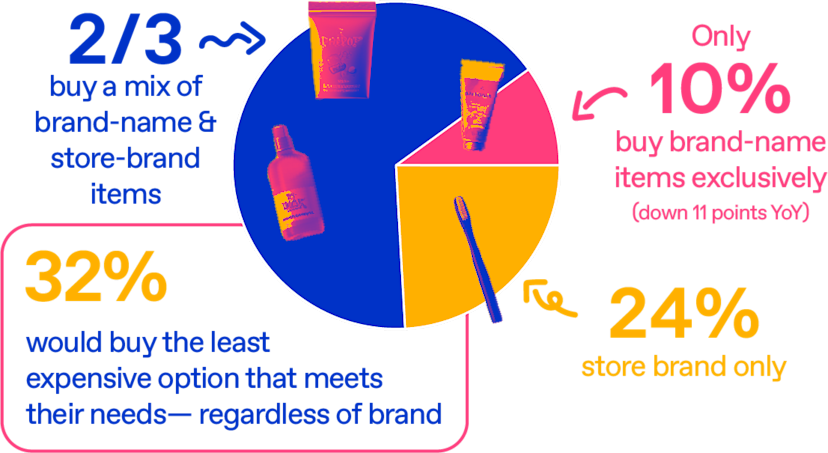
Only ~10% of consumers now buy exclusively brand-name products, while two-thirds mix branded and private label
Price is the new decision driver with 32% of shoppers choosing the cheapest option that meets their needs
Private labels have leveled up, with 60% of consumers say it’s equal to or better than national brands, removing a key barrier to switching
93% are shopping differently — using discounts, buying less and trading down
Value-seeking is now the default. Consumers across income levels are more intentional, balancing where to save and where to spend.
The scale and speed of this shift are hard to ignore.
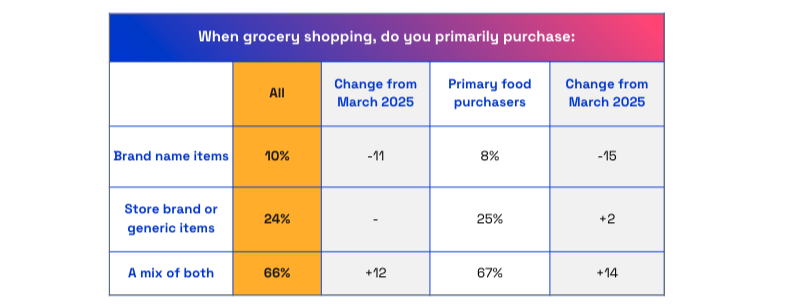
In just six months, the number of consumers who say they buy only brand-name products has dropped by 11 percentage points. Today, only around 10% of shoppers are exclusively loyal to brands.
The vast majority now mix branded and private-label products in their shopping baskets. At first glance, that might seem like a gradual shift. But in reality, it’s far more disruptive.
Consumers aren’t fully switching away from brands, they’re re-evaluating them on every purchase. That means loyalty hasn’t just weakened — it’s become conditional.
💡Takeaway: Every trip to the store is a new decision and every product has to earn its place.
At the heart of this shift is a simple but powerful change: Price now matters more than the brand.
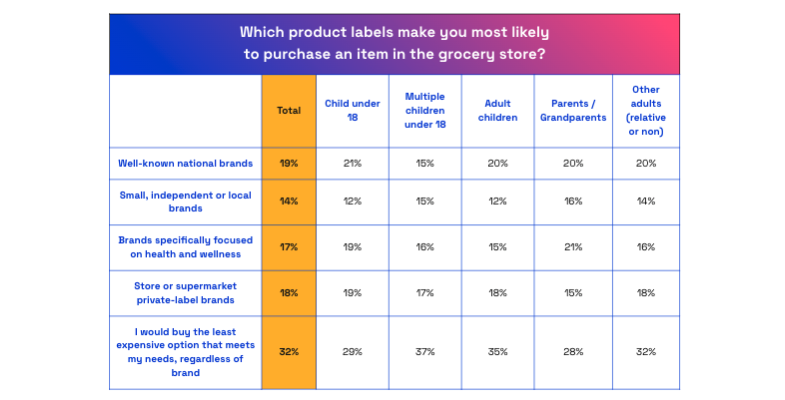
Today, 32% of consumers say they choose the least expensive option that meets their needs, regardless of brand. That makes price the single biggest driver of purchase decisions.
By comparison, well-known national brands influence just 19% of shoppers, and even private label brands are nearly as influential.
Instead of relying on familiarity or trust alone, brands now have to compete more directly on value.
💡Takeaway: If brands can’t clearly justify their price, consumers are increasingly willing to walk away.
One of the biggest reasons loyalty is eroding is that the alternatives have fundamentally improved.
In the past, private labels used to come with a trade off: Lower price, but lower quality. But that trade off is quickly disappearing.
Today, 60% of consumers say private-label products are equal to or better than national brands.
And in markets like Europe, private labels already command a significantly larger share than in the US, suggesting there’s still room for further expansion.
💡Takeaway: For consumers, switching to private label no longer feels like settling, it feels like making a smart choice. For brands, that removes one of the biggest barriers that protected loyalty in the past.
This shift isn’t happening in isolation, it’s part of a broader change in how consumers approach shopping altogether.
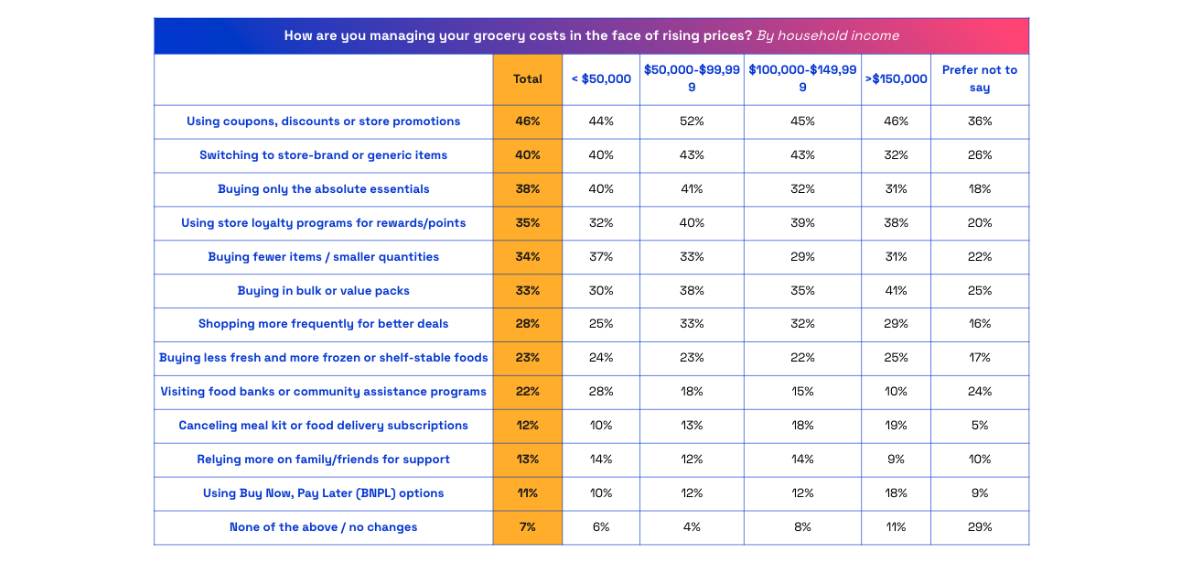
Today, 93% of consumers say they are actively changing how they shop for groceries. They’re using coupons, switching to store brands, buying fewer items and focusing more on essentials.
And some of these signals are particularly striking. For example, 11% of consumers report using Buy Now, Pay Later options for groceries, a clear indication of just how much financial pressure is shaping behavior.
As a result, shopping is becoming more deliberate. Consumers are comparing more and questioning purchases they might have made automatically in the past.
💡Takeaway: Brand loyalty has historically depended on habit. And when habits break, loyalty tends to break with them.
There’s also an internal factor at play. Complexity.
Over time, many CPG companies have expanded their portfolios to cover every possible segment or need. The result is often a large amount of SKUs that adds operational strain without necessarily adding value.
Now, that approach is being re-evaluated.
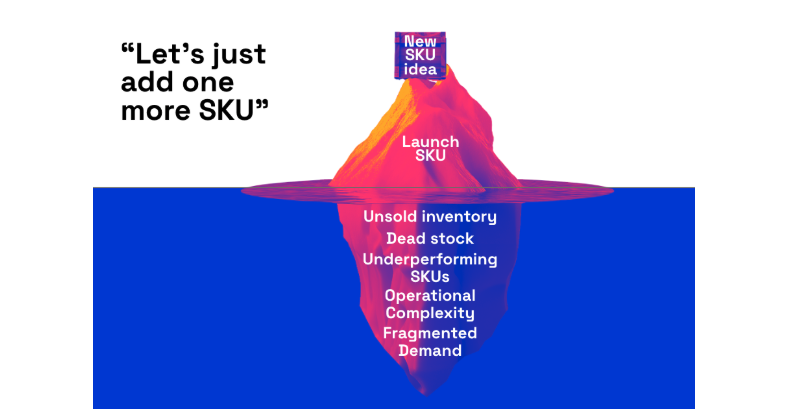
Source: visualdragon.ai
Reducing SKU complexity has been shown to improve both growth and margins, and many companies are actively simplifying their portfolios as a result.
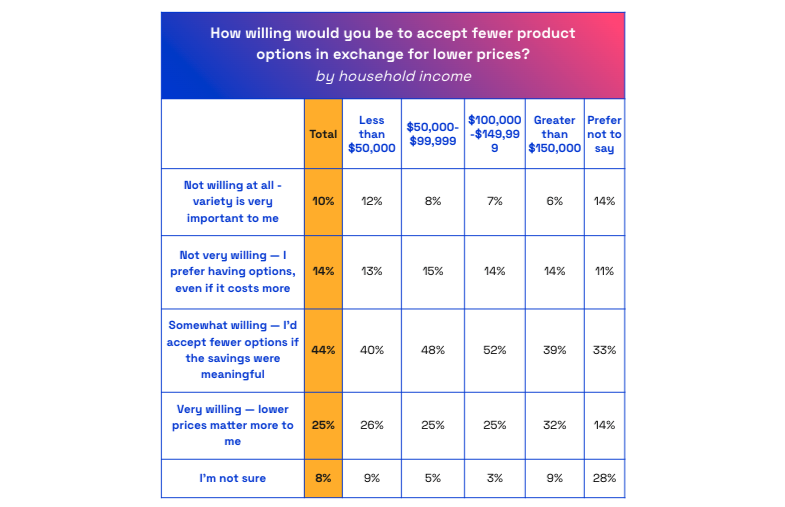
Importantly, consumers are signaling that they’re open to this. A majority say they would accept fewer options if it meant lower prices or better value.
💡Takeaway: Simplification isn’t just an efficiency play, it’s a way to better align with how consumers are actually making decisions.
Brand loyalty isn’t completely gone, but it’s no longer something brands can solely rely on.
Consumers are still willing to stick with the brands they trust, but that loyalty is far more dependent on whether a product consistently delivers value.
Ultimately, it has to feel worth it. And if it doesn’t, consumers are completely comfortable trading down or trying something new.
For CPG brands, that raises the bar. Recognition alone isn’t enough to win anymore. The brands that succeed won’t be the ones that rely on what they’ve built in the past — they’ll be the ones that consistently prove their value in the present.
For our complete findings, download our ungated report.
Stay up to date with our latest insights, tips, and industry news.