
Learn how McDonald's has partnered with Zappi to build its test-and-learn approach to innovation, rather than a "test to earn a good score" approach.
A challenger brand is a brand that uses unique brand philosophies, values or disruptive strategies to challenge business norms within their category.
Typically neither a market leader or small niche player, challenger brands are bold, unconventional and set out to change their industry.
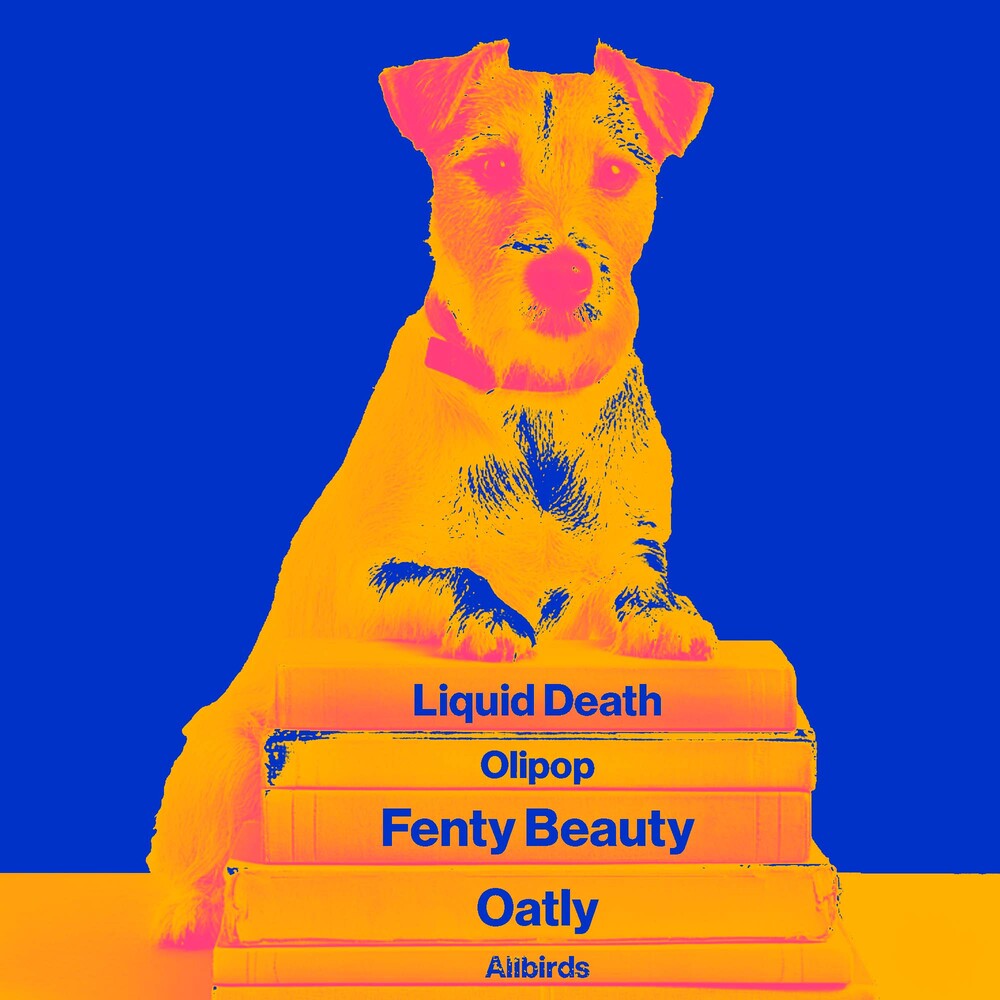
Sometimes called underdog brands, challenger brands like Oatly, Olipop and Liquid Death shake up their categories through unique products, strategies and brand values and philosophies that challenge the status quo.
In this post, I’ll take a look at ten of the most innovative underdog and challenger brands in 2026.
Here’s a look at some of the best challenger brand examples in 2026.
Product: Canned water from the Alps
Founded: 2017 (launched in 2019)
Biggest competitors: Evian, Red Bull and PepsiCo
Core brand persona: Edgy
When you think of water brands, you probably think of tranquil brand imagery and vanillaesque marketing. Unless the brand that pops up for you is Liquid Death.
Launched in 2019 by Mike Cessario, Liquid Death disrupted the market with punk branding, heavy-metal aesthetic and dark humor.
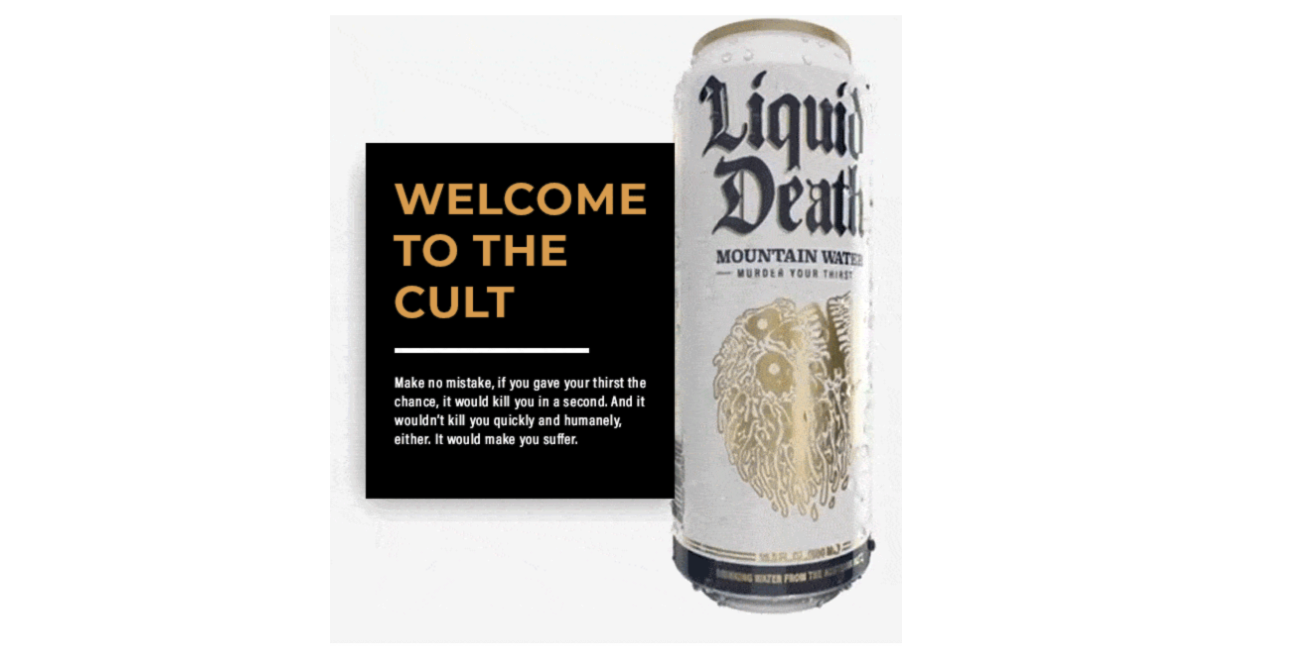
Source: Medium
As former creative director of Netflix, Cessario understood the inherent persuasiveness of being a challenger brand: “If someone I knew saw that in a store, I’m pretty sure they’re going to have to pick that up and be like, ‘What is this?' And once someone picks something up, you’ve basically won.”
Instead of the classic water bottle, Liquid Death opted for cans that looked like they belonged in the liquor store. Cessario rolled out the product alongside the iconic tagline: “Murder Your Thirst.”
Cessario reportedly created the brand's first commercial for $1,500 and spent $3,000 on Facebook ads to assess whether there was a demand for the product.
Four months later? His commercial had been viewed more three million times and Liquid Death’s Facebook followers had jumped by 100,000 — putting it ahead of Aquafina. From its early days, Liquid Death experimented with their marketing — producing a “greatest hates” album of their negative comments on Facebook and creating subversive ads like this one:
Cessario said of the strategy: “We’re not going to have Coca-Cola or Pepsi-like budgets to spend. We don’t have $300 million to throw at something, so every piece of marketing that we make has to be interesting or entertaining so people organically spread it.”
Product: Luxury leather
Founded: 1941
Biggest competitors: Kate Spade and Kors
Brand persona: Gen-Z cool
“In this sector, it’s really rare to take a kind of mediocre mall brand that has been tarnished and then elevate it to be a credible luxury contender.”
- Aneesha Sherman, Bernstein’s managing director of U.S. apparel and specialty retail
Once seen as an uncool “mom brand”, in 2025, more than two-thirds of Coach’s 900,000 new customers in North America were Gen Zers and millennials. Across TikTok, Coach has become known for their cool high-quality, luxury leather goods and chic accessories.
And this was all thanks to Coach’s 2017 rebrand, under newly-appointed creative director Stuart Vevers. Vevers built Coach’s rebrand strategy around some essential Gen-Z pillars: “it bags” in the form of the Tabby, the Dakota and the Brooklyn and cute bag charms, TikTok thriftings and unboxings and Gen-Z-aligned brand values like self-expression, confidence and authenticity.
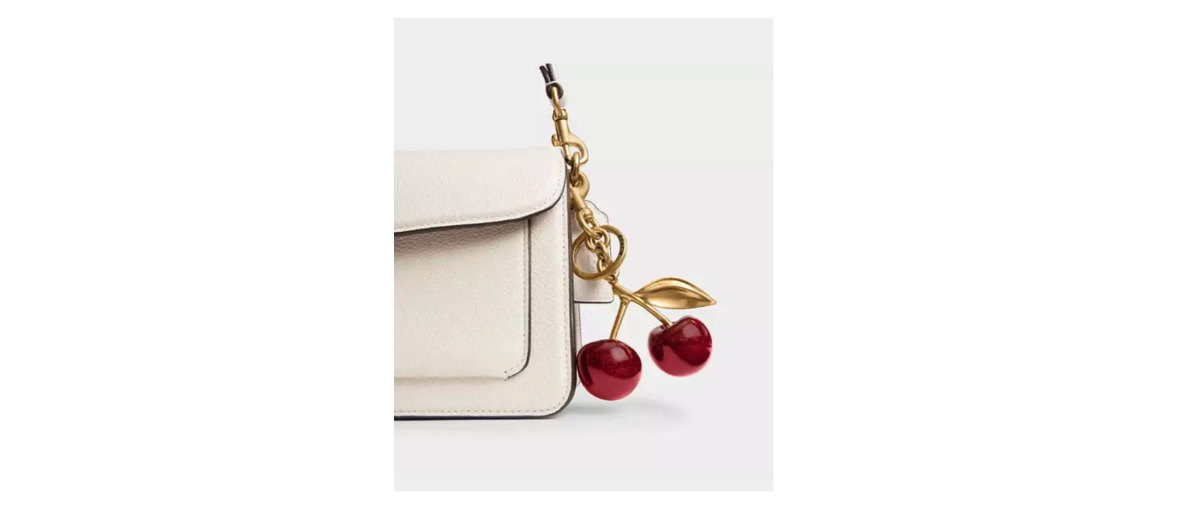
Source: Coach
Product: Healthier soda
Founded: 2018
Biggest competitors: PepsiCo and Coca-Cola
Core brand persona: Health-conscious, ‘90s retro
87% of consumers see themselves somewhat or very healthy, with over 80% actively focusing on health goals. But what they’re focusing on is changing. Health-conscious consumers that previously zeroed in on cutting calories and fat are now prioritizing reducing their sugar intake.
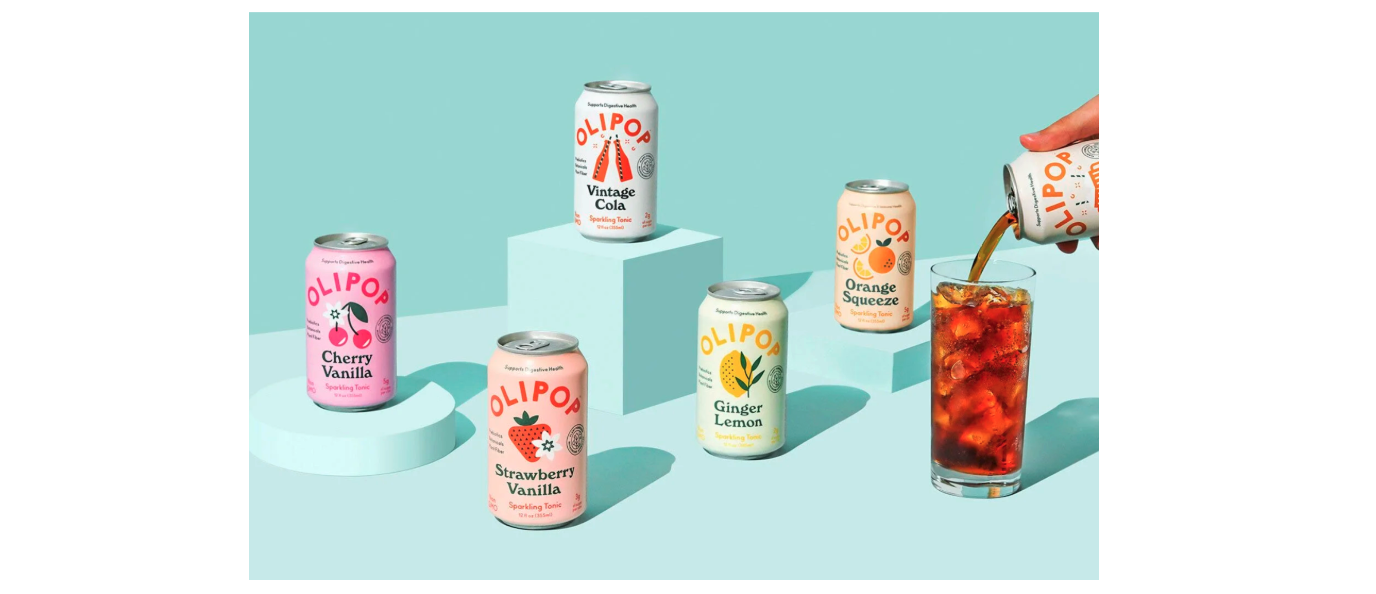
Source: Break Maiden
Olipop was founded in 2018 by Goodwin and David Lester to help consumers do just that. The soda line is low in sugar as well as calories and includes prebiotics. It comes in a host of traditional and original flavors like cherry cola and strawberry vanilla.
Online, consumers rave about Olipop’s flavors with one consumer noting the Banana Cream flavor tastes just like the pie. While others talk about how the soda makes them feel great — settling their tummy.
"Despite significant household penetration, soda consumption was declining at a rate of about a point per year. And because the customers who stayed in the market were thought to be hard to switch: guarded by large, powerful soda brands able to spend big dollars to limit brands like ours from growing. I was made to feel like developing a healthy soda category was a really stupid idea." - Ben Goodwin, Olipop CEO
Now a $97 million brand, Olipop was the first to bring a healthier soda alternative to the market — inspiring Big Soda to expand their own product lines to cater to health-conscious consumers. Pepsi and Coke quickly followed, launching their own lower calorie, low-sugar alternatives.
In May 2025, Pepsi acquired the popular prebiotic cider vinegar-based soda brand Poppi to adapt to, "Changing consumer preferences," and to give consumers, "Greater choice, optionality and functional ingredients in their cola experience."
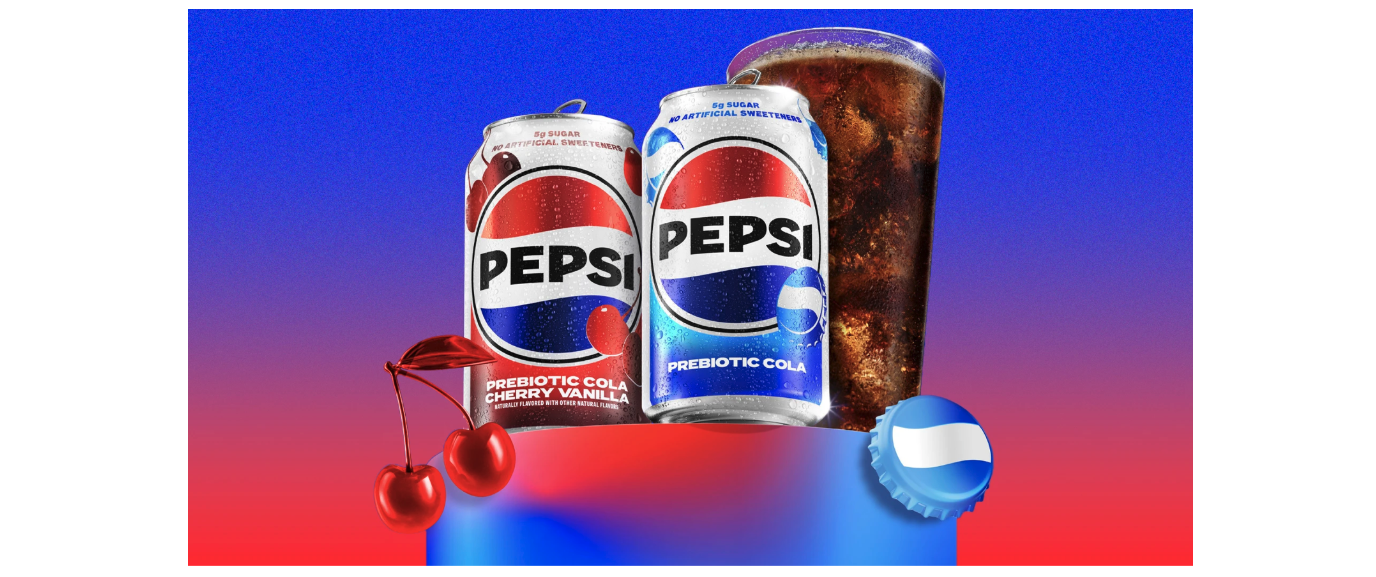
Source: Inc.
The brand was the first (and the only) soda company to run a company-funded study to demonstrate the health benefits of their product. In June 2025, Olipop found that test subjects had a better blood sugar response to their Vintage Cola when compared to traditional cola.
Goodwin says, “That should be the expectation if a consumer is going to pay a premium for something that they believe is going to benefit their health. It’s a reality that no other player in the functional soda, modern soda space has done any empirical research whatsoever.”
Find out more about Olipop’s backstory and marketing strategy in my post on CPG disruptors.
Product: Footwear
Founded: 2015
Biggest competitors: Hoka, Nike and Adidas
Core brand persona: Anti-fast-fashion
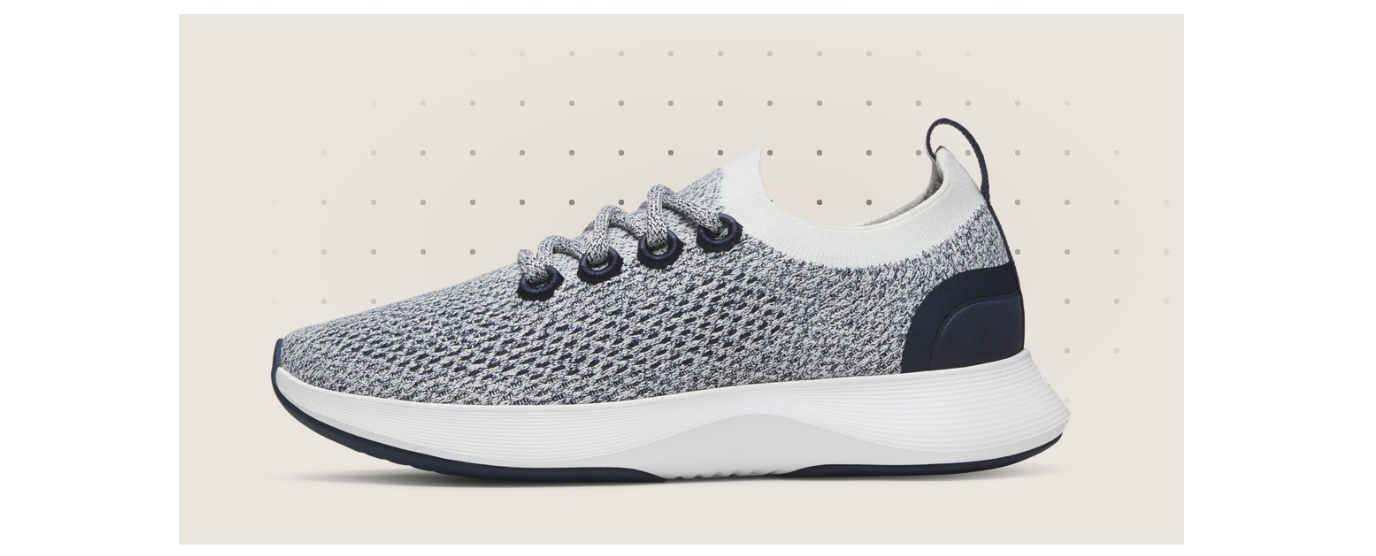
Founded in 2015 by Tim Brown and Joey Zwillinger in San Francisco (with New Zealand roots), Allbirds’ comfy, minimalist sneakers became the go-to sneaker for techies in startups across Silicon Valley.
Source: Allbirds
Brown was a professional soccer player for eight years, which included a stint as New Zealand’s vice captain for the 2010 FIFA World Cup. Brown envisioned a simple, comfortable shoe that supported athletes on the pitch.
At the time of their launch, Allbirds were unique for their minimal design, DTC approach and planet-friendly materials — targeting a consumer looking for comfort and practicality over the bold styles of Nike and Adidas. The product: comfortable, minimalist and eco-friendly. The brand’s sneakers were named by TIME magazine as, “The world’s most comfortable shoes.”
"Allbirds are the squint-and-you’ll-miss-’em shoes that ate the tech world. Tejas Priyadarshan, 22, a data scientist for a website in Berkeley, Calif., estimated that over half of his colleagues wear these spartan wool sneakers, completely free of stripes, swooshes, pixelated patterns and other design flourishes." - Jacob Gallagher, The Wall Street Journal
Product: Beauty products
Founded: 2017
Biggest competitors: Covergirl, Dior
Core brand persona: Radical inclusivity
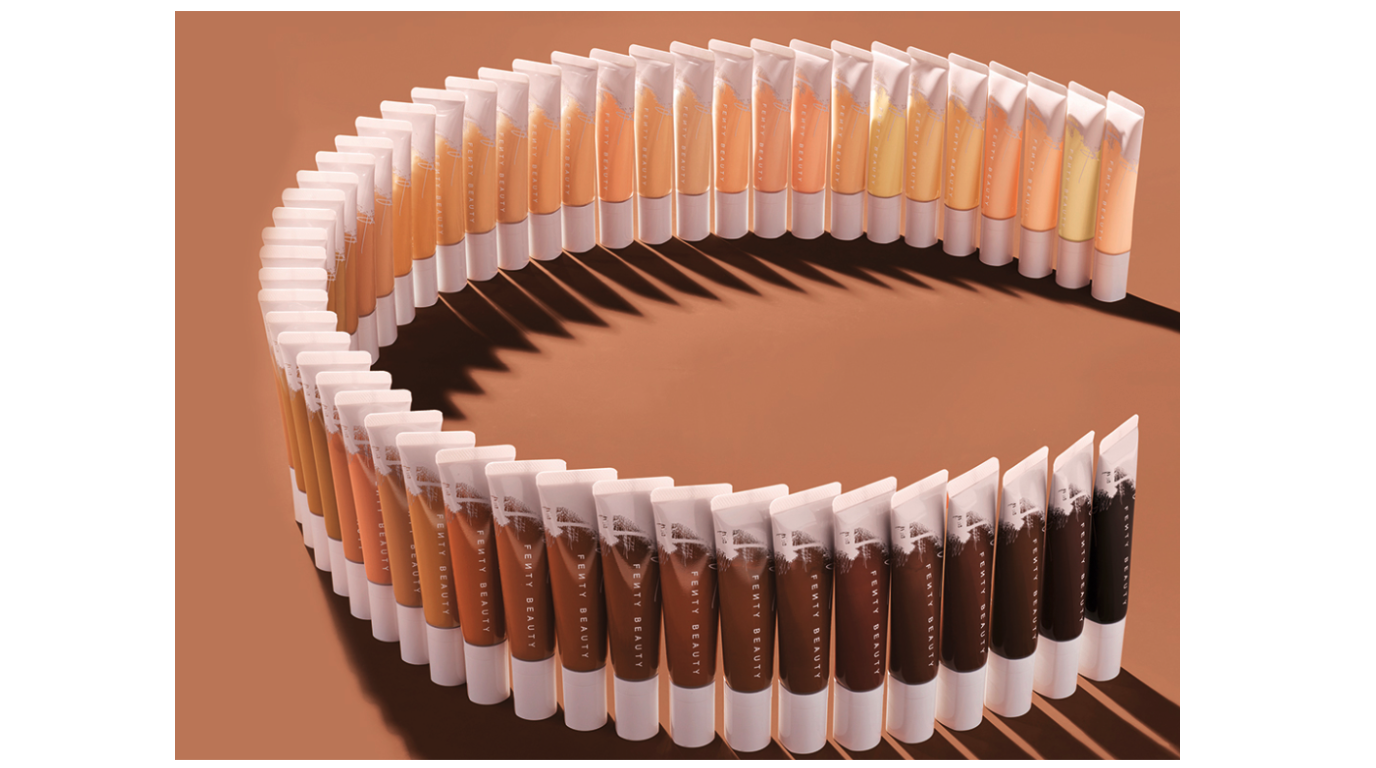
Founded by Rihanna in 2017, Fenty Beauty was launched to bring inclusive beauty products to underserved consumers — going beyond the minimal (and whiter-than-white) shade collections offered in the 2010s.
“We have this amazing emotional connection with customers who’ve never been able to find their shade of foundation before—women crying at the makeup counter—it’s crazy to even think about. The first woman I saw put makeup on her face was a black woman—my mom—and when I think of my customers, I want everyone to feel like they can find their color, that they are represented as part of this new generation." - Rihanna
Originally debuted with 40 foundation shades (now 50), the brand was backed by the tagline: Beauty for all. Fenty challenged the idea that beauty was for thin, white women — building campaigns and products around people of all genders, skin tones and sizes.
Source: Sephora
Fenty also spoke to millennial (and now Gen Z) consumers with gender-neutral, cruelty-free, premium products. The Fenty philosophy: beauty was meant to be celebratory, inclusive, authentic and made for the consumer.
Fenty forced the beauty industry to reflect. The brand inadvertently pushed other bigger beauty brands towards greater inclusivity. Dubbed, “The Fenty Effect,” brands like Covergirl and Dior quickly followed with inclusive 40-shade foundation lines in 2018. In the same year, Naomi Campbell landed her first ever beauty deal after over a decade in the industry, launching an inclusive product line with Nars.
Fenty Beauty currently has a net worth of $2.8 billion, with Rihanna later launching Sephora’s go-to lines: Fenty Skin and Fenty Hair. The brand is reportedly the main contributor to Rihanna’s billionaire status.
Product: Oat milk
Founded: 1993
Biggest competitors: The entire dairy industry
Core brand persona: Provocateurs
In 2012, John Schoolcraft, Oatly's Creative Director, took Oatly from overlooked oat-milk company to famous challenger brand with a purposefully provocative re-launch that directly targeted the dairy industry.
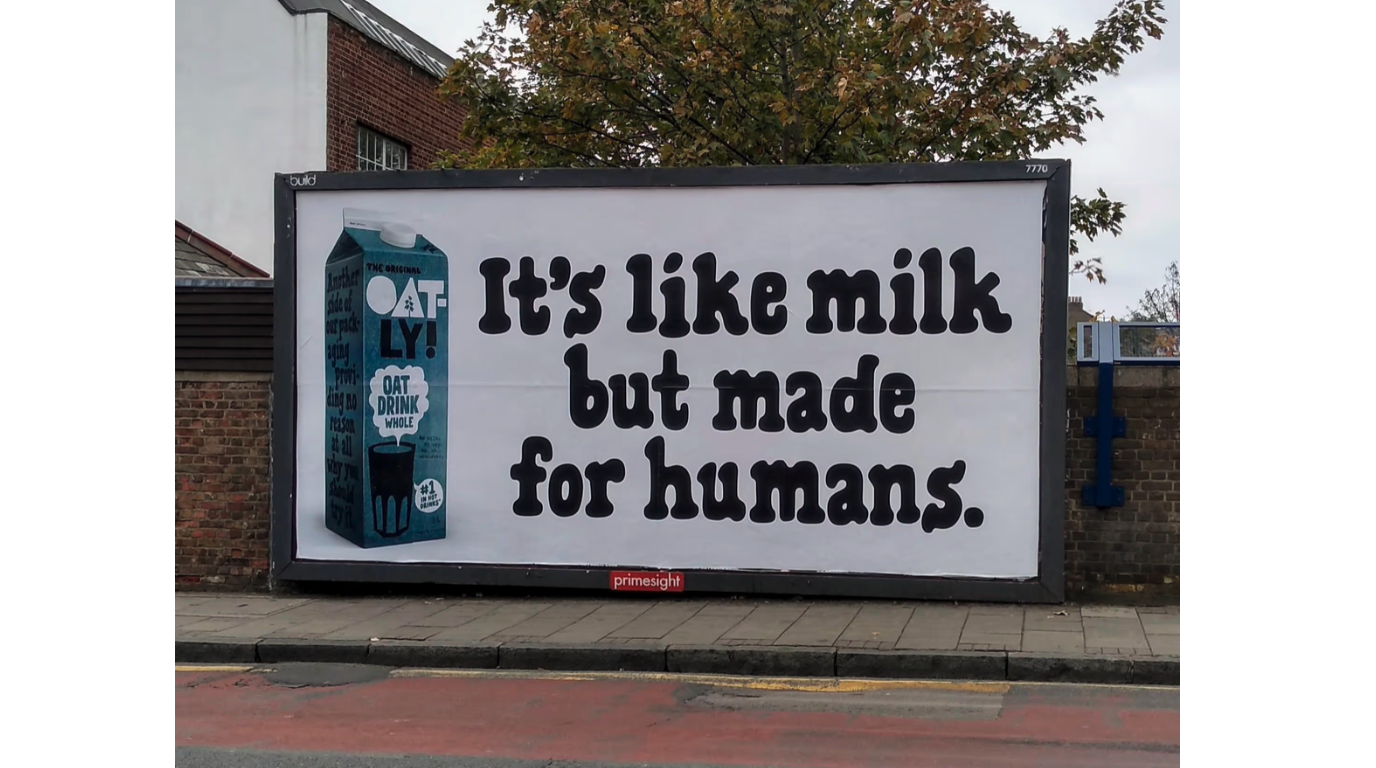
Backed by their newly-appointed Department of Mind Control (aka the revamped marketing department), Oatly expertly positioned themselves as a sustainable, healthy alternative to cows milk with punchy out-of-home murals and billboards.
Oatly built their marketing campaign around a singular, scandalous tagline: “It’s like milk, but made for humans.”
Source: Behavio
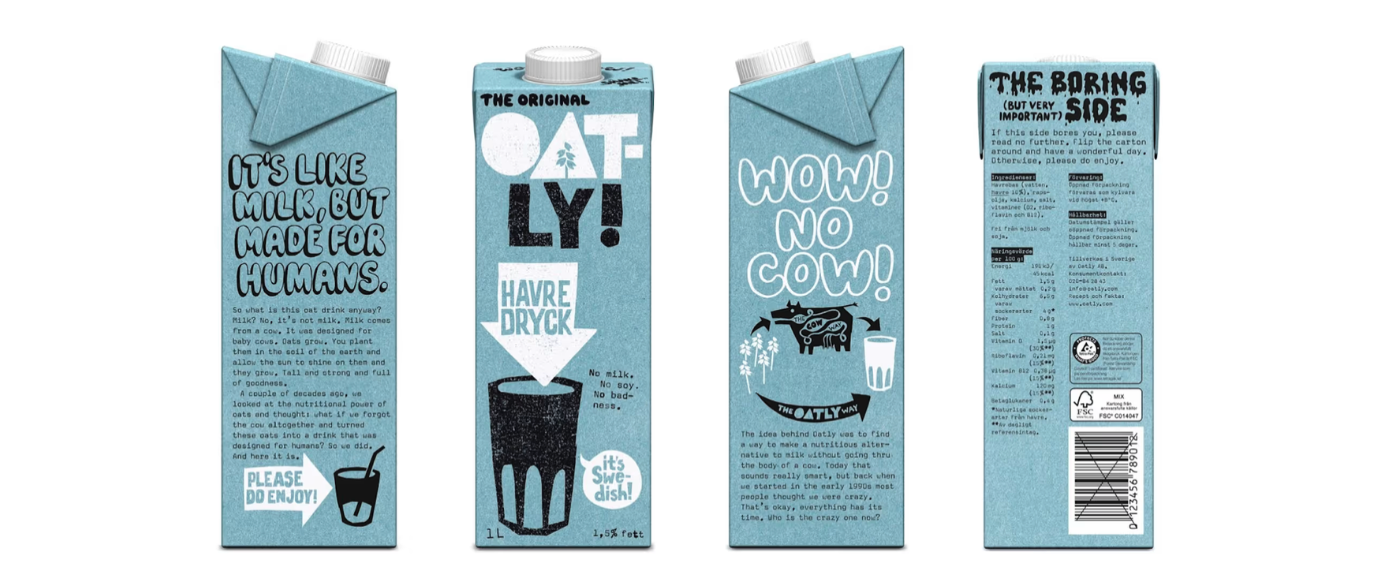
Even the packaging was designed to challenge convention and play on consumers’ curiosity. Schoolcraft shares:
“If you look at the dairy alternative packaging on shelves; the liquid is always shown, it usually pours from the right hand side, everything is colour coded to a pattern that exists in the design world. There are so many conventions. The aim was to get customers to pick it up out of curiosity so we intentionally made these look like we’d just made these in the basement at home.”
Source: Behavio
He adds:
“We thought that on every side of the packaging there should be something interesting to read. The legal side on the back we refer to as the boring side. We know that once we’re in people’s hands, they read the copy, try us, and tend, in great numbers, to like the taste."
Another key strategy for Oatly’s Department of Mind Control? Bringing Oatly to consumers via their barista-made coffees. Rather than rolling out their newly-designed product cartons in grocery stores, Oatly shared them with artisan coffee houses across the U.S.
This created a "halo effect." Consumers who tried Oatly in a latte were more likely to buy it to use at home — taking oat milk from a "weird" dairy milk alternative to a refined-yet-sustainable lifestyle choice.
Schoolcraft's approach successfully increased the brand’s revenue by 100%, turning the brand into a cultural icon and one of the greatest challenger brands of all time.
Find out how Oatly battled legislation on plant-based milks in my past post on the milk wars.
Product: Bread
Founded: 2018
Biggest competitors: Hovis and Warburtons
Core brand persona: Authentic bakery-level bread at home
Believing that consumers deserved a better bread, UK-brand Jason’s Sourdough disrupted the UK bread industry by bringing traditional, slow-fermented sourdough to the grocery-store shelves. Founded by master baker Jason Geary, the brand had consumers calling the bread life changing online.
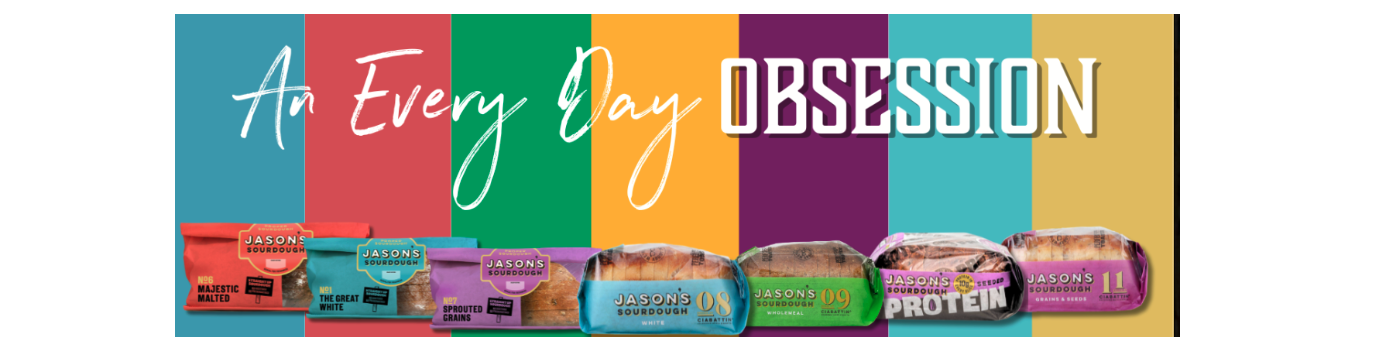
Source: Jason’s
Jason made bread fun. The brand rolled out products in colorful packaging with inventive names like Majestic Malted, The Great White and Superb Sprouted Grains — offering a diverse range of premium sourdough sliced breads. Later expanding with premium toasties in the food-to-go category, which includes unique, adventurous fillings like nduja and kimchi.
"We had to ensure our toasties & rolls stayed true to what Jason’s Sourdough is all about – making great products with great quality ingredients. Our proper sourdough is given time to ferment and rise, creating a unique taste and flavour – to add to that ethos we have chosen to use slow cooked meats, aged mature cheddar made with milk from Cornish cows and sauces which are full of flavour! All this whilst ensuring our products are free from seed oils, gums and other unnecessary ingredients." - Jason’s Sourdough.
Like many of the brand’s on our list, Jason’s has a unique authentic style. The brand impressed consumers with quirky packaging that featured Jason’s signature thick-rimmed glasses. No longer the biggest, dullest aisle in the grocery store, each sourdough variety comes in a bold color, from deep purple to forest green.
Recognizing and reflecting consumers’ calls for cleaner products and less UPFs, Jason’s breads don’t include emulsifiers, E numbers or preservatives — resting on a philosophy of simple ingredients.
Jason's has become the 4th biggest bread brand in the U.K., the brand won Bakery Brand of The Year at the 2025 Baking Industry Awards.
Product: Fair-trade Chocolate
Founded: 2014
Biggest competitors: Hershey, Mars and Alter Eco
Brand persona: Social good/muse-inspired
On the FAQ section of Tony Chocolonely’s website, a consumer asks: What’s so special about Tony’s chocolate?
The brand replies: "Tony's Chocolonely exists to end all forms of exploitation in the cocoa industry. And so, we deliberately choose to source cocoa from Ghana and Côte d'Ivoire 'cause that's where more than 60% of the world's cocoa is produced – and where some of the biggest challenges lie."
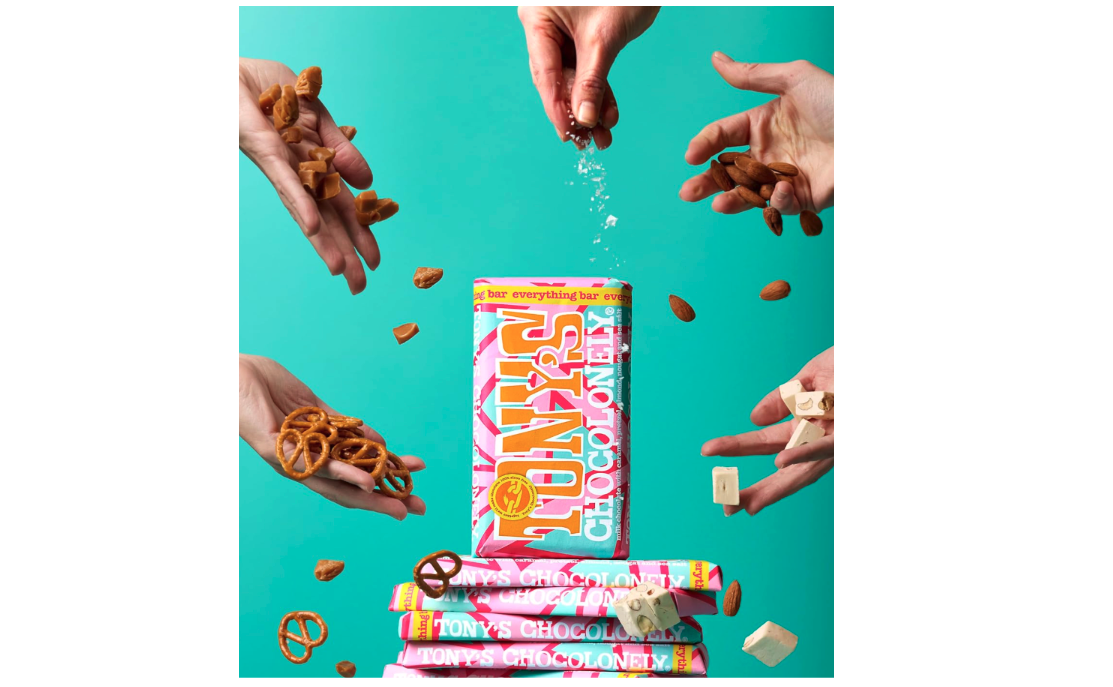
Source: Amazon
Founded in the Netherlands, Tony’s brought into public view the rarely-talked about widespread exploitation within the chocolate industry. For decades, the industry has relied on forced labor, dangerous child labor and poverty-level wages for farmers.
The company is named after their founder, the reporter Teun van de Keuken, who was assigned a story on the cocoa industry. During his research, Keuken found that the cocoa industry was run on modern-day slavery and child labor. Aidaly Sosa, Head of Marketing USA at Tony's Chocolonely, says:
"Teun, is very hard to pronounce in different languages, so he made that into Tony. And the Chocolonely was because he was a lone soldier in this fight."
"Tony's Chocolonely is a mission-driven brand. We say we're an impact brand that sells chocolate, not the other way around. And we exist because— the origin of it is that a reporter named Teun van de Keuken was writing a story on the cocoa industry, and he realized that there's a lot of modern-day slavery and child labor - so different forms of forced labor - within the cocoa industry.
Then he started digging deeper into this, and he saw that the big companies were not being held accountable for this. That's when he started Tony's Chocolonely. And he was like, "Okay, I'm going to prove to the big brands that we can create a chocolate that has a clean supply chain." So that there's no modern-day slavery or child labor in the supply chain. And he did this, and the first batch sold out very quickly." - Aidaly Sosa, Head of Marketing USA at Tony's Chocolonely.
Since 2014, Tony’s has paid farmers more than 25% of the standard price they get in exchange for their cocoa. Tony enters into five-year contracts, locking in the higher price with their partner farmers.
The brand helps support both conditions of the farms (ensuring farms are clean, safe and supportive) and the continual agricultural education and skills training of their farmers. They make sure their supply chain is fully transparent, using a bean tracker to trace beans across the supply chain and make sure social and environmental goals are met.
Showing that consumers want ethical chocolate, the brand reached $230 million in revenue by the end of 2025.
Product: Deodorant
Founded: 2019 (launched 2020)
Biggest competitors: Dove, Fussy and Native
Brand persona: Eco-friendly chic
Once the most boring toiletry in the department store, in 2019, Charlie Bowes-Lyon and Freddy Ward sought to give deodorants a chic, eco-friendly revamp. Positioning themselves against plastic-heavy competitors, the duo offered a direct-to-consumer (DTC) subscription model and compostable refills — aiming to reduce consumers' use of single-use plastic.
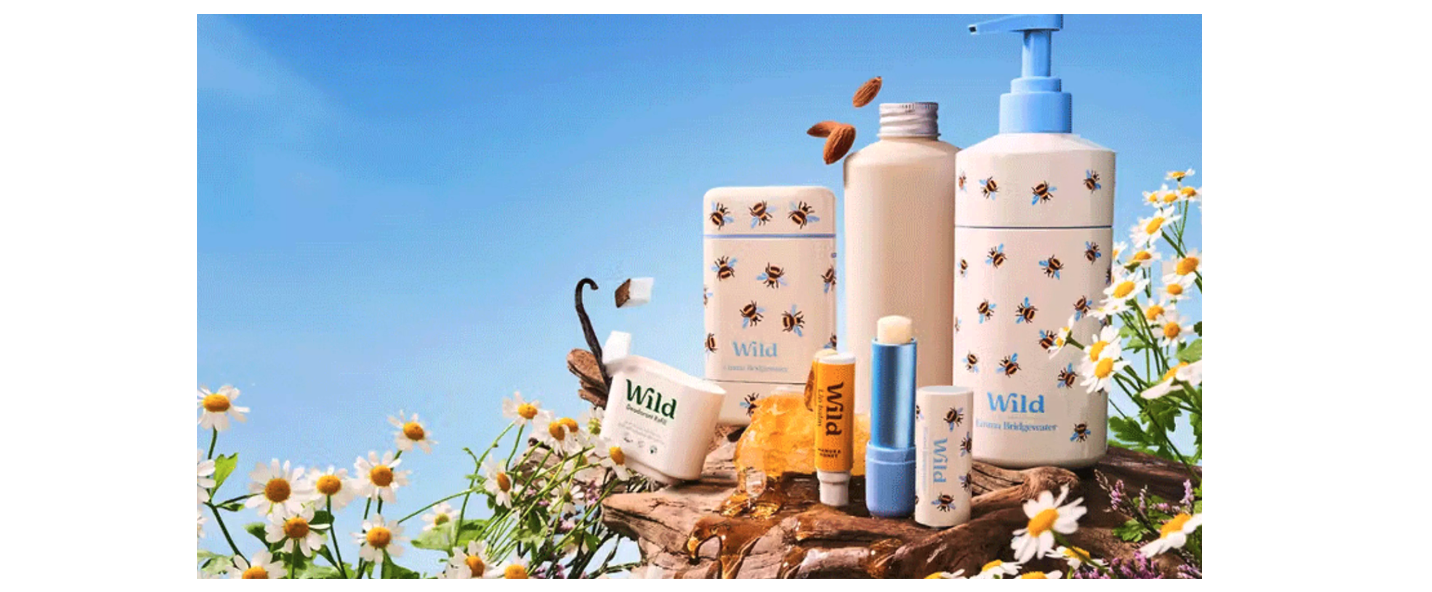
Source: Edie
"Refillable deodorants are not a new thing, but no one has yet been able to make the refills 100% plastic free until now. We are really proud of the innovative way we have been able to rethink cosmetic packaging - one of the industry's biggest polluters - and to have a more positive environmental impact." - Jo Barnard, Founder, Morrama (Wild's designer)
The brand reported a 400% year-on-year growth and sold to Unveiler in 2025. Ollie Ody notes larger incumbents often acquire niche DTC challenger brands for their unique ability to resonate culturally and build brand trust with consumers.
Product: Premium ice cream
Founded: 1978
Biggest competitors: Häagen-Dazs, Talenti Gelato and Blue Bunny
Core brand persona: Adventure meets social good
The original challenger brand: Ben & Jerry’s. Founded in 1978, by Ben Cohen and Jerry Greenfield, in a renovated gas station, the once small-time ice cream underdog has gone on to become the best-selling ice cream brand in the U.S — successfully disrupting an entire industry.
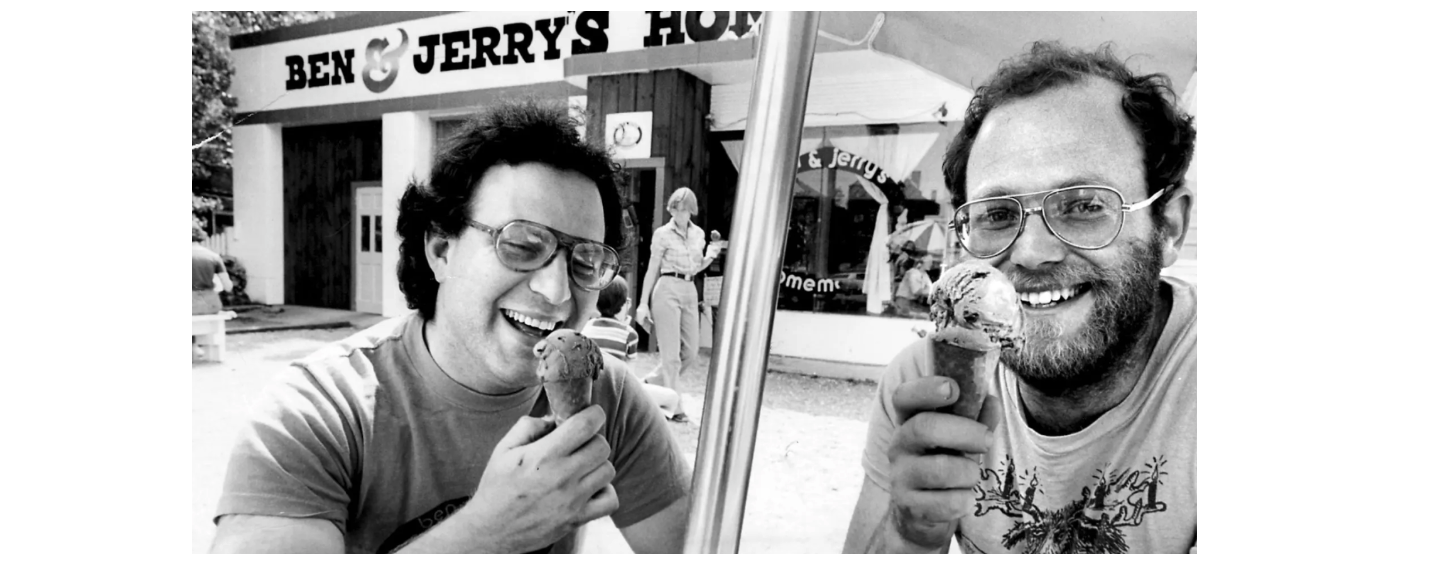
Source: Time
Commended with, “Changing American ice cream,” before the duo opened their tiny ice cream shop in Vermont, Häagen-Dazs was the market leader in premium ice cream. Back then, consumer demand was low — Häagen-Dazs produced just 40 million pints, which amounted to just 5 million gallons of than 829 million gallons of ice cream in America.
Still ranked among Gen Z’s favorite challenger brands, the quirky, Vermont-based ice cream company was the first to bring decked-out maverick flavors — heavy on the butterfat, to the market like cookie-dough-and-brownie-stuffed Half Baked and tangy Cherry Garcia.
Cohen told the New York Times in 1994, “I’ve never had a very good sense of smell, and if you don’t have that, you don’t have a good sense of taste. When we began, the game was for Jerry to make a flavor I could taste with my eyes closed. To do that he had to make ice creams that were intensely flavored.”
Indulgent, super-premium, innovative ice cream flavors and fairtrade ingredients quickly became the norm within the industry. But the brand never lost its edge. As of 2025, the company brings in over $1.1 billion in annual revenue.
Guardian writer Heidi Scrimgeour says: "Most challenger brands are businesses borne of singular determination. From challenging perceptions and subverting marketing assumptions to disrupting an entire industry, being a challenger brand usually necessitates starting small, yet the endgame is ultimately to outshine the established players. But how?"
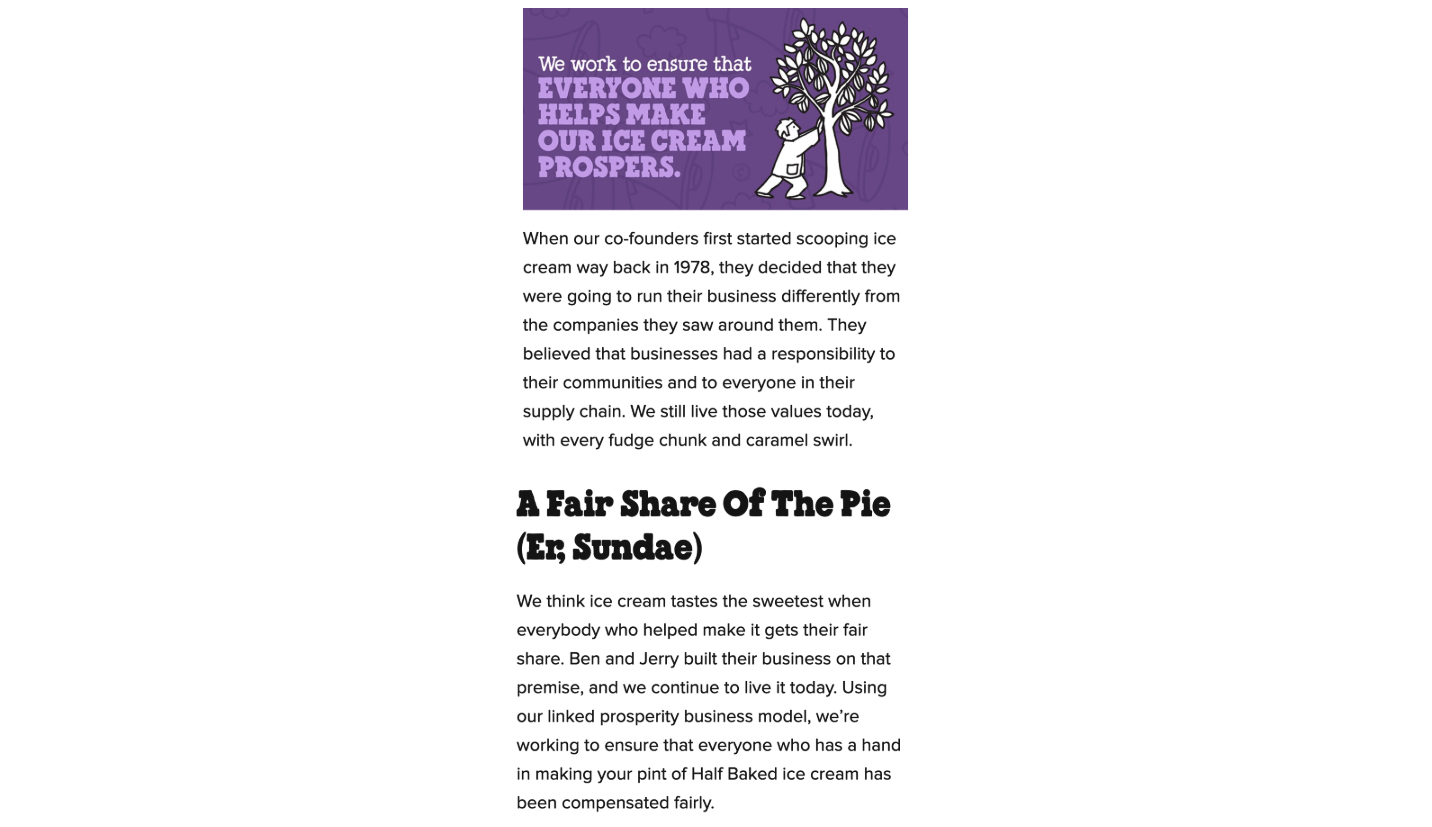
Like many successful challenger brands, Ben & Jerry’s built customer loyalty with strong values. From their earliest days, they prioritized fair wages and working conditions for cocoa and dairy farmers alongside sustainable business practices.
Source: Ben & Jerry’s
The brand pioneered a business approach that would come to be named the “double dip” – one that balanced profit with social good. Former chairman Jeff Furman, who headed up the brand from the 1980s, right through to his retirement in 2018, called the company a, “Social justice organization that sells ice cream to be able to fuel its advocacy work."
Staying relevant to modern consumers and continuing to fight for social causes, Ben & Jerry's have directly supported Black Lives Matter, environmental justice, immigrant and LGBTQ+ rights.
Successful challenger brands bring clarity to their business. They know exactly what they stand for and exactly what they stand against.
Jude Bliss, founder of The Challenger Project — a study on successful challenger brands, says:
“Challengers are as clear about what they are rejecting as they are about what they are championing, which involves clearly defining what you see in the current market that is broken, as well as what change you can bring.”
From Wild’s plastic-free ethos to Olipop’s healthy soda alternative, underdog brands understand the intersection between what they want to change and what consumers want to see changed.
That’s where consumer insights platforms like Zappi come in, to help show you where that overlap exists. From delivering real consumer insights in as little as four hours, to getting insights into consumers’ core values and how they see your brand, product and creative, Zappi helps you create products and campaigns that win with consumers.
Stay up to date with our latest insights, tips, and industry news.