
Learn how McDonald's has partnered with Zappi to build its test-and-learn approach to innovation, rather than a "test to earn a good score" approach.
The State of Creative Effectiveness: Social Video 🎥

Learn how McDonald's has partnered with Zappi to build its test-and-learn approach to innovation, rather than a "test to earn a good score" approach.
Learn how McDonald's has partnered with Zappi to build its test-and-learn approach to innovation, rather than a "test to earn a good score" approach.
$394.6 billion.
That's how much will be spent on social media advertising this year, according to WARC. Up 21.3% on last year.
Social isn't the amplifier anymore. It's where brands get made. A campaign that once lived in one hero spot now lives as hundreds of cuts, creator posts and native videos, each with a few seconds to earn its place.
But most don't.
Our State of Creative Effectiveness: Social video report analyzed over 3,000 social video ads from four platforms. One finding sets the scene: only about 1 brand-made ad in 8 holds viewers for three seconds.
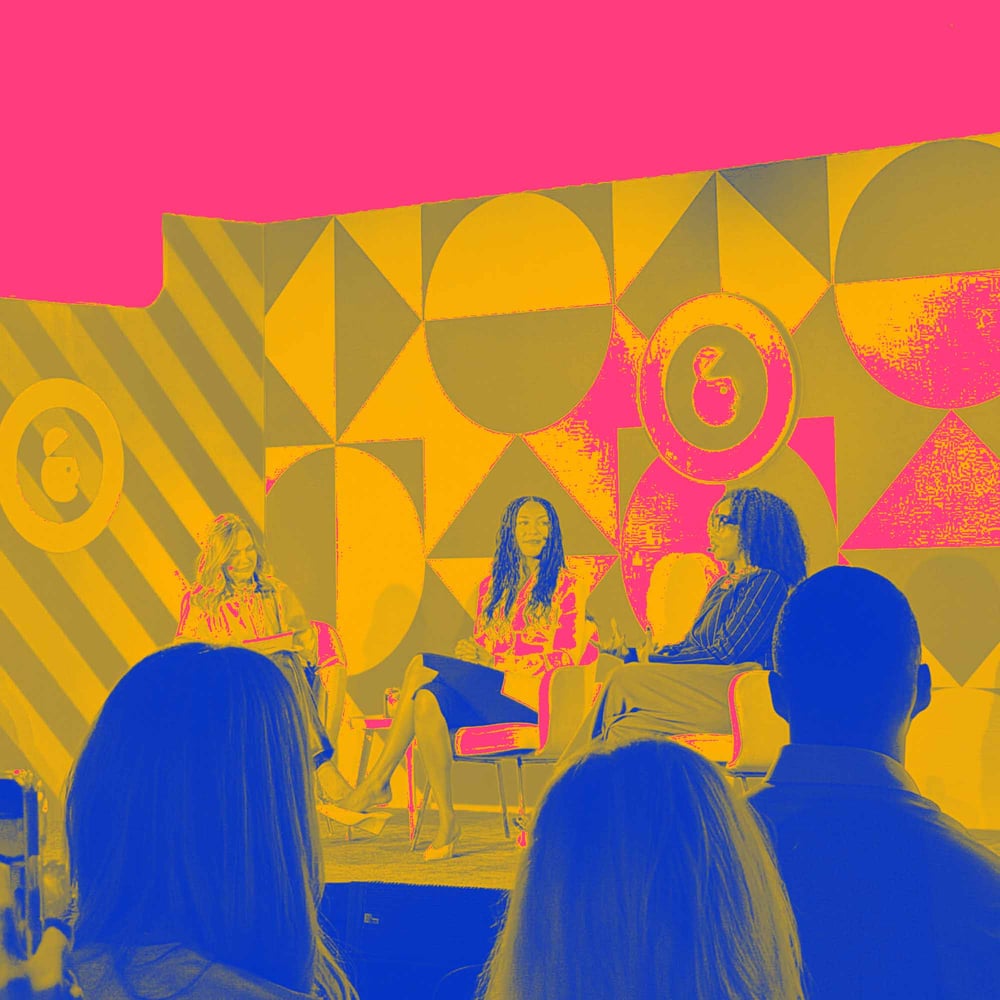
So at Advertising Week New York, I was listening for one thing: what are the brands that win in the feed doing differently? The answers from Estée Lauder, La Mer, Samsung, Dove, American Express and SharkNinja had a lot in common. None of them were trying to make more noise. They were making sharper choices. Here are five of them.
When Samsung landed a role in Spider-Man: Brand New Day, the easy move was a hero shot of the phone. Instead, CMO Keena Grigsby's team started with a harder question: how could Galaxy genuinely add to the Spider-Man story? Everyone can spot a product placement, she said, and nobody gets excited about speeds and feeds.
Our data backs that instinct. A famous face makes an ad stand out, but on its own does almost nothing to help people remember whose ad it was. The star gets the credit. The brand pays the bill.
What earns the brand the credit is the brand itself, woven into the story. Across over 3,000 social video ads, distinctive brand assets did more for brand connection than anything else we measured.
A big moment buys you a glance. Being part of the story is what gets you remembered.
As a luxury house with selective distribution, La Mer uses creators to bring the brand to people wherever they are. Amanda Jones, VP of Marketing at La Mer North America, said her team works with creators who already use the product, building the relationship long before any paid post. The briefs stay light, because they "can't be so tight that the creator is just a mouthpiece for something a consumer could read on a website."
Samsung CMO Keena Grigsby shared the same belief. Creators have spent years earning their audience's trust, so Samsung gives them the freedom to co-create. "There's a difference between creator selection and creator correction," she said. "The brief is the starting stage, not the end stage."
Creators know how to stop the scroll far better than polished brand ads. The craft is in making sure the brand gets the credit too, and that's where the fundamentals come in. In creator content, ending on a positive resolution makes an ad 3.8 times more likely to be a top performer.
La Mer's Black Friday content did exactly that. Instead of leading with the offer, the creator tapped the brand's famous glass jar and unboxed every piece of the gift. The product was the story, and the creator was the consumer's proxy.
La Mer's best holiday idea came from social listening. People were posting about catching their partners stealing their cream, given away by the sound of the glass jar twisting open. The brand turned it into a campaign built on one line: gift your partner their own. "We had to show the discipline to be restrained, to not over-engineer the moment," Amanda said.
Dove's Head of Engagement Marketing, Dana Paolucci, shared how the brand does the same thing at scale. Dove's community had been asking for sweeter, gourmand scents, so the brand partnered with Crumbl. More than half of the buyers from the collaboration were new to Dove, proof of what happens when you act on what your community is already telling you. Dove did it again with its Charli XCX tour partnership, built on years of fan chatter about sweaty shows.
None of these ideas came from a brainstorm. They came from listening, and from teams able to turn what they heard into a decision fast. That's still rare. Just 8% of organizations have reached the stage where insights are surfaced automatically at the point of decision, according to our Connected Insights Imperative report. The insight is out there in the comments. The brands that win are the ones that connect it.
Aude Gandon, EVP, Global Chief Digital and Marketing Officer at The Estée Lauder Companies, and Jessica Ling, EVP of Global Advertising at American Express, lead very different brands. But they described the same discipline.
In beauty, trends go global in days, and the pressure to jump on all of them is real. Aude's teams filter every one through two questions: what is our brand equity, and who is our core consumer? "It's not every trend for every community."
Jessica feels the same pull at Amex, with 176 years of brand behind her and the pressure to make it last another 176. Her warning was against playing "wall ball": reacting to every stimulus until the brand becomes a sum of its channels. Instead, Amex starts from a clear identity and chooses partners that express it, from the US Open fan experience to Olivia Rodrigo.
Both are saying no to most things, so the things they say yes to land harder.
SharkNinja went all in on AI, shutting the company down for a week so 4,000 people could hack AI solutions to real consumer problems. Chief Brand and Experience Officer Michelle Crossan-Matos came out of it with a virality playbook that now shapes products before they launch. But she was just as clear about the limit: AI knows the theory of pain, she said, but it doesn't know grief.
Estée Lauder has drawn its own line: no AI on anything human, meaning no hair and no skin. When you're selling what a cream actually does, the proof has to be real.
This is where it all connects. Clear positioning, consistent storytelling and distinctive brand assets help people remember you in the feed. They're also what help AI understand who you are.
The fundamentals of advertising haven't changed. What's changed is where they get tested. Social is now where brands are built, and you can see it in the investment: $394.6 billion this year alone.
But spend on its own doesn't change anything. What changes it is knowing what works before the budget goes behind it.
Which creative earns attention.
Which communicates the right message.
Which builds the brand rather than just filling the feed.
As social ad spend heads toward $500 billion by 2028, the question isn't how to produce more. It's whether you're investing enough in understanding what works before you scale it.
What does it take to make a social video ad that stands out and drives action? We dug into over 3,000 social video ads from four platforms to find out.
Stay up to date with our latest insights, tips, and industry news.


Our newsletter delivers insider info to delight your inner insights geek.