
Learn how McDonald's has partnered with Zappi to build its test-and-learn approach to innovation, rather than a "test to earn a good score" approach.
Again and again, Jenni Romaniuk, Associate Director at the Ehrenberg-Bass Institute, advocates for a simple, powerful principle: follow the evidence.
Romaniuk believes in marketing as a science. Prioritizing data-backed decision making, consumer insight and observable laws over amplified anecdotes, directionless innovation and vanity metrics.
“We’re a young science. We don’t know everything. But we know a lot more than we think we do, and that’s a great place to build from.”
- Jenni Romaniuk, Associate Director at the Ehrenberg-Bass Institute
She cites GAP’s massively-unpopular 2010 logo redesign as an example of what can go wrong when marketers put empty reinvention over evidence in their marketing and branding decisions.
The Ehrenberg-Bass methodology was one of the first methodologies to attempt to turn the field of marketing into a research-based, data-driven specialty.
In 1959, Andrew Ehrenberg was one of the first researchers to apply statistical distribution models to consumer buying behavior — providing the foundation for the institute’s laws of brand growth. Frank Bass subsequently developed his 1969 diffusion model for predicting new product adoption, bringing greater scientific rigor to the field of marketing. Both of these theories became the basis of academics’ work at the Marketing Science Centre at the University of South Australia, founded in 1995 and now known as the Ehrenberg-Bass Institute.
The Ehrenberg-Bass’ data-backed marketing approach aligns with how we conceptualize marketing and brand growth at Zappi and we’ve seen it successfully help brands across categories and markets understand their own brands, competitors and consumers more effectively — allowing them to grow and gain market share.
Below, I explore the core philosophy and tenets of the methodology as well as cover common misconceptions — showing you exactly what it gets right about brand growth and how you can apply it to your own marketing with nuance.
The Ehrenberg-Bass methodology is an evidence-based marketing approach that tracks proven laws of brand growth and consumer behavior across multiple categories, markets and countries. Rather than vague frameworks and empty metrics, the Ehrenberg-Bass methodology puts emphasis on empirical evidence gained and tested through observation, measurement or experimentation.
“Marketing is a science. Marketing is not a set of ad-hoc beliefs or untested theories, but a discipline grounded in empirical evidence, data and reproducible patterns.” The Ehrenberg-Bass Institute.
The Ehrenberg-Bass method’s Law of Growth states that brands grow by gaining more buyers, known as penetration — not by attempting to push loyal customers into buying more from their brand.
To get more buyers, brands must first work on creating more mental availability, creating stronger links between their brand and consumers’ memories in buying situations. The second lever of growth is physical availability, making it as easy as possible for consumers to find and buy their products on different channels.
I’ll get into this more below, but it’s also worth noting that while many modern brands focus their attention on retraining and encouraging purchases from their most loyal customers, the Ehrenberg-Bass method holds that light buyers, who buy from a brand every so often, are the main growth lever. It’s these customers that should be prioritized if brands want to see growth.
Ehrenberg-Bass thinking on brand growth puts mental availability and physical availability at the center of its philosophy, here’s what they mean for brands looking to increase their market share.
Mental availability, or being easy to think of, is one of the core components of the theory. Mental availability measures how often a person thinks of a product in a buying context. On the brand side, it involves creating automatic, deep connections in a consumer’s mind between a brand and a wider product category.
Two core components drive mental availability:
A great example of mental availability and proven category ownership is Heinz’s Draw Ketchup campaign. Hundreds of consumers were asked to draw ketchup and nearly all of them drew the iconic Heinz ketchup bottle — proving that the name, branded label and transparent glass bottle showing the brand’s signature ketchup inside are all distinctive brand assets anchored in consumers’ memories.
A consumer takes an average of one to three seconds to choose an item from a store shelf. The majority of consumers’ product choices come down to instinctual, fast, automatic, unconscious choices that fall into what psychology researcher Daniel Kahneman calls System 1 thinking.
If your product is what consumers think of when they think of that product category, you’ve successfully achieved category dominance.
At this stage, the success of your branding and marketing bypasses cognitive load: consumers’ skip the overwhelming cognitive load of product deliberation — immediately understanding that your product is synonymous with quality and comes from a brand they can trust. This often makes you the automatic unconscious choice online or in the grocery store.
Successfully growing relevancy through multiple category entry points and creating brand recognition and product pull with the consistent use of distinctive brand assets positions you as the “instinctive,” obvious choice in the minds of consumers, driving long-term market penetration and true brand growth.
Read more on how System 1 thinking impacts buying decisions in our past post.
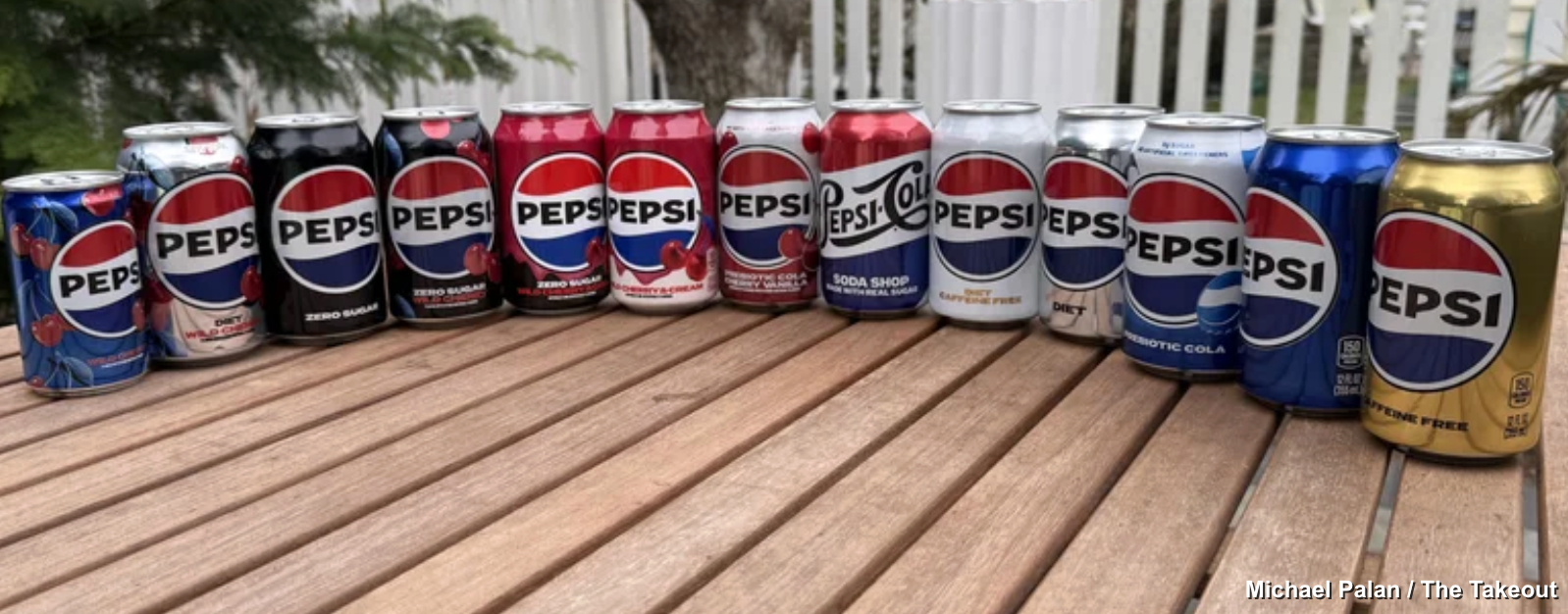
Physical availability is the complementary adjacent component to mental availability. What is present in mind also needs to be readily available and visible in the digital and physical spaces for consumers to buy. In addition, the more effectively a brand serves consumers’ various needs, the greater its physical reach.
Source: The Takeout
The less barriers there are to purchase, the more growth potential there is for a brand. The three main components of physical availability include:
Common marketing wisdom states that brand growth lies in customer retention over customer acquisition. The Ehrenberg-Bass framework rejects this widely-held marketing truth.
In his book, How Brands Grow, Byron Sharp, the director of the Ehrenberg-Bass Institute, emphasizes that consistent loyalty is an illusion. This is because even the most loyal customers only buy from their favorite brands some of the time.
No matter how much they like a brand or product, most consumers jump between brands based on factors like price, convenience, a desire for change or a need for variety. Rather than showing 100% loyalty to a brand, most consumers have a repertoire of favorite brands on rotation.
Sharp reports that 50% of a brand’s sales come from the top 20% of a brand’s customer base, 30% come from the 30% of middle buyers, while 20% of sales come from the 50% lightest, most infrequent buyers. This division between buyers is what Sharp refers to as the Pareto law.
Loyalty also correlates with market share. Smaller brands typically suffer twice: first from fewer customers and second from customers who are less loyal — a fundamental rule of brand growth known as the Double Jeopardy law.
Instead, growth lies in gaining new or light category buyers (occasional buyers). Brands must focus their attention on reach over loyalty, marketing their brands to buyers across a category. They must measure brand growth success by measuring brand penetration: the percentage of a specific target market that buys from a particular brand across a specified time period.
Sharp speaks on customer retention over acquisition in relation to hotel customers, "Many are continuing to bank on customer retention and brand loyalty, because they think it's a risk-free way to increase sales. They know how these loyal guests behave, they have their data and addresses. But deep customer loyalty to a product is hokum, if you examine it from a scientific viewpoint.”
The writer asks, “So that means that one of the most commonly held assumptions in marketing – that regular guests should be nurtured and cherished – is a waste of time, because customers will be loyal anyway?”
“In principle, buyers and guests like to be loyal. It's part of our natural behaviour. Loyalty is regarded as a virtue in itself in every society. But if you look at the demonstrable reality of whether everyone in a community adheres to this or whether a buyer always remains true to a brand, you'll realise that we're polygamous when it comes to loyalty."
Distinctive brand assets (DBAs) are the sensory signals, such as colors, shapes or logos, that help consumers instantly identify a brand as its own. A distinctive brand identity breaks through clutter, making a brand immediately recognizable.
For a brand asset to be distinctive:
To achieve brand growth, the institute prioritizes ruthless consistency over the search for differentiation. Successful differentiation is easy to copy. But consistency deeply embeds a brand’s visual codes into consumers’ memory structures. Every revamp resets these structures — forcing brands to pay an attention tax that often costs them customers and market share.
From Disney’s castle to Cadbury’s purple, researchers at the institute argue that true brand equity depends on keeping the same visual markers throughout the decades.
Find out more about consistency’s role in building memorable brands in our past post.
There are hundreds of internal and external cues that can trigger consumers to mentally step into a product or service category. The Ehrenberg-Bass Institute shares, "CEPs are essentially moments when someone mentally enters a product or service category. Think of a long day at the sunny beach when you feel like having a refreshing drink, or a birthday party where your neighbor tells you how much money he has saved by buying solar panels and you suddenly think about buying them. These moments act as cues that trigger your memory to recall brands."
Research from the institute found that connecting your brand to as many relevant cues as possible increases mental availability, helping to increase the likelihood that you'll automatically be consumers first consideration when they think about making a purchase.
KitKat’s, “Gimme a break,” and “Have a break, have a KitKat,” tie a KitKat bar to the midday slump: positioning it as the perfect pick-me-up in the middle of a stressful, tiring work day.
In 2007, marketing lead Colleen Chorak brought back KitKat’s iconic, “Have a break,” tagline after the brand had previously ditched the messaging, leading to a reported 5% year-on-year drop in sales. In one of their first ads with the resurrected tagline, the brand paired a coffee with a KitKat — leading to a 33% increase in purchase frequency.
Physical locations, social settings, a particular emotional state — map your product to your category's CEPs, covering every potential internal or external cue that may lead a consumer to desire your product in a specific buying moment.
Speak directly to consumers to uncover and understand cues that may not be readily obvious or common-sense on the surface. Anchor your brand to the cues that arise most often across your campaigns.
Customer research can help you directly uncover unusual CEPs that haven’t been explored by your competitors. Take Snickers’, “You’re not you when you’re hungry.” Rather than targeting the “Treat yourself,” messaging common with many competitors’ chocolate bars, Snickers targeted the hunger-induced hangries, connecting low-blood sugar mood swings with picking up a Snickers.
The campaign went on to become one of the most successful ad campaigns in history with global sales increasing by 15.9% in the first year of the campaign — capturing market share in 56 of the 58 markets.
One of the biggest principles of the Ehrenberg-Bass approach that frequently gets oversimplified is the prioritization of customer acquisition over retention. While the approach holds that acquisition is essential for brand growth, it doesn’t totally reject the importance of customer loyalty. From Ehrenberg-Bass’ perspective, loyalty is what brands are rewarded with as they increase their market share, not the cause of it.
Sharp says, "Brand loyalty – a natural part of buying behaviour. Brand loyalty is part of every market. In FMCG categories, buyers are regularly and measurably loyal – but to a repertoire of brands, not to a single brand. And they are more loyal to the brands they see a bit more regularly, and buy a bit more regularly. All brands enjoy loyalty, bigger brands enjoy a little bit more."
Another concept that gets oversimplified is the balance between consistency and “anti-differentiation.” The Ehrenberg-Bass approach prioritizes consistency over differentiation, reminding marketers that brands feel stale to the people in-house far faster than they do to consumers who are saturated with hundreds of alternative brands in the same category every day.
To build strong memory structures and retain mental availability, the Ehrenberg-Bass approach reinforces the importance of ruthless consistency. Nike became a mainstay in part by using the same iconic logo throughout the decades, while Disney wouldn’t be as immediately recognizable without the swirling castle icon.
But consistency has often been sidelined for innovation across the marketing space. Jenni Romaniuk, Associate Director at the Ehrenberg-Bass Institute, warns marketers not to idolize differentiation, noting the concept has been, "Badly misinterpreted."
Authenticity, consistency and recognizability are prioritized over blind, endless and substanceless differentiation.
She says, “People think you need to be wildly different to be chosen. But that’s not how real people buy." Instead, she advocates that brands, "Be consistent, be visible and look like yourself."
This doesn’t mean that differentiation isn’t still important. The method allows for and encourages differentiation and innovation across execution — including product, campaigns and creative — while still retaining ruthless consistency across brand assets.
The Ehrenberg-Bass approach often breaks down when marketers attempt to chase every potential CEP rather than mapping out and prioritizing the ones that make the most sense for their brand and their target audience. Credibility, competitiveness and potential revenue all need to be factored into CEP considerations.
The growing pervasiveness of AI has also changed the methodology’s application — changing the rules on how mental availability and physical availability are created and sustained. Mental and physical availability doesn’t just apply to consumers, but also to LLMs. Your brand and product must be as available to the algorithm as they are to potential shoppers. AI-assisted search, shopping agents and chatbot responses dictate which brands get shared and which get forgotten.
For the Ehrenberg-Bass method, effective brand measurement is focused on assessing and measuring physical and mental availability.
A brand can’t grow without expanding its customer base. In the Ehrenberg-Bass methodology, penetration and acquisition become the defining metrics of success. Success is measured by how successful you are at getting in front of and influencing light and non-buyers to buy from your brand.
"More and more brands are talking about mental availability, but talk is cheap. To understand its value you need to recognise it for what it is – a metric to be measured, studied and tracked."
- Lindsay Rapacchi, Research and Insight Director at Clear Channel, writing for Marketing Week
Source: Marketing Week
Mental availability must also be quantified and measured. Taking a deeper look into mental availability, the Ehrenberg-Bass methodology lays out four key metrics:
CEPs bring specificity to “awareness,” giving you a concrete measure of mental market share. CEPs tell you how many consumers connect your brand to a priority CEP in comparison to your competitors.
Qualitative research, in the form of surveys and interviews, allows you to uncover the most common, as well as the most interestingly niche, CEPs in your category.
CEPs also allow you to understand how successful your competitors currently are at capturing mental availability.
The Ehrenberg-Bass approach doesn’t completely invalidate traditional brand health metrics. Awareness still matters — it just needs to be quantified and enriched. Penetration becomes the primary growth metric that assesses and quantifies brand strength, supported by distribution and repeat purchase rate.
Physical availability also needs to be accounted for, building up and tracking the core pillars of presence, prominence and portfolio:
We created our Brand Health Tracker using Ehrenberg-Bass Institute's principles to help brands truly understand and measure the metrics that are the most relevant to brand growth. Megan Scott, Product Marketing Manager at Zappi, notes that Zappi's Brand Health Tracker is built on, "A methodology baked in brand science, inspired by Ehrenberg-Bass thinking and Mental Market Share."
The methodology helps brands understand how consumers actually see, experience and interact with a brand in the ways most relevant to customer acquisition and brand growth — giving companies a better understanding of how their brands perform across markets and categories in comparison to competitors.
The Ehrenberg-Bass approach supports brands in understanding, testing and tracking the metrics that actually lead to consumer resonance, category penetration and genuine brand growth. This aligns with our belief in marketing as a science, in growth grounded in a data-based strategy and in decision making based on consumer insight over intuitive guesswork.
"Brand health isn’t just a metric — it’s the heartbeat of your business. It reflects what people feel, believe and ultimately choose. And in a world where consumer attention shifts in seconds, brands can’t afford to fly blind. "
- Megan Scott, Product Marketing Manager at Zappi
As an integrated consumer research system, Zappi supports continual learning across innovation, creative development and brand health, enabling brands to continually test, learn, optimize and innovate.
The Zappi platform brings together research across each area and centralizes it on a single dashboard. Every idea screened, every tracker wave and every piece of creative tested helps build on your understanding of your products, consumers and brand — supporting greater innovation and data-backed decision making.
At Zappi, we've seen Ehrenberg-Bass Institute's principles help brands across categories understand the factors that predict and drive brand growth. We’ve watched brands develop an in-depth understanding of mental availability, how great creative builds distinctive memory structures, CEP connections and penetration.
We’ve also seen the approach help brands accurately conceptualize and measure competitors’ performance through metrics like mental market share, CEP ownership and share of mind. Brands have used this data to successfully compare their performance to other category leaders and uncover early shifts in market dynamics. 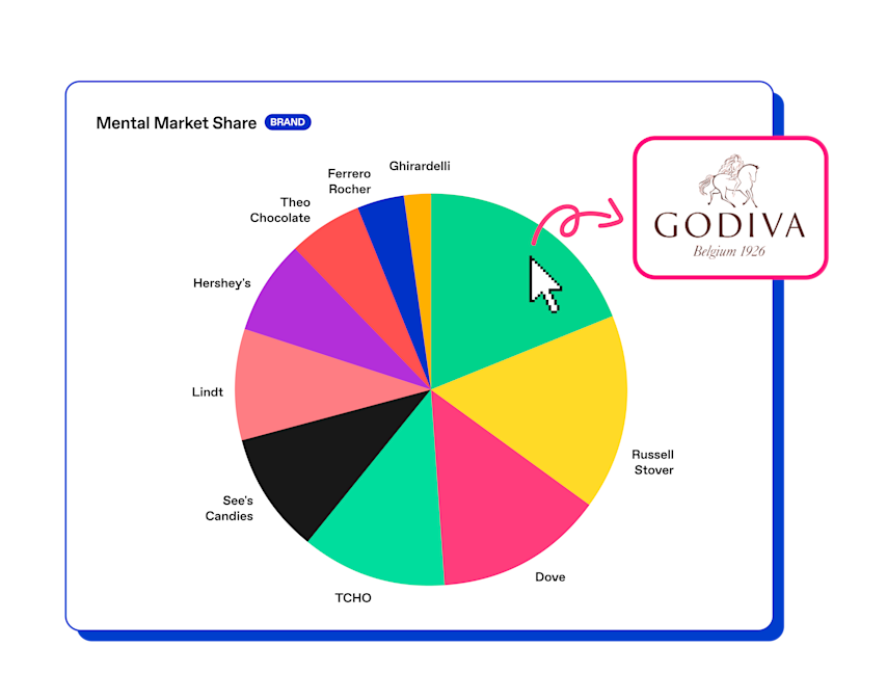
Ehrenberg-Bass’ methodology provides insight, guidance and overarching effective measurement and encourages you to refocus your attention on what actually matters when it comes to brand growth.
But it’s up to your brand to connect the marketing science with the human. Use Ehrenberg-Bass’ theory and methodology as your grounding and consumer insights as the “heart” of your product and campaign development.
While the methodology highlights that factors like CEPs matter, it’s important to undertake direct research with your own target consumers to find out which ones matter most in your category. This type of research brings a human element to CEPs, allowing you to understand the nuanced and often complex ways consumers experience them.
It’s also important to allow for mental flexibility, bringing nuance to Ehrenberg-Bass’ academic research. Take the law of double jeopardy. While the law may be a statistical fact across most markets, it doesn’t always apply to smaller, values-led niche challenger brands, which typically build their brand through loyal self-selected buyers, rather than prioritizing broad category reach.
Science itself is flexible. As physicist Richard Feynman joked, “If you thought that science was certain, well that is just an error on your part.” Science observes patterns that can be discounted and revised based on evidence that comes later — the domain’s philosophy reminds us that flexibility is as important as our current evidence and data. Take this flexibility and apply it to your own brand — understand the laws but let your context, category and consumers guide their application.
Ehrenberg-Bass’ marketing methodology reminds us to trade baseless idealism, anecdote and dataless innovation (think the GAP rebrand) for data and evidence — putting research at the center of every campaign, rebrand and product development decision.
The approach pushes us to look at the true levers of brand growth: capitalizing on mental and physical availability, mapping out CEPs and focusing on brand penetration over squeezed loyalty.
This marketing methodology serves as a powerful evidence-based foundation that still needs nuance in its application. Consider which concepts, metrics and methods are most useful to your own brand, category and consumers.
Stay up to date with our latest insights, tips, and industry news.