

Learn how McDonald's has partnered with Zappi to build its test-and-learn approach to innovation, rather than a "test to earn a good score" approach.

Every year, John Lewis' Christmas ad becomes part of festive conversations. From heartwarming family stories to memorable characters and emotional soundtracks, the retailer has built a reputation for advertising that captures something special about the Christmas season and one that consumers look forward to.
This year's ad, “Gloria and Pickles,” follows a grandmother on a mission to find a meaningful Christmas gift for her grandchildren. After an initially underwhelming response to her gifts of cash, Gloria finds inspiration in a vintage toy dog, Pickles, and sets off on an adventure to create something the whole family can enjoy together.
At its heart, the message is a familiar one: Christmas is about the thought behind a gift and the memories we create, rather than how much we spend.
While the ad has plenty of charming moments, our latest consumer research reveals a more mixed response than some of John Lewis' previous Christmas campaigns. The idea lands, the ending delivers an emotional payoff and the brand is memorable, but the journey to get there offers some interesting lessons about what makes an emotional story truly resonate.
Here's what we can learn from consumer’s response to this year’s John Lewis ad.
As we touched upon above, one of the strongest elements of this year’s John Lewis ad is its central idea. The message that thoughtful gifts and shared experiences mean more than money is clear and particularly relevant at Christmas.
And our research found that a third of respondents were able to play back this idea in their own words. Among those who shared what they liked about the film, 15% specifically mentioned the ad’s message of thoughtful gifts over cash.
The ad also made an impression on the brand itself. More than a third of viewers (35%) mentioned John Lewis when retelling the story, compared with 19% for last year's “Where Love Lives” ad.
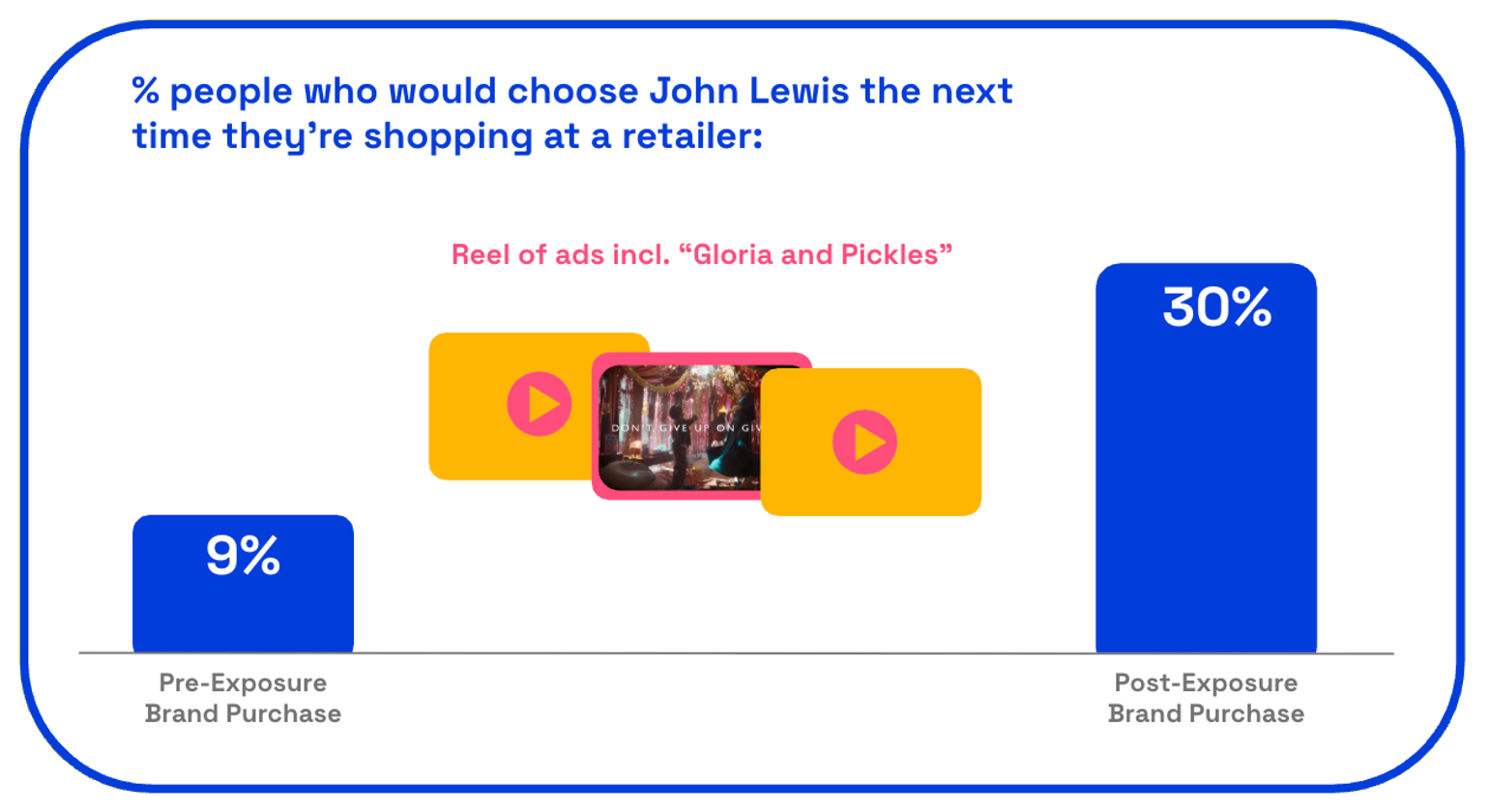
And that brand connection translated into a change in consumer preference. The number of people who said they would choose John Lewis more than tripled after watching, rising from 8% to 28%.
This highlights the value of building an idea around a highly resonant message that’s meaningful to people. A meaningful message can help build brand associations and influence how people think about a brand, especially when it connects with something they already value.
If there's one part of “Gloria and Pickles” that really stands out, it's the ending.
After Gloria and Pickles' adventure through London, the grandchildren finally discover the “Gran Cave” — a special space filled with everything they need to create memories together. The reveal, complete with the key, the door and a family dance, delivers the emotional payoff the story has been building towards.
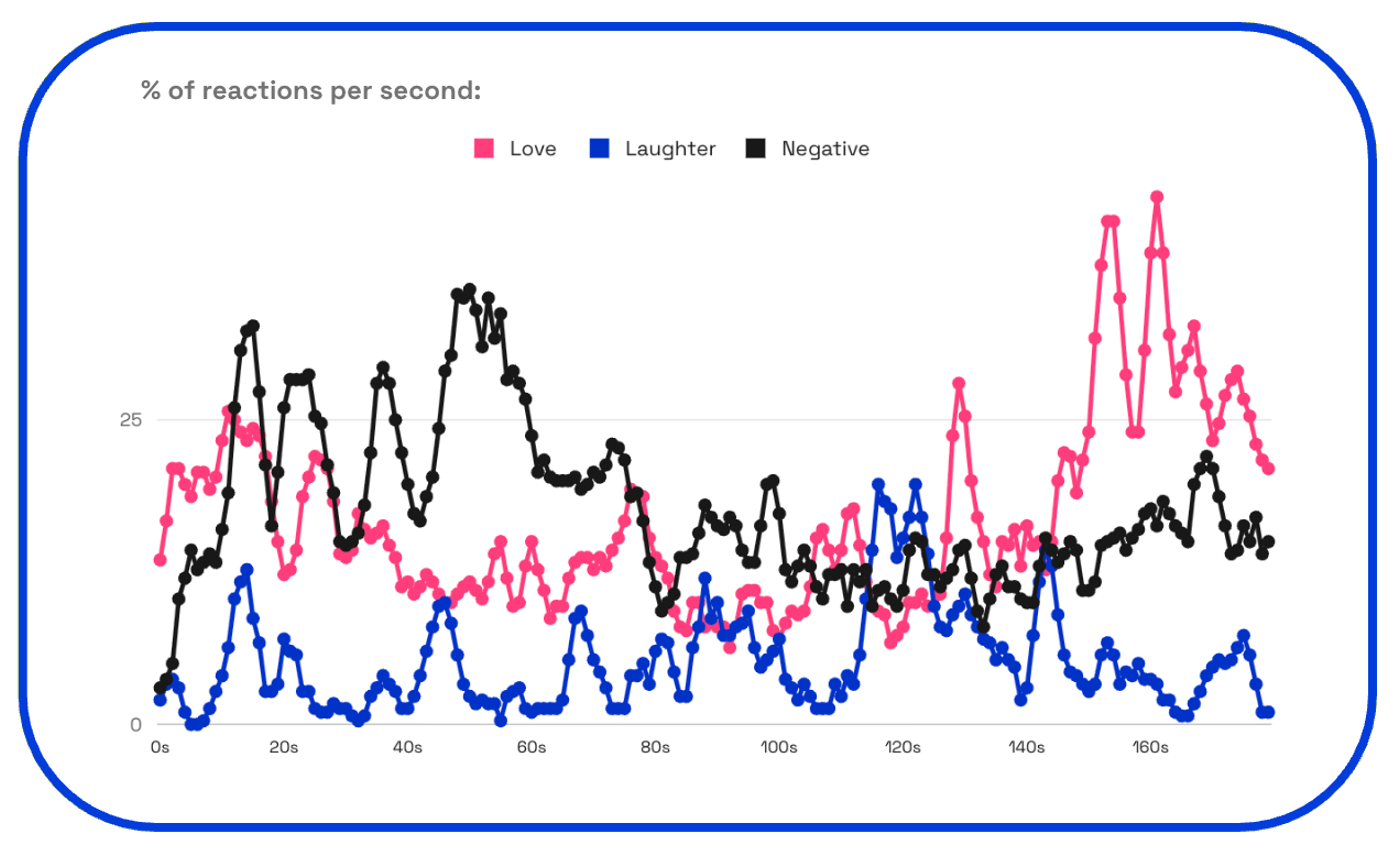
Positive emotive moments
Our second-by-second emotional analysis found that love peaks during these final 30 seconds of the ad. It's a clear shift from the earlier scenes, with the ending bringing the family together in a way that reinforces the ad’s central message.
There are other standout moments along the way, too. Gloria and Pickles racing through London in a tuk-tuk generated the biggest laughs in the film, at more than twice the rate of other moments. Pickles himself also taps into a sense of nostalgia, with viewers appreciating the familiarity of the vintage toy.
There's a broader creative effectiveness lesson here, too. Across thousands of ads analyzed for their creative characteristics in our latest State of Creative Effectiveness report, those that ended on a positive note were found to be 1.5 times as likely to be top performers.
And in advertising, those final moments are particularly important. A satisfying ending can reinforce the message, leave viewers with a positive impression that rubs off on the brand and gives the story something memorable to finish on.
But getting there requires the audience to stay emotionally invested along the way.
While the central idea and ending resonate, one of the more interesting findings from our research is how little viewers mention the relationship at the heart of the story.
In the opening scenes, Gloria's grandchildren appear more interested in their phones and expensive gifts than spending time with her. This establishes the problem that drives the story, but it also creates some distance between the audience and the family before their relationship has had much chance to develop — with no change in sentiment towards the grandchildren by the end of the ad — as there wasn't much of a connection to root for.
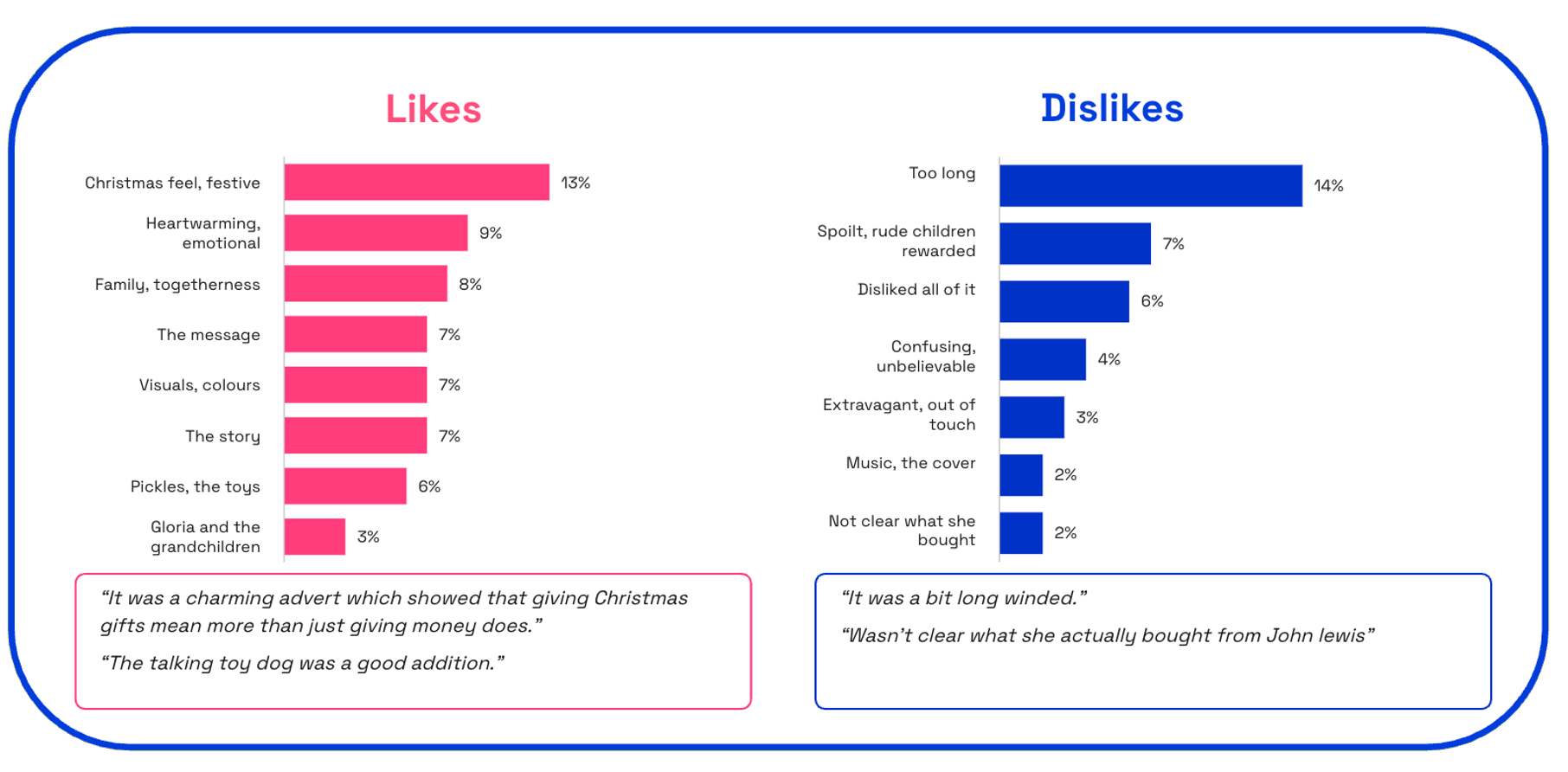
In fact, only 3% of respondents mentioned the bond between Gloria and her grandchildren as something they liked about the ad. That's a notable difference from last year's spot, where 8% of viewers specifically mentioned the relationship between the father and son and there was no dislike of either of the key protagonists.
The response to “Gloria and Pickles” was particularly pronounced among older viewers. Thirty-seven percent of those ages 55 and over were left feeling a negative emotion after watching the ad, compared with 10% of viewers under 36. Some also expressed frustration with the grandchildren's behavior, with one viewer even commenting that the ad rewarded a “bratish attitude in the children.”
These findings suggest that the emotional bond between the characters could have been established more clearly from the outset, creating an empathetic understanding of generational differences and a stronger emotional bond to root for when they do connect at the end.
Emotional storytelling depends on audiences feeling invested in the people on screen, after all, not just understanding the message they're trying to communicate. For this year’s ad, building that connection earlier could make the eventual family reunion feel even more rewarding.
At three minutes, “Gloria and Pickles” is a long Christmas ad. And while audiences generally understood the story, our research suggests that its length may have affected how engaged they felt along the way.
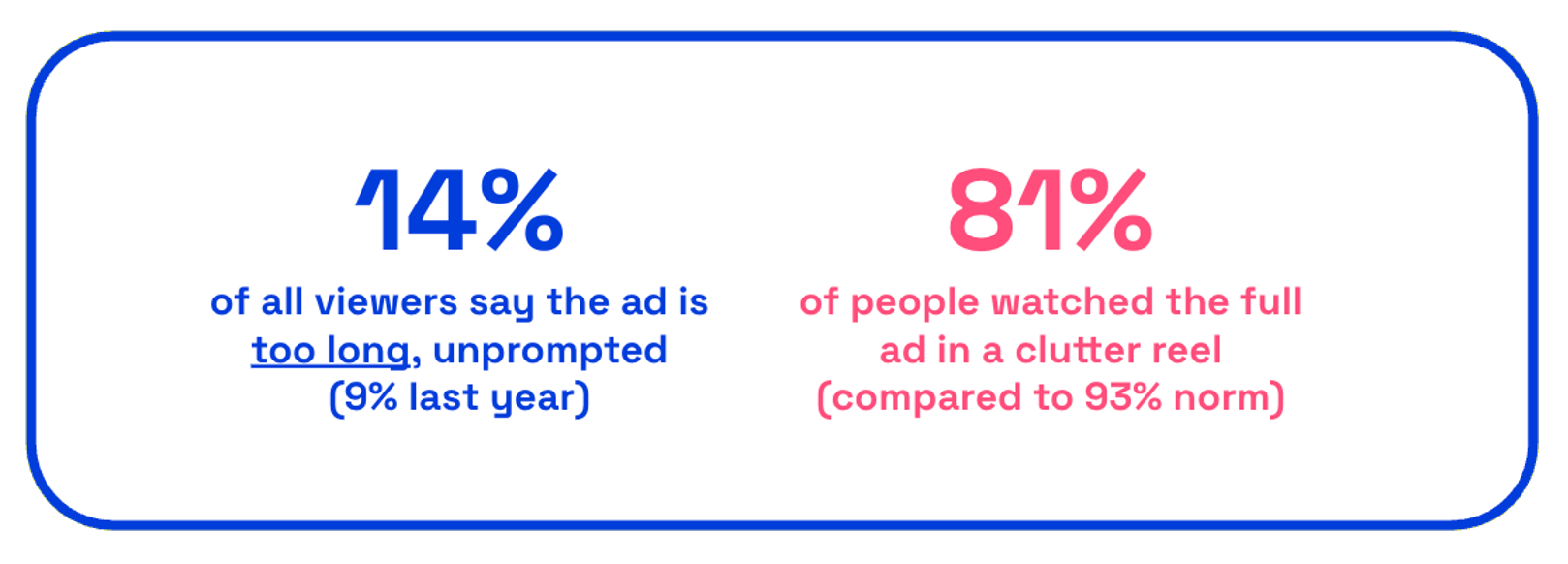
14% of viewers mentioned that the ad was too long, making it the most frequently cited dislike. That's up from 9% for both the 2024 and 2025 John Lewis Christmas ads.
The moment-by-moment analysis offers some clues as to why.
Negative emotive moments
The biggest spikes in negative emotional reactions are largely tied to the use of the spots time. When it comes to the initial interaction with the grandchildren, these kinds of negative moments are okay to witness with a powerful enough resolution. A story can work better with tension and satisfying resolve at the end. But as we mentioned earlier, the relationship between the grandchildren and Gloria was not fully built up, leaving little room to make viewers root for them.
And while the tuk-tuk adventure provides a welcome lift, reactions flatten during the middle section as Gloria searches through the shops — taking up time that could have been used to build on the narrative.
The story remains clear, but it takes some time to reach its emotional high point.
Interestingly, 81% of viewers watched the full ad in the clutter reel, compared with 93% for the UK norm. This is worth considering alongside the ad's length, as longer ads tend to see lower full-watch rates.
All this to say that this doesn't necessarily mean long-form storytelling is ineffective. A longer format can give brands room to develop characters, establish a narrative and build towards a more meaningful emotional payoff, but every moment needs to contribute to that journey.
It’s important to remember that a compelling ending is key, but maintaining audience engagement throughout the journey matters just as much.
This year’s John Lewis ad offers some useful reminders for brands looking to create more effective advertising, particularly when using emotional storytelling to connect with audiences.
Here are four things to take away:
1. Make the message meaningful and memorable. A strong central idea gives audiences something to take away from an ad. John Lewis' message about thoughtful giving taps into a familiar human truth, making it easy to understand and remember.
2. Give audiences someone to root for. Relatable characters and recognizable relationships help people become emotionally invested in a story. Establishing that connection early can make the eventual payoff much more powerful.
3. Build towards a satisfying emotional payoff. A positive ending can leave audiences with a lasting impression. Think about how each scene contributes to that final moment and reinforces the message you want people to remember.
4. Make every second count. Long-form storytelling can be effective, but pacing matters. Keep the moments that move the story forward, develop the characters or build an emotional connection and consider where the narrative could be tightened.
John Lewis has spent years creating Christmas campaigns that become part of the holiday conversation. This year’s spot reminds us of the value of emotional insights and storytelling, especially during big moments like Christmas.
Ultimately, it’s important to remember that understanding what makes an ad effective means understanding which moments connect with people, what makes them feel something and where there are opportunities to make an already strong creative idea work even harder.
Stay up to date with our latest insights, tips, and industry news.