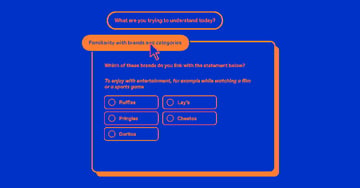
Learn how McDonald's has partnered with Zappi to build its test-and-learn approach to innovation, rather than a "test to earn a good score" approach.

Learn how McDonald's has partnered with Zappi to build its test-and-learn approach to innovation, rather than a "test to earn a good score" approach.

Brand performance is about more than clicks or campaign metrics.
Those numbers tell you what happened. Brand tracking helps you understand why — from what’s happening with your brand in consumers’ minds to how that changes over time.
Are more people aware of your brand? Is consideration growing? Are consumers choosing you over competitors? What do they associate with your brand? And when they’re ready to buy, does your brand come to mind?
Brand tracking gives you a consistent way to answer all of those questions. Plus, by measuring brand health over time, you can spot changes earlier, understand your position against competitors and make better-informed decisions about where to focus.
In this article, we’ll cover what brand tracking is, which metrics matter, how to build a tracking program and, most importantly, how to turn brand health data into action.
A typical brand tracker looks at measures such as awareness, consideration, usage, preference and brand perceptions. It can also explore when and where consumers think about a brand, helping you understand the mental availability within the category.
The key word to pay attention to here is ongoing.
A one-off consumer study can give you a snapshot of where your brand stands today, while brand tracking gives you a series of comparable measurements, so you can see where your brand is headed and monitor changes over time.
That context matters because brands are constantly changing. New campaigns launch, competitors shift their strategies, new products enter the market and consumer needs evolve. Tracking helps you understand what those changes can mean for your brand.
A strong brand tracking program can help you:
Ultimately, the goal of brand tracking is to build a clearer picture of if and how your brand is changing and what you should do about it.
Like many things, the right metrics depend on your objectives and growth strategy. But most brand tracking programs include a core set of measures that help explain how consumers move from knowing a brand to choosing it.
Here’s a breakdown of each.
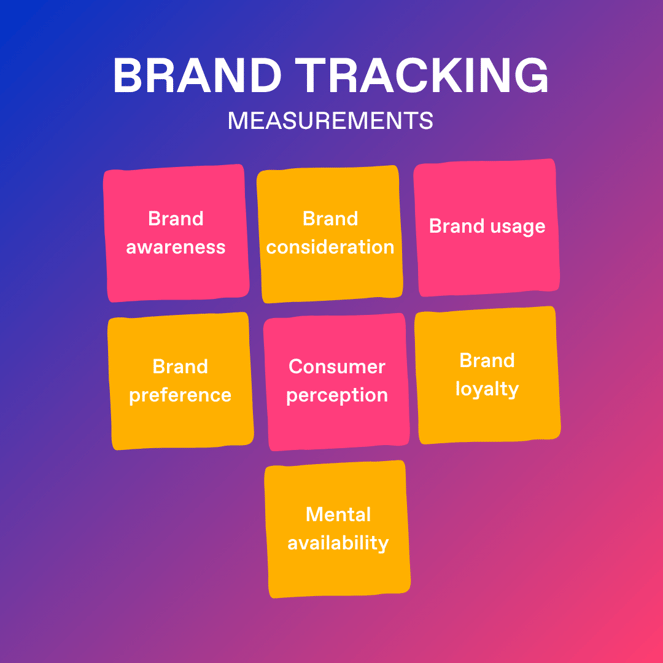
Brand awareness measures whether consumers know your brand and whether it comes to mind within your category.
Unaided awareness asks consumers to name brands without being given a list. This shows which brands are top of mind.
Aided awareness gives consumers a list of brands and asks which ones they recognize.
Together, these measures help you understand how visible your brand is within the category.
Consideration measures whether consumers would consider buying or choosing your brand.
It helps show whether awareness is translating into potential demand. For instance, a brand can have high awareness but relatively low consideration, which raises a different question: why aren't more consumers considering it?
Usage measures whether consumers currently or have previously used a brand.
Looking at usage alongside awareness and consideration helps connect what consumers say about a brand with the choices they make.
For example, high awareness and consideration paired with low usage could point to barriers preventing potential demand from becoming actual choice.
Brand preference measures whether consumers favor your brand over others in your category.
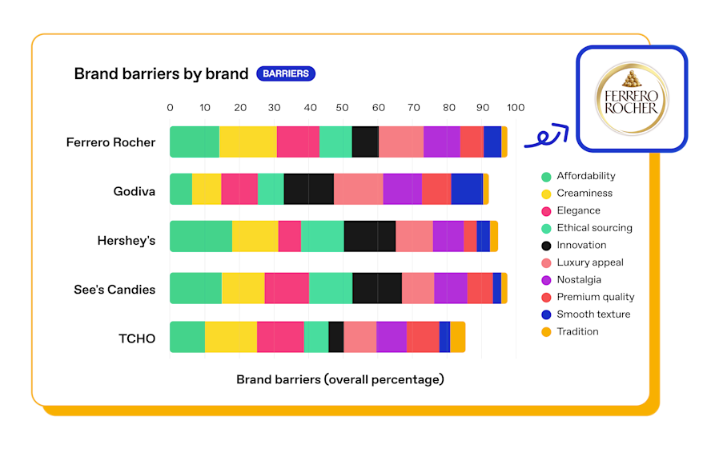
Tracking preference alongside competitors helps show where your brand has an advantage and where it may be losing ground. It can also help uncover the associations or category needs that are driving preference.
Consumer perception measures what people think and feel about your brand.
This can include attributes, associations and other measures related to your positioning. The key question is whether the way consumers see your brand matches how you want it to be seen.
Tracking these perceptions over time can show whether your positioning is becoming stronger, fading or failing to resonate.
Brand loyalty looks at whether consumers continue choosing a brand and whether they're likely to advocate for it.
Measures can include repeat purchase, likelihood to repurchase and willingness to recommend. Together, these signals can help you understand whether your brand is building lasting relationships or showing signs of consumer defection.
Mental availability measures how easily your brand comes to mind in relevant buying situations.
That's different from simply asking whether someone knows your brand. The more useful question is: is your brand one of the options that comes to mind when a buying situation arises?
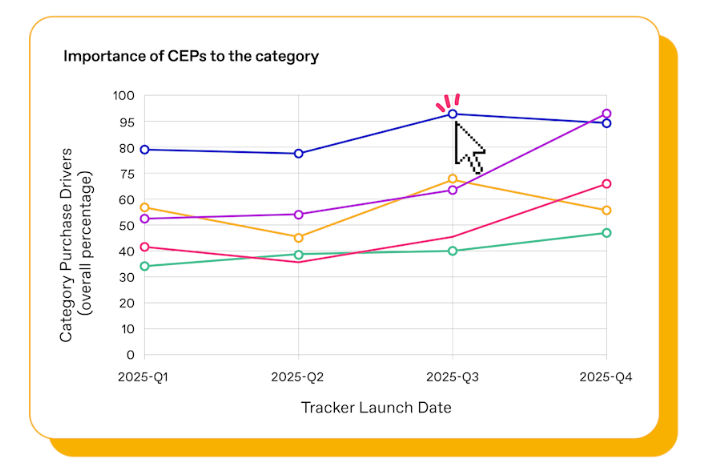
One way to understand this is through Category Entry Points (CEPs) — the needs, occasions, emotions or contexts that can trigger someone to think about buying within a category.
For example, an ice cream brand might want to come to mind when someone is looking for a way to treat the kids or simply cool down on a hot day.
Tracking which brands come to mind in these situations helps you understand where your brand is mentally competitive and where competitors have an advantage.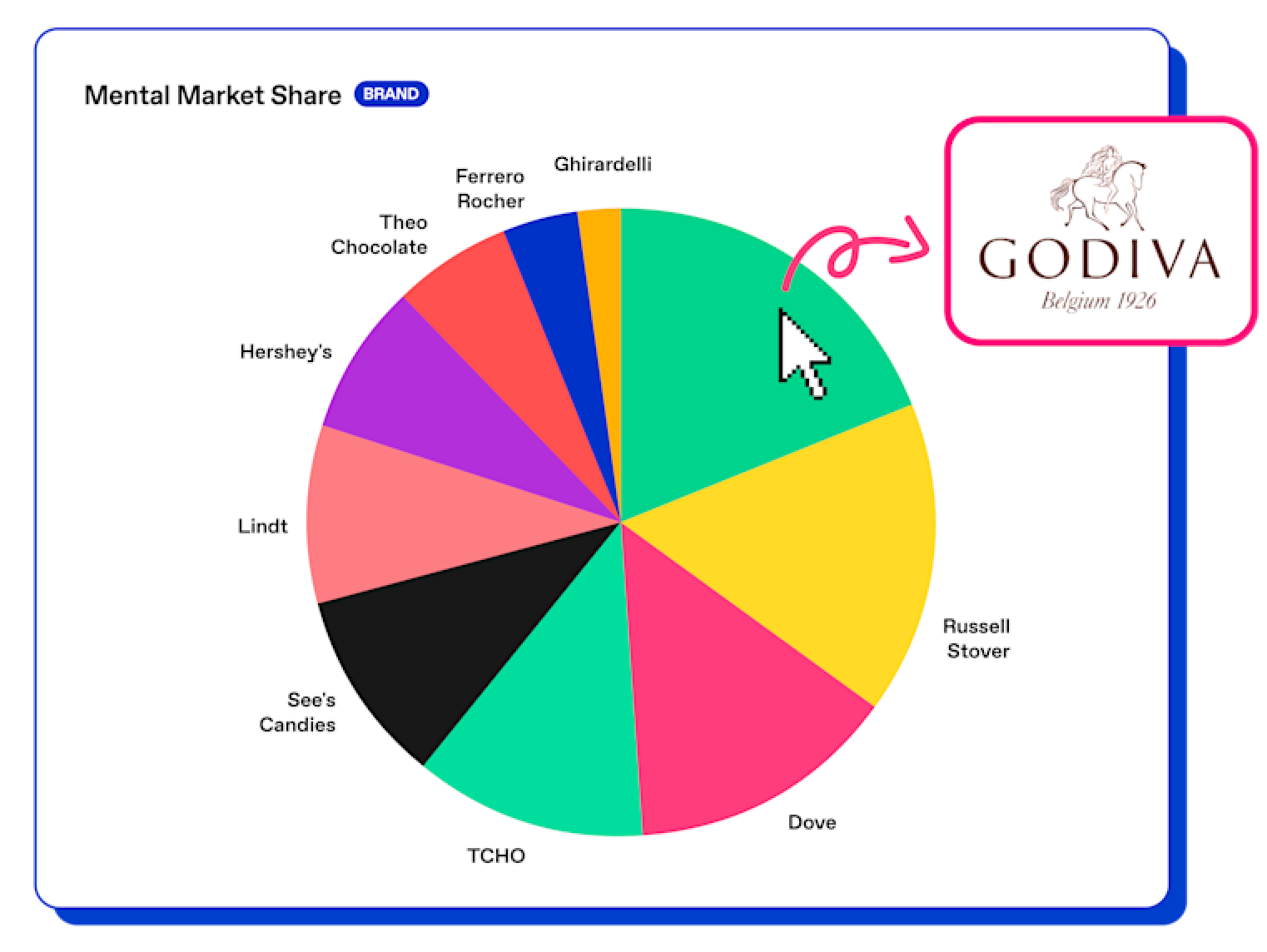
Mental Market Share adds another layer by showing how often your brand comes to mind relative to competitors across relevant buying situations.
This is an important part of modern brand tracking because growth depends on being easy to think of when consumers enter your category.
An effective brand tracking program starts with the decisions you need to make. From there, you can build the measurement system around the questions that matter most.
Start with the business questions.
Ask yourself: What decisions should your tracker help you make? Are you trying to understand whether a new positioning is working? Monitor the impact of advertising? Track competitors? Identify opportunities for growth?
Your objectives should determine what you measure.
If a metric doesn't help answer an important business question, ask whether it needs to be in the tracker.
Choose a focused set of metrics that reflect your objectives.
A tracker doesn't become more useful just because it contains more questions. Too many measures can actually make it harder to see the signals that matter.
Start with the fundamentals — such as awareness, consideration and usage — then add measures that are particularly relevant to your category, positioning or growth strategy.
Your brand doesn't operate in a vacuum.
Include the competitors consumers actually consider alongside your brand. Competitive measurement gives you the context to understand whether a change is specific to your brand or part of a broader category movement.
For instance, if your consideration falls by three points while every major competitor falls by a similar amount, that's a very different story from your brand declining while competitors remain stable or grow.
Your first wave creates the baseline for measuring future change.
Before launching a major campaign, repositioning your brand or entering a new market, consider measuring brand health first. That gives you a clear reference point for evaluating what happens next.
The value of a baseline also grows over time. As you collect more waves, you build a historical view of your brand and get better at distinguishing normal movement from meaningful change.
Consistency is one of the foundations of useful brand tracking.
Keep your methodology, audience definitions and core questions consistent enough that changes can be interpreted as changes in consumer behavior rather than changes in the research itself.
The right cadence depends on how quickly your category and brand are changing. The goal is to have enough visibility to support decisions without creating unnecessary research or reporting.
A single wave tells you where your brand stands. Multiple waves tell you where it's going.
Look for trends rather than reacting to every movement. Then consider what was happening around those changes.
Campaigns, competitive activity, new products, pricing, cultural moments and category shifts can all provide important context.
That's where brand tracking becomes more than a recurring report. Each wave adds another piece of evidence that can help you understand your brand and make better decisions.
There isn't one right cadence for every brand. The best approach depends on how quickly your category changes and how often your team needs to make brand decisions.
Periodic tracking typically measures brand health quarterly, semiannually or annually.
It can work well for slower-moving categories where brand perceptions change gradually and teams primarily need a high-level view of performance.
The tradeoff is that meaningful changes can happen between measurement periods.
Continuous tracking provides a more frequent view of brand health.
It's particularly useful for fast-moving categories, competitive markets or brands running frequent campaigns and making regular marketing decisions.
Instead of waiting for the next quarterly or annual report, teams can monitor changes as they develop and investigate emerging signals sooner.
The value of continuous tracking also compounds over time. Every new wave adds to the historical context available to your team.
Sometimes you don't need an ongoing tracker.
 A brand health snapshot provides a point-in-time view of brand performance. It can be useful when entering a new market, answering a specific strategic question or establishing a baseline before a major change.
For example, a brand considering expansion into a new category could measure awareness, consideration and perceptions against local competitors before deciding where more research is needed.
The important thing is to match the approach to the decision. Continuous tracking is useful when you need an ongoing pulse; a snapshot can be the better choice when you need a focused read.
Collecting brand health data is only the beginning. The real value comes from understanding what the movement means.
Brand metrics will move from wave to wave.
A small increase or decrease doesn't necessarily mean your brand has meaningfully changed. Look at the size and duration of movement before deciding that you've found a trend.
💡 Historical data can help establish what normal movement looks like and identify changes worth investigating.
Your brand's performance becomes much more useful when you know what's happening across the category.
If your awareness increases while competitors remain flat, that could point to a brand-specific gain. If awareness increases across the category, there may be a different explanation.
💡 Competitive benchmarks help separate brand-specific movement from broader market trends.
Individual metrics rarely tell the whole story.
For example:
💡 Looking across metrics helps you move from what changed to where to investigate next.
Brand tracking can tell you what changed and when. Understanding why requires context.
Look at brand health alongside:
💡 This is where connected insights become especially useful. Brand tracking can show what's happening in-market, while advertising and innovation research can provide additional evidence about what's driving those changes.
The strongest brand tracking programs do more than produce a dashboard. They help teams make decisions.
Use brand tracking to understand whether advertising is contributing to the brand health outcomes you're trying to build.
If awareness is growing but consideration is flat, for example, you may need to investigate whether campaigns are building visibility without giving consumers a strong reason to choose the brand.
Connecting brand tracking with advertising research can provide an even richer view: which creative is resonating, which brand assets are strengthening memory and which messages are helping build the brand over time?
Brand tracking can reveal where your positioning is strong and where there are gaps.
Perception measures can show whether consumers associate your brand with the attributes you want to own. Mental availability can reveal the buying situations where your brand is easy to recall and where competitors have the advantage.
Together, these signals can inform positioning, communications and longer-term brand-building strategy.
Competitors can change the category even when your own strategy stays the same.
Tracking competitors alongside your brand can help identify who is gaining awareness, consideration or preference and where your brand is losing ground.
The next question is why. Competitive movement can point to areas where your team needs to investigate changes in messaging, products, pricing or consumer expectations.
Brand tracking can also inform innovation.
Changes in consumer perceptions and category needs can reveal opportunities for new products or propositions. Innovation research can then test whether those ideas meet consumer needs and fit with the brand.
Over time, connecting those two sources of learning can help you understand not only which innovations consumers prefer, but how they contribute to the brand overall.
Brand health metrics can also provide leading indicators that complement revenue and sales.
The goal isn't to claim that a single-point increase in awareness caused a specific sales outcome. Instead, look for relationships between brand health and business outcomes over time.
For example, if consideration has historically strengthened before branded search or sales increase, a new movement in consideration could be an early signal worth investigating.
This makes brand tracking more useful as a business tool: it can help you understand what's changing today and what those changes could mean for future growth.
Even well-funded tracking programs can lose their value if the research isn't designed or used carefully.
More metrics can create more noise. Focus on the measures that support meaningful business decisions.
If you significantly change your audience, questions or methodology, it becomes harder to tell whether a change in results reflects consumer behavior or the research design.
Your own numbers only tell part of the story. Competitive benchmarks help put brand movement into context.
Not every movement is a trend. Look at historical patterns and multiple waves before making major decisions.
A dashboard can tell stakeholders that consideration fell two points. It should also help them understand why that matters and what they should investigate next.
The ultimate test of a tracker is whether the organization uses it. If no one acts on a metric, reconsider whether it belongs in the program.
The research approach and technology you choose can have a big impact on how useful your tracking program becomes.
A strong brand tracking solution should provide:
That last point is increasingly important.
Brand tracking creates more value when the learning doesn't stop with the tracker.
An advertising test can show how consumers respond to a campaign. Brand tracking can show what happens to brand health in-market. Innovation research can show which new ideas meet emerging consumer needs.
When those sources of evidence connect, teams can build on what they already know instead of starting from scratch with every new question.
Both approaches can work. The right choice depends on your team's resources, needs and operating model.
An agency-led approach can make sense when you need extensive customization, strategic support or a research partner to manage the program end to end.
Brand tracking software can make sense when your team needs greater control, faster access to results, standardized measurement and the ability to explore data directly.
The important question is whether your approach gives your team reliable data quickly enough to use it in real decisions.
Here’s a few of the most frequently asked questions when it comes to brand tracking:
The right frequency depends on your category, competitive environment and how often you make brand decisions. Quarterly tracking can be sufficient for some brands, while fast-moving categories may benefit from continuous measurement.
Brand tracking costs can vary based on the number of markets, audiences, competitors, metrics and measurement frequency. Continuous tracking and highly customized programs generally require more investment than a single brand health snapshot.
Brand ROI can be assessed by examining relationships between brand health indicators and business outcomes such as sales, market share or branded search over time. The goal is to identify meaningful relationships rather than attribute a business outcome to a single brand metric.
Brand health describes the strength and condition of a brand across measures such as awareness, consideration, usage and perception. Brand tracking is the ongoing research process used to measure how that health changes over time.
A brand tracking survey is a recurring consumer survey that measures brand health consistently over time. It typically includes measures such as awareness, consideration, usage, preference and brand perceptions alongside competitors.
Yes. Smaller brands can use brand tracking to establish a baseline, understand their competitive position and identify changes in consumer perception. The key is keeping the program focused on the questions and metrics that matter most to the business.
Brand tracking should tell you more than whether a metric went up or down.
The real value comes from understanding how the relationship between consumers and your brand is or isn’t changing, what’s driving it and where to act next.
That requires consistent measurement, competitive context and a clear connection between brand health data and business decisions. It also means treating each wave as part of a larger body of consumer knowledge rather than another standalone report.
This is where brand tracking can become part of a broader connected insights system.
Advertising research can help explain how your brand connects with consumers. Innovation research can reveal what consumers need next. Brand tracking provides the ongoing view of what's happening in-market — creating new learning that can inform the next round of decisions.
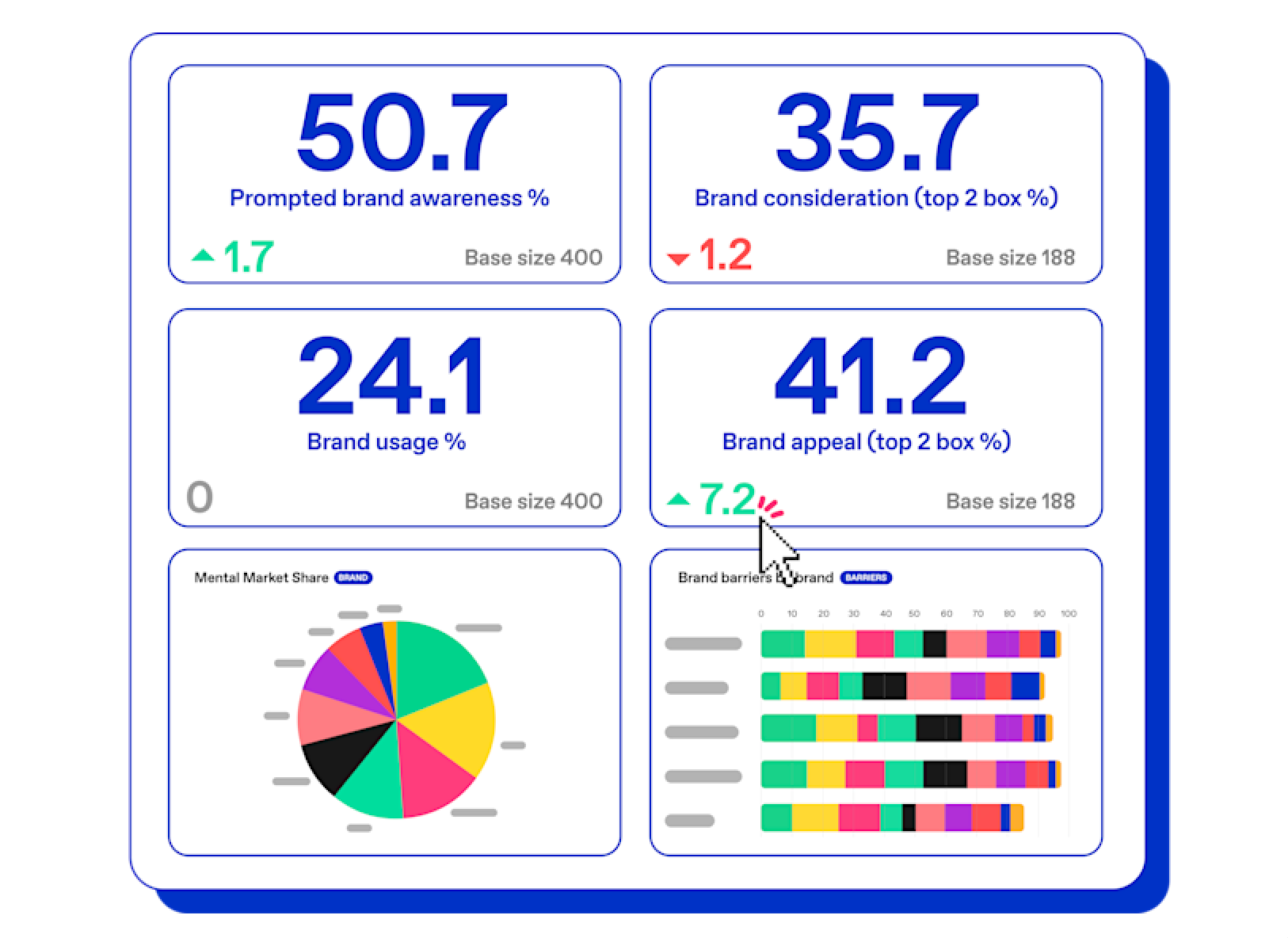
Zappi brings these areas together through its connected consumer insights platform, with our brand health tracking solution providing continuous visibility into brand performance, competitors and the factors influencing brand health.
The result is a more connected approach to understanding where your brand stands today, how it's changing and what you can do next.
Stay up to date with our latest insights, tips, and industry news.